The role of power and politics in shaping our oceans and coasts
The world’s oceans are not empty space: they are constantly being shaped by politics, policies and people. Overfishing, marine pollution, aquaculture, deep-sea mining, conservation and other human activities in the ocean are increasing, and decisions about these issues are guided by powerful actors and organizations.
Engaging with insights from political ecology – which studies the relationships between environmental issues and political, economic and social factors – may be key to engaging effectively with the highly political nature of the ocean. This is what Dr. Nathan Bennett, a Research Associate at the UBC Institute for the Oceans and Fisheries and the Université Côte d’Azur in France, suggests in a new article in Coastal Management.
Bennett explores research on four interconnected themes of political ecology that are related to ocean governance and management: power and politics, narratives and knowledge, scale and history, and environmental justice and equity.
Of all factors, power plays one of the most complex and critical roles in ocean governance and resource management. The influence of powerful actors and organizations in particular has been studied in fisheries management. Bennett gives the example of a case in Thailand, where unequal power relations between small-scale fishers and government officials influenced control over and access to resources [1]. Lack of accountability allowed local officials to interpret laws and extract bribes in their own interests.
“Power is shaped by rights and money, among other things, and some people simply have more power than others,” explained Bennett. “Having power can influence everything from whether you can participate in decision-making processes, to whether decisions are made in your favour, to whether you are able to harvest marine resources.”
“Having power can influence everything from whether you can participate in decision-making processes, to whether decisions are made in your favour, to whether you are able to harvest marine resources.”
“Being ignored or marginalized from decision-making can produce unfair decisions. There are plenty of examples where women’s harvesting patterns, Indigenous rights or small-scale fishers’ livelihoods have been ignored in fisheries management and marine conservation,” he continued.
Power is also deeply tied to knowledge production and use. The science used to inform marine management actions, for example, is mostly produced by relatively wealthy and powerful groups. “When local knowledge is used alongside Western science in fisheries management, it can put people on more equal footing,” said Bennett.
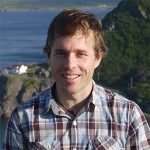
Nathan Bennett
On the other hand, powerlessness can also be overcome. The narratives that Indigenous peoples tell about their relationship with the ocean can be shaped into powerful tools of resistance by certain groups to demand fisheries resources or reclaim ocean spaces. This is the case with the Heiltsuk First Nation, who have been asserting their rights to manage and harvest herring roe on Canada’s Pacific Coast [2].
Insights from political ecology can be applied to create more inclusive governance processes and more equitable solutions. Bennett emphasized that a re-politicizing of the ocean is needed in order for decision-makers and organizations to avoid advocating for policies and actions that will marginalize and produce negative impacts on coastal communities, small-scale fisheries and Indigenous peoples.
Bennett added, “True collaborations between communities, natural and social scientists, and policy-makers are needed to help to identify ocean solutions that are both sustainable and just.”
The paper “In Political Seas: Engaging with Political Ecology in the Ocean and Coastal Environment” was published in the journal Coastal Management.
[1] Tan-Mullins, M. 2007. The state and its agencies in coastal resources management: The political ecology of fisheries management in Pattani, Southern Thailand. Singapore Journal of Tropical Geography 28 (3):348–61. doi:10.1111/j.1467-9493.2007.00314.x
[2] Gill, I. (2018, August 28). Of Roe, Rights, and Reconciliation. Hakai Magazine. Retrieved from www.hakaimagazine.com/features/of-roe-rights-and-reconciliation/
Tags: fisheries management, IOF Research Associates, Nathan Bennett, ocean governance, political ecology, Research
Gabriel Reygondeau named ‘The Marine Guy’ for the Half Earth Project
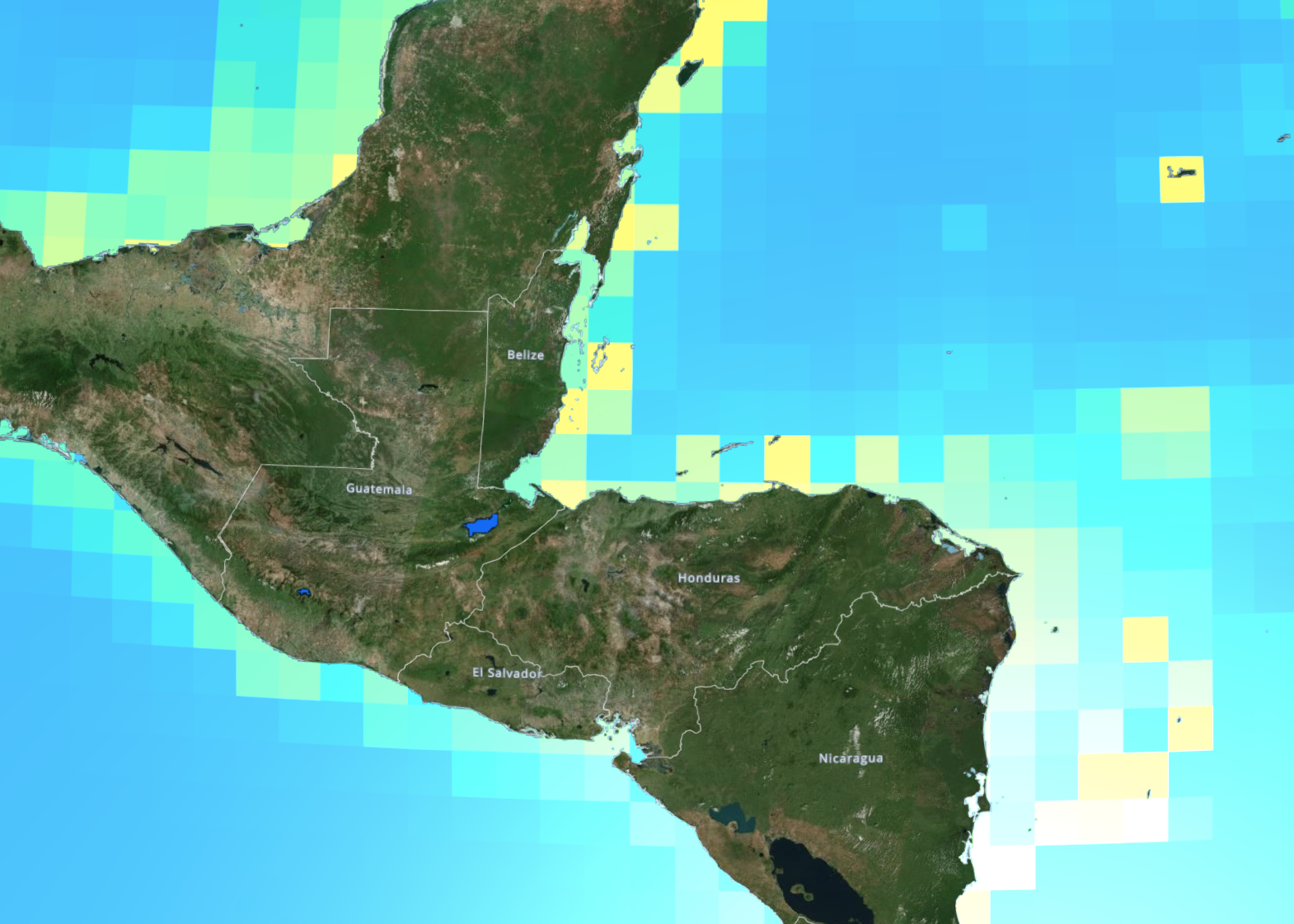
Map of Marine Species Rarity (Fishes) / Half Earth Project (half-earthproject.org/maps)
Dr. Gabriel Reygondeau has been chosen as “The Marine Guy” for the Half Earth Project, and has been named a UBC-Yale Fellow. Reygondeau, a Postdoctoral Fellow at UBC’s Institute for the Oceans and Fisheries (IOF) in the Changing Oceans Research Unit (CORU) and part of the NF-UBC Nereus Program, was selected for his work on marine species distribution.
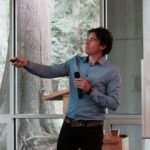
Gabriel Reygondeau
The Half Earth Project, founded by Ed Wilson, has found that humans need to protect at least half of the Earth’s habitats to save 85 per cent of all biodiversity. But which half should humans protect to save the most species? To answer this, biodiversity specialists, including Reygondeau, were invited to join the Project and help map the richness and rarity of different species worldwide.
A specialist in marine biogeography and species distribution, Reygondeau was invited to map the global distribution of marine species. He was selected for his various accomplishments: he was the first researcher to gather a massive database on species distribution; and one of the first to develop a standardized species distribution model. To date, he has also modelled more than 22,000 diverse marine species from present day until 2100.
While the distribution of marine species has already been mapped in some locations, Reygondeau expanded on this to model the distribution of species worldwide by using existing data. This relied heavily on the idea of the ecological niche.
“Any species, especially in the ocean, will most likely have a preferred area where you can find them, an ecological niche,” Reygondeau explained. An ecological niche is unique to each species and refers to a species’ specific role in its ecosystem, including how it interacts with other species and its environment. Using niches, researchers can predict the environmental conditions under which a species is likely to be found. They can then extrapolate on this data to map a species’ potential distribution across the globe.
“Having a global pattern helps you manage different scenarios better, especially in the context of climate change, where species are moving due to change,” Reygondeau said. Global modelling can account for scenarios where species move into new areas, like the introduction of invasive species or species migration in response to climate change. “For example, in Canada, lots of species on the West Coast will not disappear but just migrate to Alaska, which may create conflict with economical fisheries,” he explained.
“Having a global pattern helps you manage different scenarios better, especially in the context of climate change, where species are moving due to change,” Reygondeau said.
Reygondeau is also the first IOF researcher to obtain the UBC-Yale Fellowship, which will allow him to continue his research at both UBC and Yale University. His marine species modelling work for the Half Earth Project will contribute to the Map of Life Project, an initiative to map the distribution of individual species across the globe.
Tags: CORU, Gabriel Reygondeau, IOF postdoctoral fellows, IOF Research Associates, marine biogeography, Modelling, Nereus Program, species distribution
Environmental changes and fisheries impact Baltic fish stocks more than grey seal predation
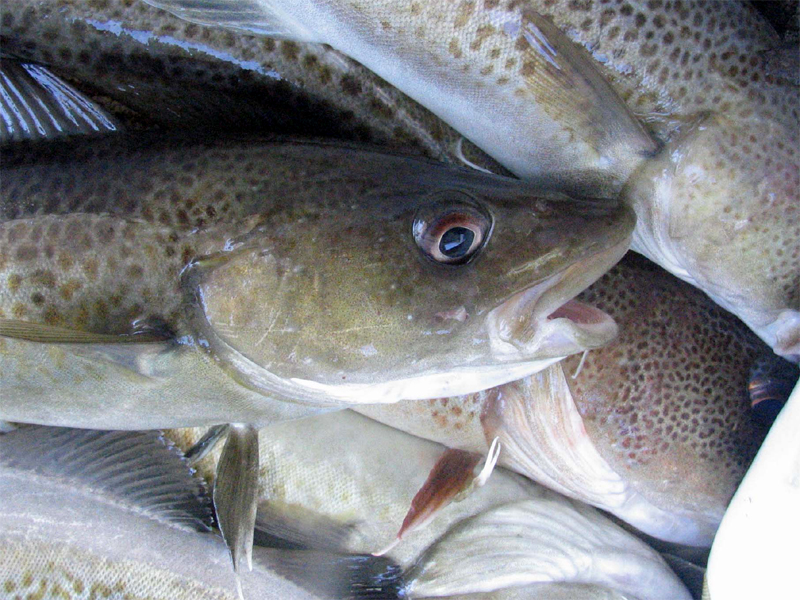
Eastern Baltic Cod. Credit: Matthieu Godbout/Wikimedia Commons (CC BY SA 3.0)
In the Baltic Sea, the exponential growth of grey seals since the 1980s has raised concerns in the fisheries industry, especially in relation to the impact they may have on the region’s most important fish stocks. As seal populations elsewhere are recovering and interacting with fisheries, these concerns are reflected worldwide, along with conservation concerns about the fish that seals eat.
The story, though, is not that simple. Human-induced impacts such as climate change and eutrophication – the overgrowth of plants and algae due to excessive nutrients in the water – have also impacted the Baltic Sea. According to a study by researchers from UBC’s Institute for the Oceans and Fisheries, Stockholm University and the Swedish University of Agricultural Sciences, fishing mortality and environmental factors affect fish biomass and catches in the region more than seal predation.
“Our study demonstrates that the Baltic Sea is both very driven by environmental changes while also being highly sensitive to anthropogenic changes,” said Dr. David Costalago, the study’s lead author and a former Postdoctoral Researcher at Stockholm University’s Department of Ecology, Environment and Plant Sciences, now a Postdoctoral Research Fellow at UBC’s Institute for the Oceans and Fisheries.
“Our study demonstrates that the Baltic Sea is both very driven by environmental changes while also being highly sensitive to anthropogenic changes,” said Dr. David Costalago…
Sprat. Credit: Szabi237/Wikimedia Commons (CC BY 3.0)
By modelling different future conditions, the researchers investigated how grey seal predation is expected to affect fish stocks of Baltic cod, Baltic herring and Baltic sprat until 2098. These fish stocks are considered the most economically important to the Baltic Sea, and have their largest stocks in the Baltic Proper, an offshore area in the Baltic Sea that was modelled for the study. The majority of Baltic grey seals are also found there. Conditions considered included factors such as seal numbers, climate, nutrient load – the amount of nutrients entering an ecosystem – and how the cod trawling fishery might impact fish stocks.
The researchers found that seal abundance generally did not have major effects on the biomass of adult fish. Consumption by grey seals at a population size of 30,000 individuals was found to affect fish biomass less than climate change, nutrient load and fisheries. By contrast, cod trawling fishing and environmental forcing – which includes climate change and nutrient load scenarios – had considerable impacts on fish biomass, and were found to be the major determinant of fish biomass.
If 100,000 seals were located in the study area, they would consume around 49,000 tons of adult herring, accounting for 3.65 per cent of the estimated herring stock size in 2017. For cod, the region’s most economically important fish species, the study predicts that the 30,000 to 35,000 seals currently inhabiting the Baltic Proper consume less than 9,000 tonnes of adult cod annually. In comparison, according to the International Council for the Exploration of the Sea (ICES), annual catches of cod in the region by humans have never fallen below 30,900 tonnes.
Grey seal. Credit: Dunpharlain/Wikimedia Commons (CC BY-SA 4.0)
“We want our insights to inform management and conservation efforts, and to help them consider the whole ecosystem and multiple pressures, not only how much fish the seals eat,” said Costalago. “Often, debates about the impact of seals arise from poor understanding of the complexity of the ecosystem.”
Different environment and fisheries conditions were also expected to influence the impact of seal predation on fish. For example, in scenarios with less cod fishing, seal prey less on herring and sprat. This is because grey seals tend to prey more on cod than on other species whenever cod is available in the environment.
The researchers also found that the predation mortality of Baltic fish by grey seals was higher when cod, sprat and herring fish stocks were at their lowest, which points to the importance of maintaining cod populations at relatively high levels, as doing this could reduce cod predation mortality by seals.
“There are, however, two important aspects that were out of the scope of our study but also need to be addressed: the economic damage produced by some seals when they raid the fishing gears of coastal fishers, and the increase in the parasitism by cod liver worms that use seals as their final hosts,” Costalago added. “We need to find ways to both secure the revenues of the fishers, and also guarantee the conservation of the fish stock and good status of the grey seal population.”
The paper “The necessity of a holistic approach when managing marine mammal-fisheries interactions: Environment and fisheries impact are stronger than seal predation” was published in the journal Ambio.
Tags: Baltic Sea, cod, conservation, David Costalago, herring, IOF postdoctoral fellows, Modelling
Super Salmon Science
Updates from Hakai’s Juvenile Salmon Program
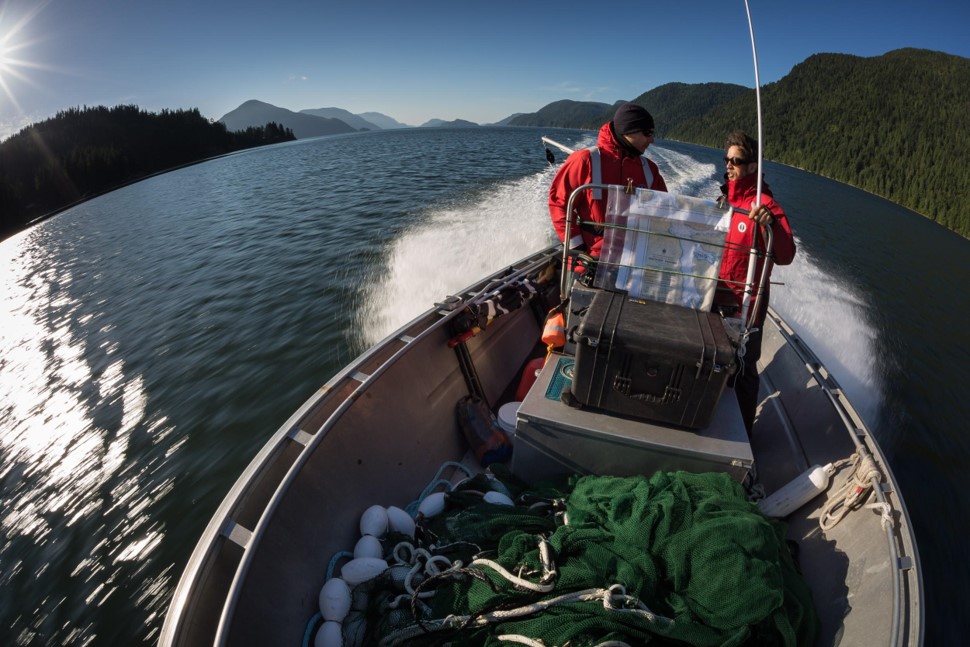
The first months at sea are a critical time for salmon, potentially having significant impacts on stock recruitment. With this in mind, the Hakai Institute’s Juvenile Salmon Program is investigating the factors affecting juvenile salmon across two critical sections of the Fraser River salmons’ northward migration; the Discovery Islands and Johnstone Strait.
The Juvenile Salmon Program was launched in 2015 as a collaboration between two of British Columbia’s coastal research stations, universities, and industry partners. It explores many of the issues facing Pacific salmon, including the physical and chemical conditions, plankton dynamics, salmon feeding, growth, condition, migration, parasites, and mortality. Each of these elements has a whole team of researchers focused on them. On November 9th, UBC’s Institute for the Oceans and Fisheries hosted the Hakai Institute’s 4th annual meeting, bringing those researchers together to report on their findings.
The teams’ recent work has shed new light on water movements through the area, showing that Johnstone Strait and the Discovery Islands are actually two separate water masses divided by a tidal front near the eastern end of Johnstone Strait. As a result, the physical, chemical, and biological properties are unique to each region. This is supported by what was seen in the zooplankton community structure, with different species composition in the northern Strait of Georgia, Discovery Islands, and Johnstone Strait. As a result, juvenile salmon experience an abrupt transition as they transit through each area, with researchers seeing these regional differences reflected in their diets. Across both regions, feeding intensity appears to be low, suggesting that juveniles may be experiencing food-limited growth as they pass through this ‘trophic gauntlet’. Sea lice loads along this route have also been correlated with low foraging success, suggesting that ‘lousy fish make lousy competitors’ and that the sub-lethal effects of sea louse infection on juvenile growth and survival could be more significant than previously thought.
The teams has discovered that the physical, chemical, and biological properties of the Johnstone Strait and the Discovery Islands water masses are unique to each region. As a result, juvenile salmon experience an abrupt transition as they move through each area, with researchers seeing these regional differences reflected in their diets.
RNA:DNA ratios also provide evidence for reduced growth through Johnstone Strait, showing higher fish condition and instantaneous growth rates at the most southern and northern ends of our study area. Otolith microchemistry has also shown that reduced feeding can lead to reduced growth with long-lasting effects. Future work will compare juvenile and adult otoliths to see whether a growth-limited signature on the otoliths from their residence time in this area can be detected.
A more fine-scale analysis of residence time, migration speed, distribution and survival are also being investigated in this complex region through the use of acoustic tagging. Results were presented from the past two years and significant improvements were made in 2018, where 123 of 150 tagged salmon were detected at the receiver sites. Differences were found in the number of salmon, speed of migration, and survival across the multiple Discovery Island routes, providing more insight into salmon movements through this region.
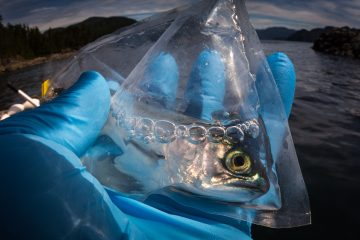 Salmon Seining at Quadra. |
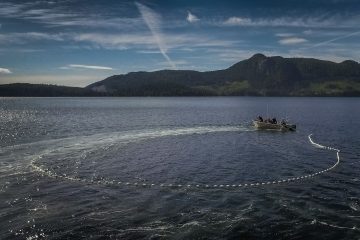 Salmon Seining at Johnstone Strait. |
In addition to these research discoveries, the past year has seen some exciting developments for the program, with a new Shiny app created by Brett Johnson (Hakai), interactively displaying recent field data. Program researchers produced many publications and conference presentations, and two team members, Natalie Mahara (MSc, UBC) and Sean Godwin (PhD, SFU), completed their degrees and graduated.
Through the collaboration of all these unique, interdisciplinary projects, the conditions and factors affecting Pacific salmon along this critical migration route are becoming clearer. The team is working hard to fit together more pieces to this oceanographic puzzle, so stay tuned as the bigger picture for salmon in coastal B.C. is revealed.
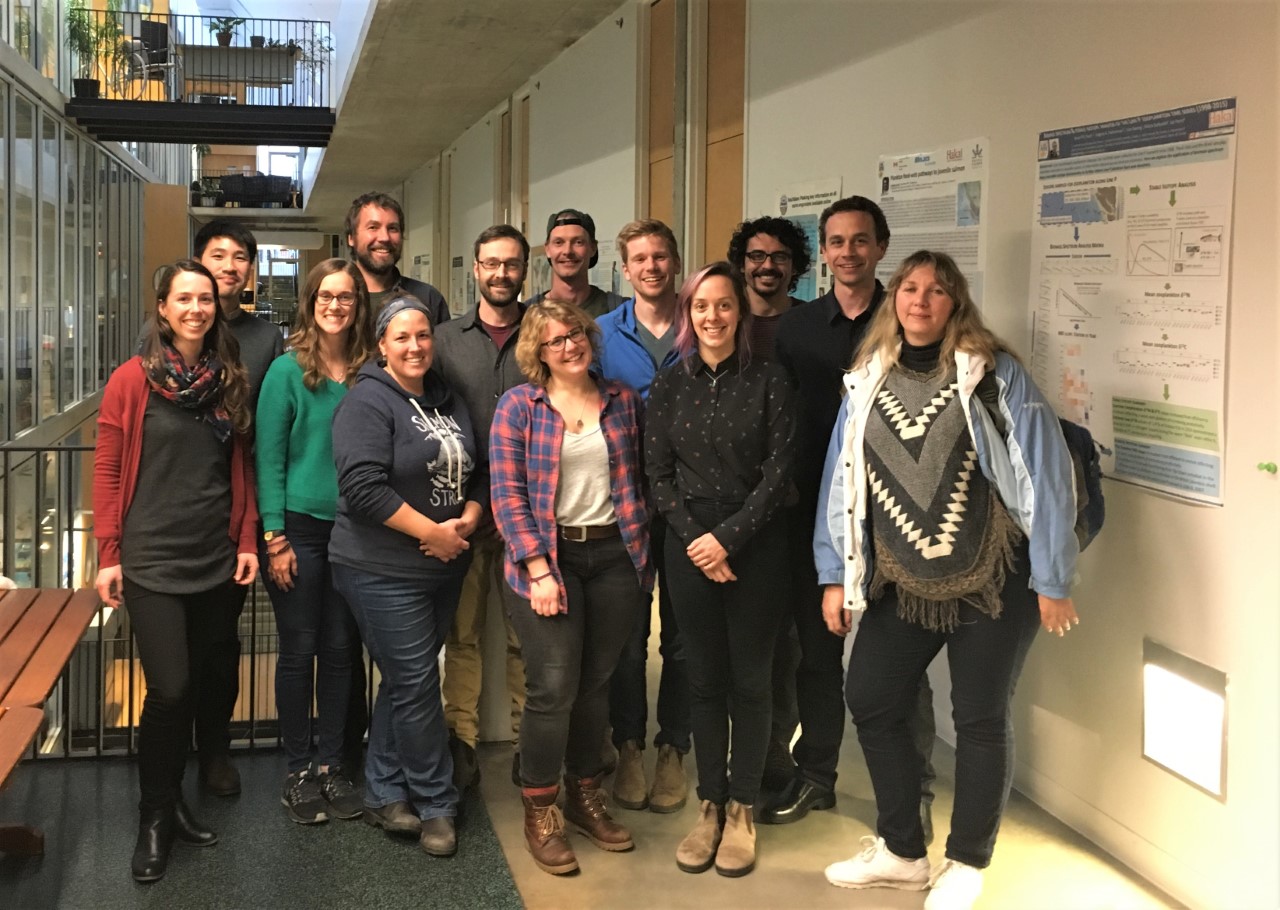
In attendance were Dr. Eric Peterson, the Hakai Institute’s founder and director (not pictured here), program leads, Hakai staff, post-docs, and graduate students. Left to right: Sam James, Julian Gan, Vanessa Fladmark, Dr. Martin Krkosek, Lauren Portner, Brett Johnson, Dr. Jessica Garzke, Stephen Johnston, Dr. Sean Godwin, Carly Janusson, Dr. David Costalago, Dr. Brian Hunt, and Yuliya Kuzmenko.
Recent North Pacific Anadromous Fish Commission publications describing the program:
- Hunt, B.P.V., B.T. Johnson, S.C. Godwin, M. Krkosek, E.A. Pakhomov, and L. Rogers. 2018. The Hakai Institute Juvenile Salmon Program: early life history drivers of marine survival in sockeye, pink and chum salmon in British Columbia, Canada. NPAFC Doc. 1788. 14 pp.
- Johnson, B.T., J.C.L. Gan, C.V. Janusson, and B.P.V. Hunt. 2018. Juvenile salmon migration dynamics in the Discovery Islands and Johnstone Strait; 2015–2017. NPAFC Doc. 1790. 10 pp.
Written by Samantha James and Vanessa Fladmark
Tags: British Columbia, fieldwork, Hakai Coastal Initiative, Hakai Institute, IOF students, Pelagic Ecosystems Lab, Research, salmon
Industrial fisheries are starving seabirds all around the world
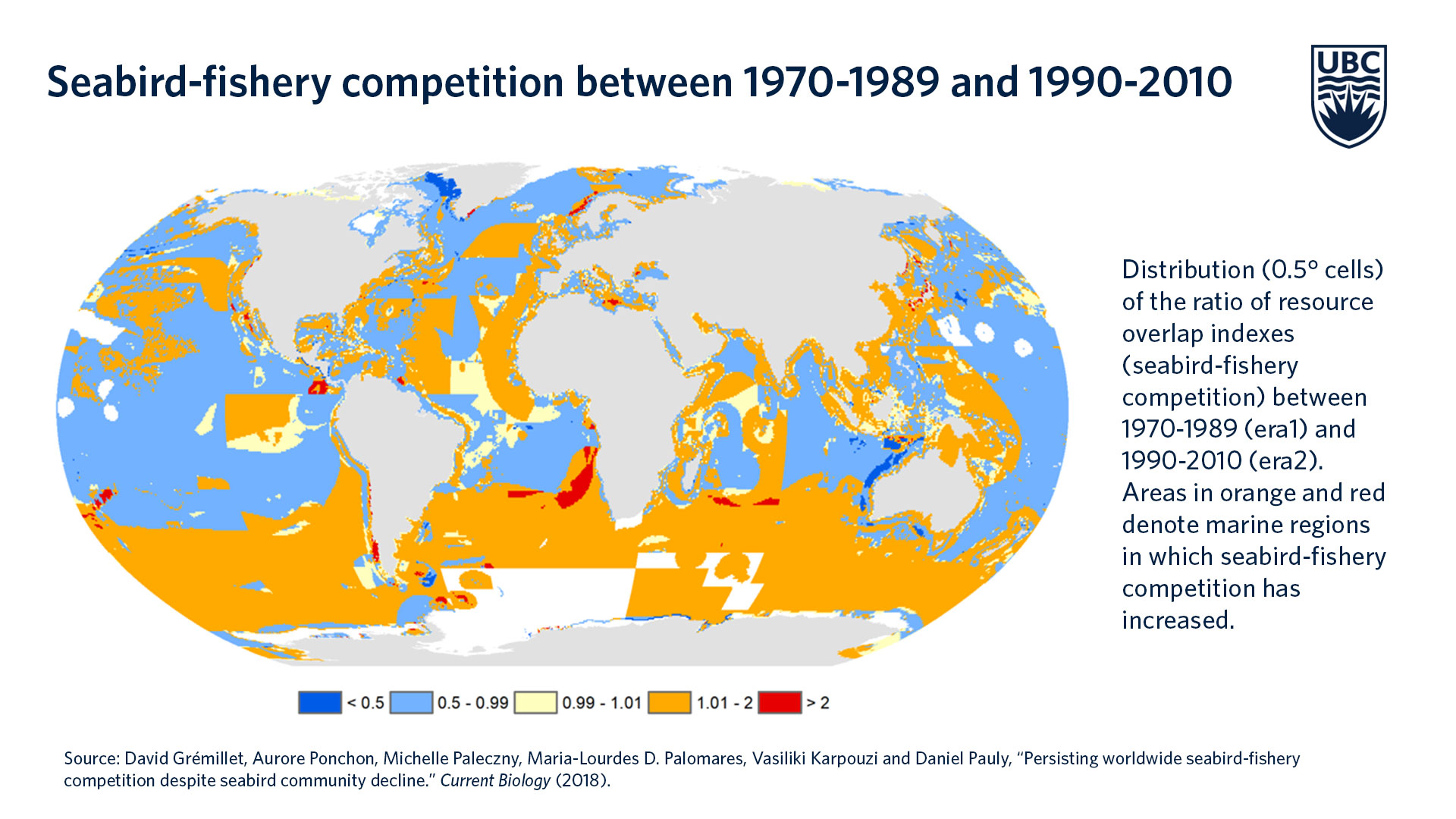
Industrial fisheries are starving seabirds like penguins and terns by competing for the same prey sources, new research from the French National Center for Scientific Research in Montpellier and the Sea Around Us initiative at the University of British Columbia has found.
In a study published today in Current Biology, researchers found that annual seabird food consumption decreased from 70 to 57 million tonnes between 1970 and 2010. Meanwhile, fisheries increased their catches of potential seabird prey from an average of 59 tonnes in the 1970s and 80s to 65 million tonnes per year in recent years.
“Fisheries persist in starving a vanishing seabird community, like a boa tightening its grip on prey,” said David Grémillet, lead author of the study and a researcher at the French National Center for Scientific Research in Montpellier. “Despite the fact that the world’s seabird community is shrinking, the level of competition between seabirds and fisheries remained the same between the 1970-1980s and 1990-2000s.”
This diminished food supply is putting seabirds at risk – making them the most threatened bird group – with a 70 per cent community-level population decline in the past seven decades.
“Since the 1970s and 80s, we’ve lost a quarter of all penguins and nearly half of the terns and frigatebirds,” said Grémillet. “Meanwhile, seabird-fishery competition continues to increase in areas such as the Asian shelves, Mediterranean Sea, Norwegian Sea and the Californian coast.”
The researchers mapped where seabirds caught their prey, calculated how much and what they consume based on what is known about their diets and caloric intake, and compared that information against the Sea Around Us initiative’s global maps of fisheries catches of species targeted by both seabirds and fishing boats.
Seabirds that feed on squid, Antarctic krill and small ‘mid-water’ fish such as herrings and sardines are suffering the most
“In total, we analysed the behaviour of one billion individual seabirds across four decades, which is about 60 per cent of the world’s seabird population,” said Deng Palomares, co-author of the study and the Sea Around Us project manager at the University of British Columbia’s Institute for the Oceans and Fisheries. “Those that feed on squid, Antarctic krill and small ‘mid-water’ fish such as herrings and sardines are suffering the most.”
Palomares explained that urgent action is needed because not only are seabirds starving to death as they engage in unfair competition for food with massive vessels, but they are also getting tangled in fishing gears and on the large amounts of plastic waste floating on the world’s oceans.
“On top of this, they are threatened by oil pollution, the introduction of non-native predators to their colonies, the destruction and changes to their habitats by human activity and environmental and ecological changes caused by climate change. If we don’t do anything, seabird populations are going to collapse,” the Sea Around Us researcher said.
The paper “Persisting worldwide seabird-fishery competition despite seabird community decline” was published today in Current Biology.
Tags: Deng Palomares, industrial fishing, IOF Research Associates, Research, Sea Around Us, seabirds
The impact of global, future change on the lives of Tonle Sap inhabitants
Tonle Sap, the largest freshwater lake in Cambodia’s Mekong basin, is an integral fisheries resource for Cambodians’ livelihoods, food security and trade. UBC IOF scientists Dr. Louise Teh and Dr. Rashid Sumaila, in collaboration with researchers at the University of Guelph, Université Paul Sabatier and University of Battambang, investigated the economic impacts of global change on households around Tonle Sap, many of which engage in fishing. They explored current and future vulnerabilities of Tonle Sap inhabitants by examining their livelihood activities – their jobs or income sources – and responses to different scenarios of future change.
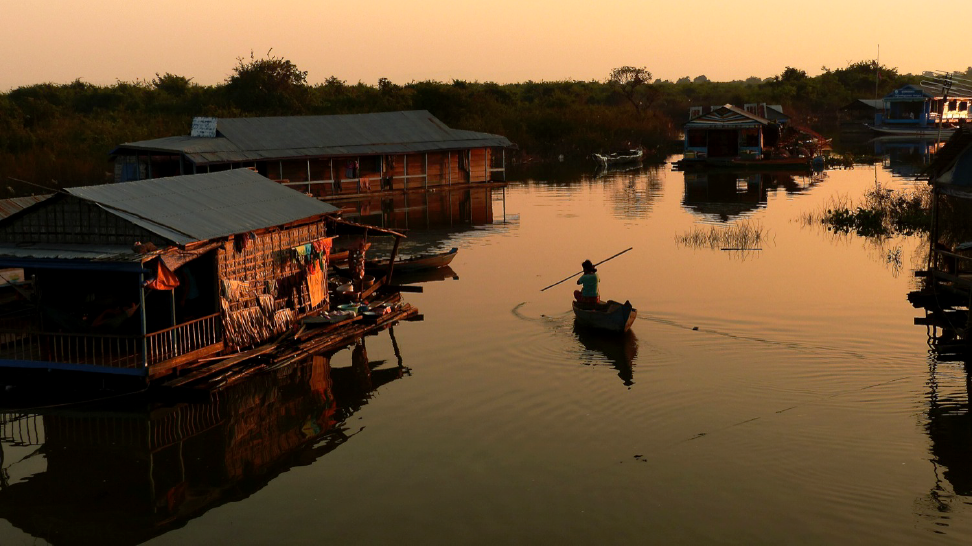
Photo: Evan Fraser.
“We found that many inhabitants are highly vulnerable to future change, as our results indicated that the majority of respondents face economic losses across all scenarios of future change,” said lead author Teh. “This emphasizes the need to sustain lake fisheries, which is crucial for supporting current and future livelihoods, and also for improving the adaptive ability of households.”
Inhabitants were grouped based on their livelihood: fishing only, fishing with other work like farming, and non-fishing work. While households near the lake usually fish with some income from other work, many of the poorest households depend on one livelihood, typically fishing.
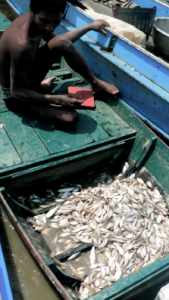
Photo: Evan Fraser.
Respondents were then presented with 4 future scenarios: less fish in the Tonle Sap Lake, more farm land, urbanisation and no future change. For each, they were asked if they would continue with their current livelihood, and if not, how they would spend their time on other livelihoods. Based on this, the researchers estimated each group’s future net income under each scenario. They also investigated how livelihood diversification – having multiple livelihoods – and respondents’ closeness to the nearby National Road might affect this.
The researchers found a trade-off between having one livelihood and obtaining higher income, or having lower income with multiple livelihoods and diversifying the risk associated with each. Currently, non-fishers appeared the most vulnerable because they had the lowest net income. By contrast, fishing only respondents had the highest net income, which suggests specialising in fishing may be economically advantageous. However, relying on one livelihood comes with greater risks: livelihood security may fluctuate due to the seasonal nature of fishing, and fishing only respondents are most vulnerable to future changes on Tonle Sap fisheries.
“One way to mitigate economic losses is to engage in more than one livelihood activity, since our results indicate that those with multiple livelihoods experience about half the economic losses under future scenarios compared to those with single livelihoods,” Teh explained.
“One way to mitigate economic losses is to engage in more than one livelihood activity, since our results indicate that those with multiple livelihoods experience about half the economic losses under future scenarios compared to those with single livelihoods,” Teh explained.
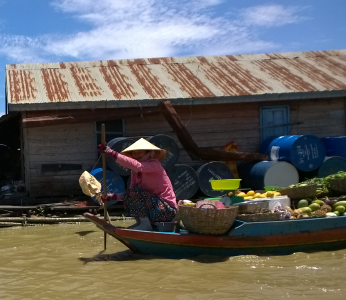
Photo: Ratha Seng.
Surprisingly, inhabitants closest to the lake, who were expected to be the most vulnerable because they mostly only fished, currently had higher income than some inhabitants closer to the road, who had multiple livelihoods and were thus expected to be less vulnerable. This might also be explained by an income-diversification trade-off, where those closer to the lake have higher income but fewer livelihood options, while those further from the lake have more livelihood options but lower income from diversified activities.
For all scenarios of future change, all inhabitants were expected to lose net income across their livelihood activities, with the most vulnerable being those engaged in one livelihood activity. This is because single livelihood inhabitants are estimated to experience the largest losses while having the least ability to adapt to changes. The scenario depicting increased future urbanisation was expected to result in the largest net income loss for all groups, with the fishing only group most heavily affected.
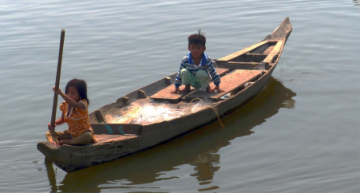
Photo: Evan Fraser.
Most chose to retain their current livelihood for all scenarios, suggesting they may not have the technical or financial ability to adapt to changing conditions. However, under the urbanisation scenario, many fishing only respondents chose to engage in livelihood activities that generated less income than fishing. This suggests that they may not fully understand potential costs of switching livelihoods, and points to the need for livelihood programmes to educate inhabitants about the costs and benefits of new livelihood options.
The scientists published their findings in an article titled, “The economic impact of global change on fishing and non-fishing households in the Tonle Sap ecosystem, Pursat, Cambodia”, in the journal Fisheries Research.
Tags: Cambodia, faculty, FERU, fishing practices, freshwater, Indigenous fisheries, IOF Research Associates, Louise Teh, Rashid Sumaila, Research, small-scale fisheries
Fishing companies lose millions of dollars every year and they don’t know it
Fishing companies operating worldwide are leaving between $51 billion and $83 billion in unrealized net economic benefits on the table every year due to the overexploitation underperformance of fish stocks, according to new research from the Sea Around Us initiative, Fisheries Economic Research Unit, the Institute for the Oceans and Fisheries at the University of British Columbia, the Fish Tracker initiative, and the Sea Around Us – Indian Ocean project.
The study, published this month in PLOS ONE, shows how fishing companies operating in both North and South America could have increased their profits substantially in past years had they allowed fish stocks to rebuild and fished them sustainably.
The researchers looked at companies targeting menhaden in the United States and anchoveta in Peru and developed a seven step method that compared their revenues and profits to the fish resources they exploited and the abundance of those fish stocks.
“We found that Atlantic and Gulf menhaden stocks were in a healthy state and being fished under the estimated sustainable limit, or maximum sustainable yield. By not augmenting their catches the two largest companies targeting them were losing $50 million in additional revenue and $12 million in profits,” said Tim Cashion, lead author of the study and PhD candidate at the Institute for the Oceans and Fisheries.
South of the equator, the picture is a very different one but the economic losses persist. “The seven largest fishing companies targeting anchoveta in Peru could have significantly increased their individual annual revenues by $3 million to $9.1 million between 2011 and 2015 if management institutions had promoted the recovery of the stocks by applying more conservative fishing policies,” co-author and PhD candidate at the Institute for the Oceans and Fisheries, Santiago de la Puente explained.
In both cases, however, changing fishing strategies has an unavoidable initial cost. For the Peruvian anchoveta stocks, reducing the level of catches would have implied a few years of diminished revenues until the stock recovered. For the U.S. menhaden, increased catches would probably have increased fishing costs and affected profitability. Yet, overcoming the initial stages of change would have created a new situation in which future gains would surpass the losses.
“Companies that do not optimize their fishing practices are making their owners, shareholders and investors lose money. They are also affecting governments, who lose out on tax dollars and licensing fees. This study shows that besides the obvious ecological benefits, there are massive economic rewards in rebuilding fisheries stocks and keeping them in a healthy state,” co-author Daniel Pauly, principal investigator of the Sea Around Us initiative, concluded.
The paper “Establishing company level fishing revenue and profit losses from fisheries: A bottom-up approach” was published in PLOS ONE.
Tags: Daniel Pauly, faculty, fisheries management, industrial fishing, IOF students, Research, Sea Around Us