Modern slavery promotes overfishing
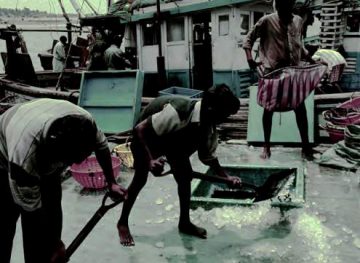
Slavery at Sea – Photo by ILO
Labour abuses, including modern slavery, are ‘hidden subsidies’ that allow distant-water fishing fleets to remain profitable and promote overfishing, new research from the University of Western Australia and the Sea Around Us initiative at the University of British Columbia has found.
By combining fisheries data from the Sea Around Us initiative at UBC with country-level data on modern slavery, the researchers found that countries whose fleets rely heavily on government subsidies, fish far away from home ports, and fail to comprehensively report their actual catch, tend to fish beyond sustainable limits and are at higher risk of labour abuses.
“Crews on vessels from China, Taiwan, Thailand, South Korea and Russia are particularly at high risk because of a lack of regulatory oversight in those countries combined with the complexities of jurisdiction at sea. This makes it easier to force people to work excessively long hours, often under appalling conditions, to extract as much fish as possible in exchange for a low – or zero – pay,” said David Tickler, lead author of the study from the University of Western Australia.
With global marine fish catches declining at a rate of 1.2 million tonnes per year since the mid-1990s, the only way many industrial countries’ fleets have been able to remain ‘profitable’ is by receiving government subsidies. However, labour costs can typically only be lowered by reducing worker pay and conditions.
“The lack of control over these boats makes them a fertile ground for labour abuses, as well as other crimes including illegal fishing. It also facilitates transshipment, where catches of multiple fishing vessels are often combined before landing. Thus, seafood caught illegally or under conditions of modern slavery is laundered by mixing it with legally caught fish before it enters the supply chain,” said Daniel Pauly, co-author of the study and the principal investigator of the Sea Around Us initiative at the UBC’s Institute for the Oceans and Fisheries.
Seafood caught illegally or under conditions of modern slavery is laundered by mixing it with legally caught fish before it enters the supply chain
This is how ‘low slavery risk’ markets, such as the US, the EU and Australia, end up consuming seafood that may have been caught by modern slaves.
“While domestically the average slavery risk in the United States is low, the U.S. accounts for about 14 per cent of global seafood imports and those imports have a slavery risk 17 times higher than fish caught by U.S. fleets domestically,” said co-author Dirk Zeller, leader of the Sea Around Us – Indian Ocean initiative at UWA.
Once imported seafood is combined in local markets with U.S.-fleet caught fish, “the seafood available to domestic consumers in the U.S. becomes eight times more likely to have been produced or processed with modern slavery. This makes the choice about both sustainability and social justice very difficult,” said Jessica Meeuwig, Director of the Marine Futures Lab at UWA and co-author of the study.
In the wake of these findings, the researchers call for a strengthening of national laws so that both the environmental and the social elements of sustainability in seafood supply chains can be audited in a transparent manner. “This would place increased responsibility on the large seafood corporations that can often best influence supplier behaviour and who, maybe without even knowing it, are currently profiting from modern slavery,” said Fiona David, director of research for the Walk Free Foundation, the architects of the Global Slavery Index.
- Sea Around Us initiative, University of British Columbia
- Walk Free Foundation, Australia
- Fisheries Economics Research Unit, University of British Columbia
- Marine Futures Laboratory, University of Western Australia
- Sea Around Us – Indian Ocean initiative, University of Western Australia
Tickler, D., Meeuwig, J., Bryant, K., David, F., Forrest J.A.H., Gordon, E., Joudo Larsen, J., Oh, B., Pauly, D., Sumaila, R.U., Zeller, D. (2018) Modern slavery and the race to fish. Nature Communications
—-
Note:
Modern slavery encompasses any exploitation that a person cannot avoid, refuse or leave because of threats, violence, coercion, abuse of power or deception. The Global Slavery Index (https://www.globalslaveryindex.org/) estimates that at least 40 million people are trapped in modern slavery in textile, agriculture, construction and fisheries sectors, as well as in the sex industry and in forced marriages.
Tags: Daniel Pauly, Dirk Zeller, faculty, fisheries management, Illegal fishing, Research, Sea Around Us, slavery, supply chain
Women play critical role in fisheries governance, studies suggest
In a special issue of Maritime Studies that explored women in fisheries management, two papers published by UBC IOF researchers investigated women’s roles in fisheries governance in two different populations: the Heiltsuk Band on Bella Bella in British Columbia, and fishers in the Danajon Banks of the Philippines.
In the paper Indigenous women respond to fisheries conflict and catalyze change in governance on Canada’s Pacific Coast, Sarah Harper, IOF PhD student and lead author, examined the roles of Heiltsuk women during a 2015 fisheries crisis, and how their unique position empowered governance changes in Pacific herring management on British Columbia’s Central Coast.
“Heiltsuk women took on key roles in terms of leadership in organizing the community and bringing the community together, and challenging the current governance system and creating change,” Harper said. She, along with the other researchers, interviewed Heiltsuk members involved in the 2015 crisis and identified important actions taken by women in the community.
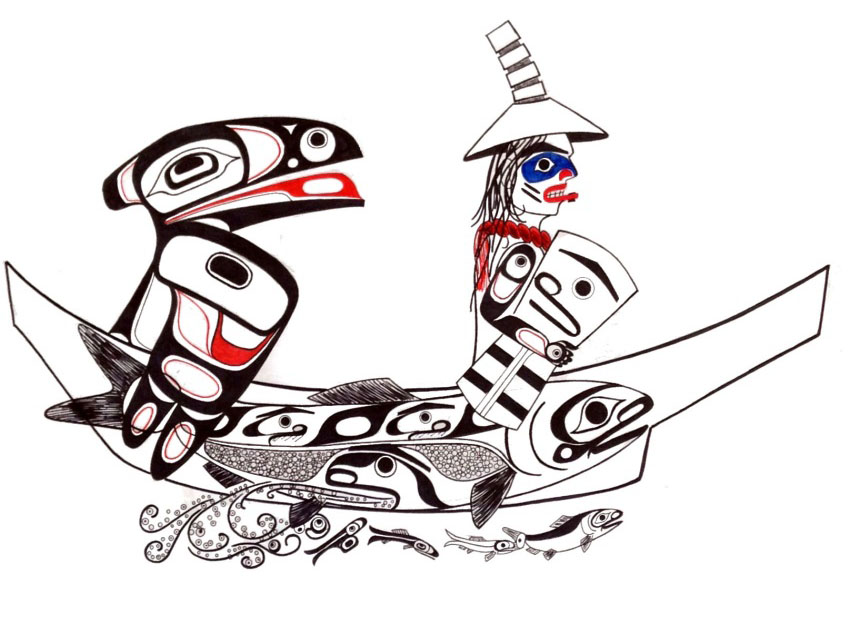
Herring crest by Heiltsuk Artist Nusi (Ian) Reid, depicting Raven and a Heiltsuk noblewoman sharing a canoe surrounded by spawning female herring.
A long-time source of livelihood, herring is of significant economic, social and cultural importance for the Heiltsuk. Fisheries conflicts between the Heiltsuk and local institutions date back far before the 2015 crisis, with a history of court cases, licensing negotiations, and litigation.
From 2008 to 2013, commercial fisheries were closed due to low herring numbers on the Central Coast. Despite recommendations from First Nations to let stocks recover by leaving the fisheries closed, commercial herring fisheries were re-opened, leading to protests by the Heiltsuk and other First Nations. The opening of a commercial sac-roe fishery in 2015 culminated in a stand-off on the water, where two Heiltsuk women took actions at the forefront to protect their rights to conserve herring.
The opening of a commercial sac-roe fishery in 2015 culminated in a stand-off on the water, where two Heiltsuk women took actions at the forefront to protect their rights to conserve herring.
Shortly after, Heiltsuk members delivered an eviction notice to the local federal fisheries agency office, leading to an occupation and lock-down of the office by the elected leadership. This ultimately led to further negotiations and a new herring management plan, developed collaboratively and adopted in 2016. A year later in 2017, the Heiltsuk Nation and the Province of British Columbia signed a framework agreement for reconciliation, further sharing the power of fisheries resource governance between the two parties.
The researchers found that in the 2015 herring conflict, Heiltsuk women drew from both their traditional and contemporary roles as mothers, teachers, community and domestic managers, and political leaders who were promoting intergenerational care by defending their children, culture, and future generations.
“Drawing on this identity around care for children and future generations – and looking at other examples with respect to fisheries and environmental issues more broadly – there were examples where women drew strength from this motherhood identity,” Harper explained. “In some ways, that depoliticized the role that women took in those settings and made them more effective at negotiating and being at the forefront of those struggles.”
“Drawing on this identity around care for children and future generations – and looking at other examples with respect to fisheries and environmental issues more broadly – there were examples where women drew strength from this motherhood identity,” Harper explained.
This is consistent with many other Indigenous cultures, where women often bear the roles of mothers and caregivers, and harness this positioning in their political and environmental activism. In Heiltsuk creation stories, women are portrayed as peacemakers responsible for intertribal alliances, characteristics that featured heavily in the leadership style of women in the 2015 conflict.
While the whole community was involved in the conflict, women stood at the forefront of the negotiations and demonstrations in Vancouver. They protested at government and industry offices, and used social media to promote cohesion and the flow of information. Their ability to coordinate, organize the community, and lead informally were gendered strengths that set the framework for system-level governance transformation through harnessing social networks and building momentum.
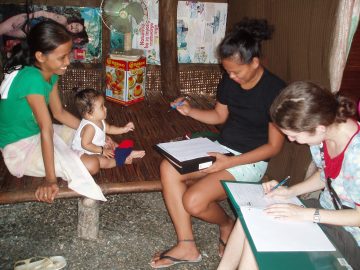
Interviews: community small scale fishing practices.
Photo: Danika Kleiber/Project Seahorse.
The second paper, Gender and marine protected areas: a case study of Danajon Bank, Philippines, was spearheaded by lead author and IOF PhD alumna Dr. Danika Kleiber, as well as Dr. Amanda Vincent, IOF Professor and founding Director of Project Seahorse, and Dr. Leila Harris of IRES UBC. The paper investigated gendered attitudes and participation in community-based management of no-take marine protected areas (MPAs) in Danajon Bank, the Philippines. Although the Philippines ranks highly on gender equality, strict gender roles are still evident in contexts like fisheries, making gender an important area of study.
No-take MPAs can present both advantages and drawbacks. Species recovery in MPAs can lead to increased biomass and a spill-over of fish from protected areas into fishing grounds, benefiting fishers. Conversely, their placement can also supplant fishers from fishing grounds.
“We found that women tend to glean – a method used to gather marine life in shallow waters or on exposed land – in the intertidal zone for shells and urchins, while men are more likely to fish from boats for fish or crabs. We wanted to know if MPAs had a different effect on women and men’s fisheries,” Dr. Kleiber explained. In addition to fishing itself, gender is also important in governance, because men and women’s participation in governance meetings can explain differences in management priorities and how fisheries resources are used.
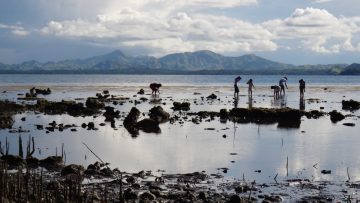
Photo: Danika Kleiber/Project Seahorse.
Through interviews with fishers, the researchers found that men were more likely than women to state that their community MPA improved their fishing, but men and women were equally supportive of having one. Seventy-one per cent of respondents – both genders equally – said they would recommend an MPA to other communities, with fish protection and spill-over cited as the most common reasons.
Few men or women mentioned being displaced by an MPA. However, in several communities, interviews with local officials made it clear that the “no-take” rules for gleaning had been changed. In some cases, gleaning was allowed at certain times of the year, and in other cases the MPA boundary had been moved to exclude the gleaning area. This reflected the subsistence and social value given to the gleaning fisheries.
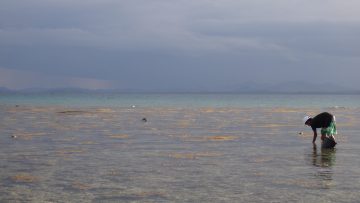
Photo: Danika Kleiber/Project Seahorse.
“Gleaning was often described as a what I started to think of as a ‘back-up’ fishery. People would say they gleaned when the weather was bad and they could not go fishing in a boat, or when they didn’t have money to buy food,” Dr. Kleiber said. “One leader explained that they moved the MPA out of the gleaning area because this is where people went to get food.”
Although equal numbers of men and women attended management meetings, women were less likely to actively participate in the management of MPAs. This suggested that the protected areas seemed to be managed and prioritized around men’s fisheries, and since women’s fisheries and management needs were secondary, their participation was also secondary. The researchers argued that gender and gender roles should be considered from the beginning of MPA development to include and represent a wider range of needs and interests within the community.
The papers Indigenous women respond to fisheries conflict and catalyze change in governance on Canada’s Pacific Coast and Gender and marine protected areas: a case study of Danajon Bank, Philippines were both published in the journal Maritime Studies.
By: Kristine Ho
Tags: Aboriginal fisheries, Amanda Vincent, Danika Kleiber, faculty, fisheries management, gender, Indigenous fisheries, IOF alumni, IOF students, Project Seahorse, Research, women
Project Seahorse and Guylian Belgian Chocolates celebrate 20 years of partnership
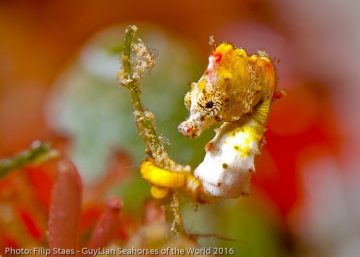
© Filip Staes, Guylian Seahorses of the World Photography Competition 2016
At a ceremony today in Lisbon, during the Belgian Royal State Visit to Portugal, and in presence of his Majesty King Filip of Belgium, Project Seahorse and Guylian Belgian Chocolates celebrated 20 years of partnership and success in marine conservation around the world.
Project Seahorse, an international ocean conservation group, is dedicated to securing a world where marine ecosystems are healthy and well-managed, using seahorses as flagship species to generate action. “Project Seahorse successes have made a real difference to marine species and habitats around the world, winning many awards in the process,” says Prof. Amanda Vincent, Director and co-founder of Project Seahorse and Professor at the University of British Columbia’s Institute for the Oceans and Fisheries in Canada.
Guylian is one of the top Belgian boxed chocolate brands and distinguishes itself by creating Belgian chocolates in the shape of seashells and seahorses. As a way of giving back to both its customers and to the environment, Guylian has been the major sustaining sponsor of Project Seahorse since 1999, and has donated over €1.750 million to support Project Seahorse’s international work. In addition to this financial contribution, Guylian helps to raise awareness around the world through targeted outreach activities, such as Seahorses of the World Photography & Video Competitions, exhibitions and school education programs. Guylian uses conservation messages on millions of boxes of its chocolates sold worldwide every year, as well as on its website and social media channels.
“We are thrilled to have such a wonderful partner in marine conservation. Guylian’s wholehearted support for the ocean provides a model for other business to emulate. And their chocolates are also truly delicious,” said Prof. Vincent.
As well as partnering with Project Seahorse in its mission to save seahorses and the ocean, Guylian is also making progress in its use of sustainable ingredients. Guylian aims to become the leading palm oil-free Belgian chocolates brand by 2019 and to use 100% sustainable cocoa in all of its recipes by 2025. Guylian is also replacing soy lecithin in its recipes with sunflower lecithin to offset allergy issues. “Our R&D and Marketing teams have identified the key trends in the premium chocolate industry, and are working hard to offer consumers more premium, more indulgent, more sustainable, and healthier chocolate products,” said Mieke Callebaut, Managing Director of Chocolaterie Guylian.


Tags: Amanda Vincent, conservation, faculty, marine ecosystems, Project Seahorse, seahorses
2018 – Adams River Sockeye Trip
A group of approximately 30 students, along with some faculty and staff, spent the September 29-30, 2018 weekend in Tsútswecw Provincial Park to witness the famous Adams River sockeye run and enjoy the Salute to the Sockeye Festival.
Every four years this river sees a large run of sockeye salmon and this group was lucky enough to witness this monumental event.
Dr. Carl Walters joined the group to talk about the history and significance of the run.
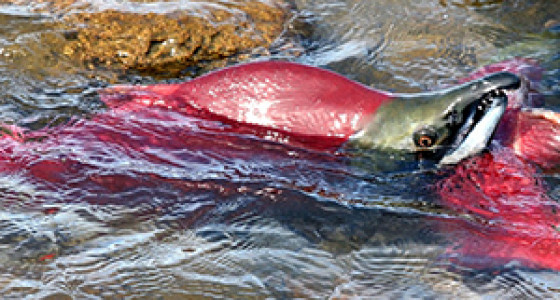
2018 – Adams River Sockeye Trip
Every four years this river sees a large run of sockeye salmon and a group of IOF participants were lucky enough to witness this event
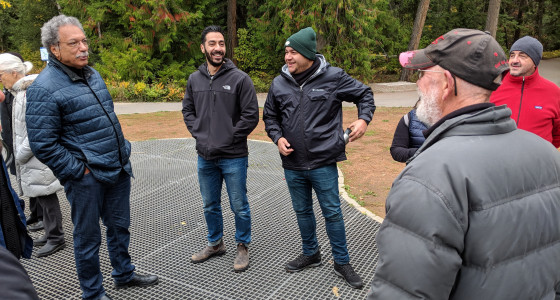
Preparing to watch the run
photo © Ravi Maharaj
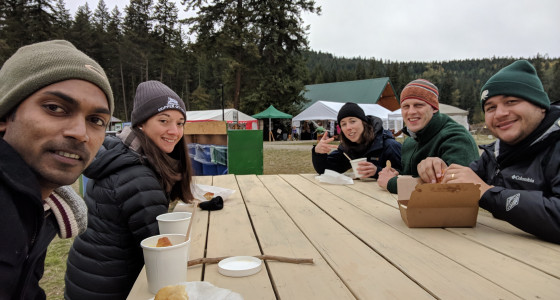
Enjoying Adams River trip
photo © Ravi Maharaj
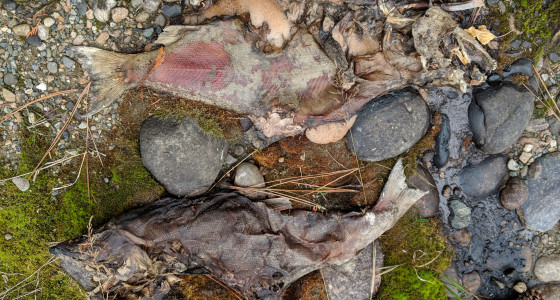
Some salmon didn’t make it
photo © Ravi Maharaj
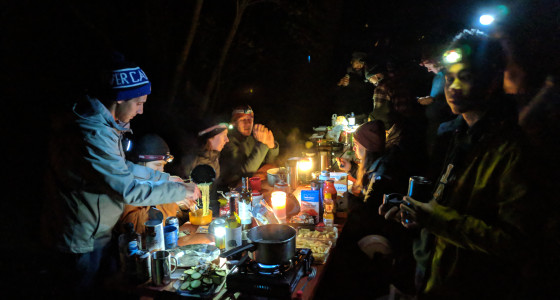
Camping out
photo © Ravi Maharaj
Tags: AdamsRiver, salmon
Preparing to watch the run
IOF community members prepare to watch the run (photo © Ravi Maharaj)
Dr. Carl Walters discusses salmon run
Dr. Carl Walters discusses the importance of this salmon run (photo © Ravi Maharaj)
Enjoying Adams River trip
IOF students enjoying Adams River trip (photo © Ravi Maharaj)
Some salmon didn’t make it
Some salmon didn’t make it (photo © Ravi Maharaj)