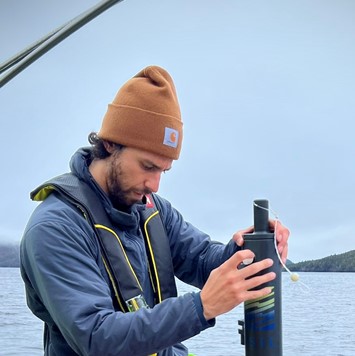
Student Profile: Alex (Alejandro) Schmill
Alejandro (Alex) Schmill is a first-year MSc student, co-supervised by Dr. William Cheung and Dr. Margot Hessing-Lewis of the Hakai Institute.
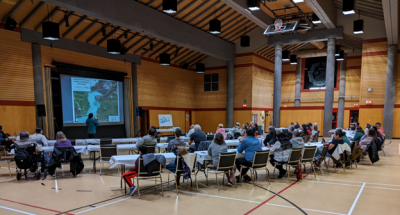
Partnering with Indigenous communities to improve research outcomes
Trust was essential in encouraging the community to discuss their relationships with spaces in Atl’ka7tsem and to use research findings during decision-making.
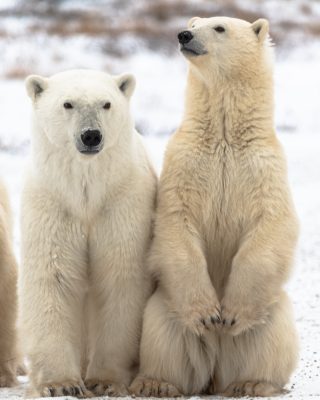
Increasing temperatures and salinity result in decreased ecosystem diversity, UBC study finds.
Ecosystems can be impacted and changed by a lot of different things, including human activities, stormwater runoff, contaminants, invasive species, and climate change
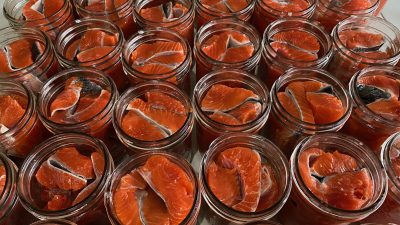
Indigenous data sovereignty and conservation in British Columbia
A collaborative study examined the concept of Indigenous data sovereignty in the context of salmon-bearing ecosystems in BC. The authors argue that successful conservation in the face of cumulative effects and climate change will require scientists to respect and incorporate Indigenous data sovereignty.
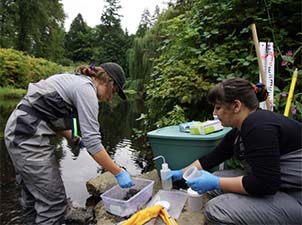
How to conduct scientific research with Indigenous Peoples and Lands in a good way
In a comment published in Nature Ecology & Evolution, authors outline four essential elements for conducting ecological research with and for Indigenous Peoples and Lands in a good way. In this Q&A, they discuss these elements and their importance for all scientific research.
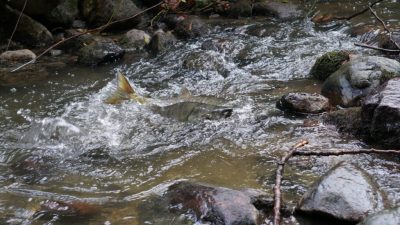
Salmon bones confirm sustainable chum fishery for 2,500 years under Tsleil-Waututh Nation
New research confirms that Tsleil-Waututh Nation has consistently and sustainably fished for chum salmon for 1,200 years longer than the archaeological record had previously demonstrated
Dr. Andrea Reid appointed Tier 2 Canada Research Chair with additional awards for research on Indigenous fisheries conversation
Dr. Andrea Reid of the Nisg̱a’a Nation is one of UBC’s newest Tier 2 Canada Research Chairs (CRC). She also receives a grant through the Canadian Foundation for Innovation (CFI) John R. Evans Leaders Fund (JELF).
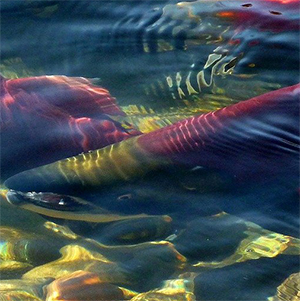
The DNA of salmon heritage
Two UBC researchers are exploring the problem of dwindling salmon runs from opposite ends of the knowledge continuum—cutting edge genomics, and empirical evidence gathered over millennia by the Indigenous Peoples of the coast.
BC is facing a steep decline in sockeye salmon
The sockeye population has been in decline for a century – since 1913, returns in the Skeena River have dropped by 75% – and while there are many factors at play, says Dr. William Cheung, “climate change is definitely one of them.”
This scientist is taking an international jellyfish tour to explore mucus and medusae
UBC doctoral student Jessica Schaub is about to set off on an international tour of jellyfish