(photo © Ravi Maharaj)
Dr. Andrew Trites awarded the UBC Faculty of Science Alumni Builder Award
Congratulations to Dr. Andrew Trites, MSc’85, PhD’91, professor in the Institute for the Oceans and Fisheries, who has been awarded the UBC Faculty of Science Alumni Builder Award for 2018.
The Alumni Builder Award recognizes alumni who have significantly contributed to the University and enriched the lives of others, and in doing so, have supported alumni UBC’s mission of realizing the promise of a global community with shared ambition of a better world and an exceptional UBC.
Dr. Trites was presented with this award due to his leadership, passion, advocacy, and long-standing dedication to the multidisciplinary facets of environmental education, conservation and ocean sciences.
The presentation took place on September 27th 2018 in Victoria BC.

Dr. Andrew Trites receives UBC Faculty of Science Alumni Builder Award
(l to r): Allan Berezny (Assistant Dean, Faculty of Science Development and Alumni Engagement), Andrew Trites, Meigan Aronson (Dean, UBC Faculty of Science)
Tags: Andrew Trites, awards, faculty, IOF alumni, Marine Mammal Research Unit
Ahead of the G7 Summit, UBC researchers played key role in shaping marine policies
Ahead of the G7 Summit, UBC researchers applied their expertise to tackle key ocean-based challenges and help shape marine policies.
Tim Cashion and Vanessa Fladmark, two researchers from UBC’s Institute for the Oceans and Fisheries, participated in the Youth, Women and Oceans roundtable from September 17 to 18 in Halifax, Nova Scotia. The forum was organized by Fisheries and Oceans Canada in partnership with the SIDS Youth AIMS Hub – Seychelles and the Youth Climate Lab.
Two key issues were addressed at the meeting: illegal, unreported and unregulated (IUU) fishing, and marine pollution, with a specific focus on abandoned, lost or otherwise discarded fishing gear (ALDFG). The participants, among them Cashion and Fladmark, shared policy recommendations with Jonathan Wilkinson, Canada’s Minister of Fisheries, Oceans and the Canadian Coast Guard, for him and his team to present them at the G7 ministerial meeting, which took place shortly after from September 19 to 21.
“The purpose of the conference was to get a greater understanding of a youth or women’s perspective on these two issues ahead of the G7 meeting,” explained Cashion, an IOF PhD student and former research assistant at the Sea Around Us, who presented directly to the Minister on IUU fishing.
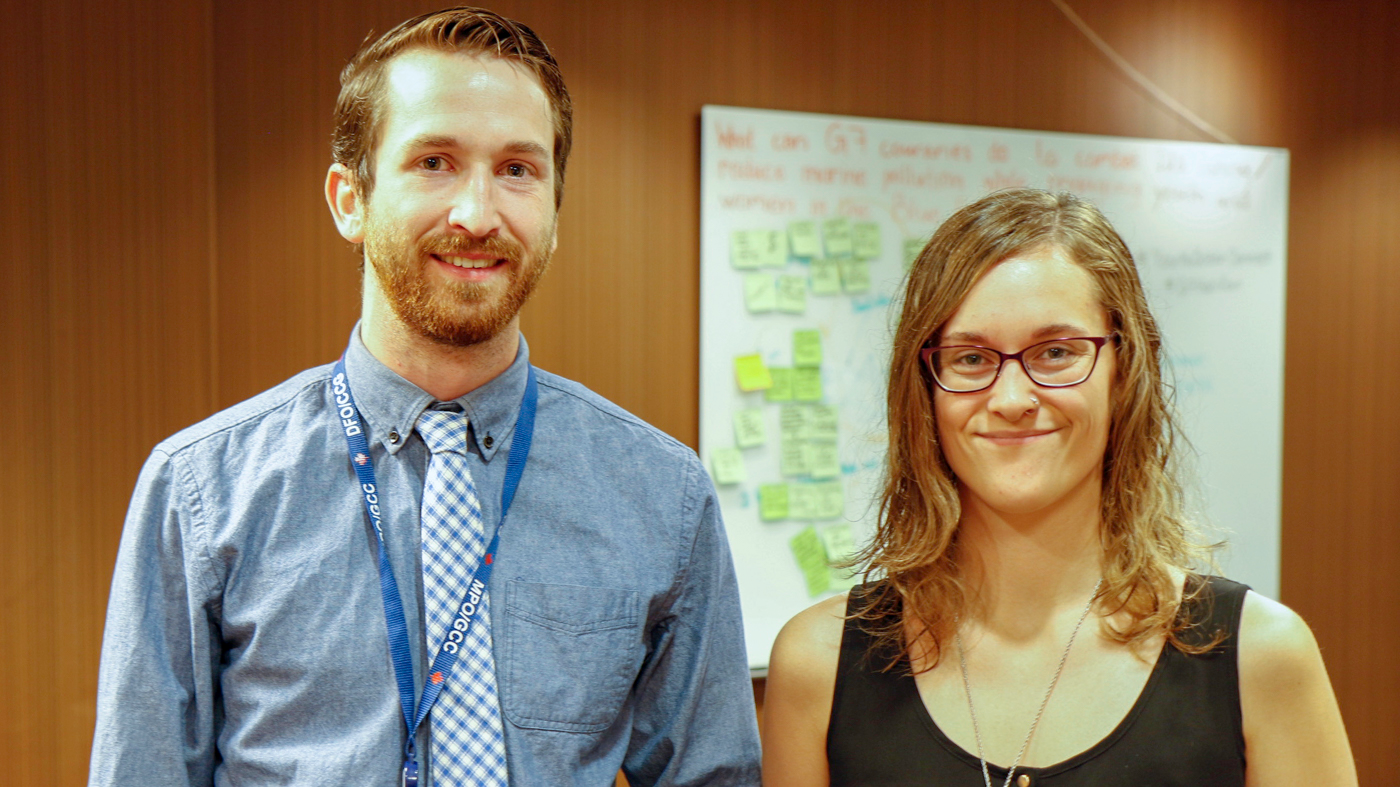
Tim Cashion and Vanessa Fladmark. Photo: Robert Wiebe
IUU fishing not only threatens the environment, but is also closely linked to illegal activities like drug trafficking and modern slavery. Since seafood supply chain processes often lack transparency, it can be unclear how seafood travels from the ocean to the table and whether IUU fishing – along with human rights abuses – forms part of the process. For instance, Canada is not required to label where its seafood comes from or how it is caught, allowing illegal activities to lurk in seafood catches.
“We know that it’s not just a problem at the final purchase, but that information is lost or mislabelled intentionally throughout the supply chain,” said Cashion. “And so our recommendation is really to try and give more credence to that.”
To combat this, the attendees recommended that G7 countries implement more controls throughout supply chain processes. This would require fisheries and seafood companies to declare a fish’s common name, scientific name, where the fish was caught and the fishing method used, allowing consumers and companies to make informed purchasing decisions.
This would require fisheries and seafood companies to declare a fish’s common name, scientific name, where the fish was caught and the fishing method used, allowing consumers and companies to make informed purchasing decisions.
The attendees also recommended the creation of an “IUU Blue Action Challenge” that would engage youth with the issue through mentorship and apprenticeship programs, and increase research opportunities.
The second issue discussed, ALDFG, or ghost gear, poses an immense threat to marine life. Each year, approximately 640,000 tonnes of fishing gear are lost in the oceans, accounting for over 50 per cent of macroplastics by weight. Ghost fishing – when ghost gear entangles with marine life – is extremely harmful, as was demonstrated recently when the bodies of five seals washed up on the shore of British Columbia’s Fraser River.
In addition to increasing funding to study the impact and reduction of ghost gear, the attendees recommended that G7 countries enact laws and regulations to incentivize gear retrieval and join the Global Ghost Gear Initiative, an international ghost gear reduction movement.
“The gear obviously has a value, and if fishers lose it, they have to replace it, so they already have an incentive, but it’s a matter of whether the incentive is strong enough,” said Cashion. Finding a market for selling unusable fishing gear would also encourage fishers not to throw away unserviceable gear, he added.
Considering recent movements to ban consumer plastics like straws, Cashion said he expects such efforts to support their recommendations on ghost gear.
“It will be interesting to see how that will play out, because it has the momentum of this other marine anti-plastic movement,” he said. “We’re going to see some good progress likely on ghost gear and other marine plastics.”
By: Kristine Ho
Tags: fishing gear, Illegal fishing, IOF students, plastic, pollution, Research
Small in size, but mighty in impact
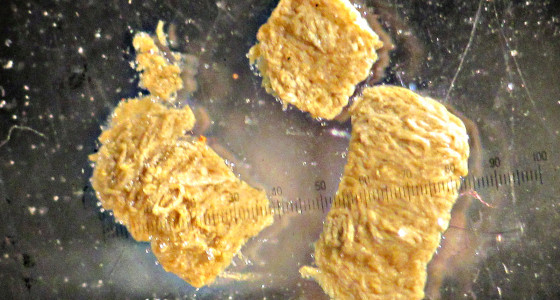
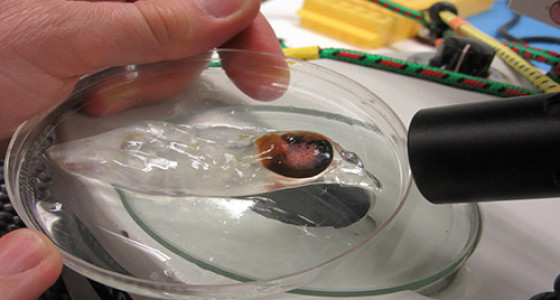
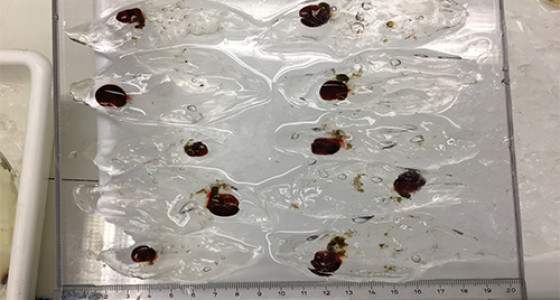
Salps, barrel-shaped marine primitive vertebrate animals found alone or in string-like colonies, and krill, small crustaceans that are the main food source for many ocean creatures, are fascinating organisms that have a huge impact on the planet’s ability to manage climate change.
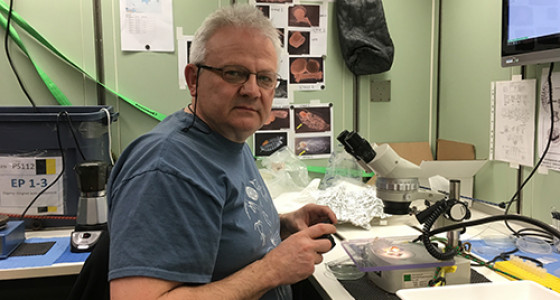
In late spring of 2018, a German led research expedition travelled to the Southern Ocean near Antarctica, where salps and krill are most abundant (though they are found throughout the world’s oceans), to study these creatures. Over 50 scientists from around the globe boarded the German icebreaker RV Polarstern to participate in this unique voyage, including UBC Institute for the Oceans and Fisheries Professor and Director, Dr. Evgeny Pakhomov.
Dr. Pakhomov’s research on this voyage was concentrated mainly on salp ecophysiology, to understand how much they eat and how important they are in the downward carbon flux. In addition, a special emphasis was given to the basic salp biology. Along with the other scientists, he helped gather samples from various locations and depths around the Antarctic Peninsula, and documented salp numbers, weight, sex, stage of development, and stomach content. Scientists also collected samples to perform DNA, carbon nitrogen, and stable isotope analyses of salps and their stomachs. Much of this was concentrated on the composition of salp fecal pellets, including their size, composition, and drop rate, which is indicative of their effect on carbon flux.
“Salps are like little ‘vacuum cleaners’ that come to the surface, generally at night, to feed, digest and produce fecal pellets. These pellets then drop through the water, typically at a rate of about 400-1,000 metres per day. They break apart, some being consumed by various zooplankton, including krill, or defragmented into smaller pieces that fall at slower rates than the larger pellets,” said Pakhomov. “With my colleagues, we discovered the rate of fecal pellet degradation per day, and were able to discern how efficient salps are at removing organic carbon.”
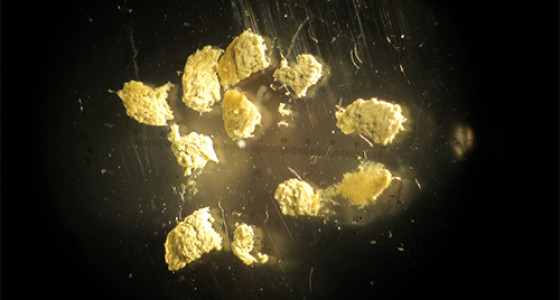
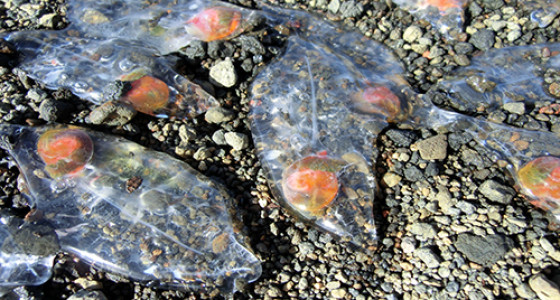
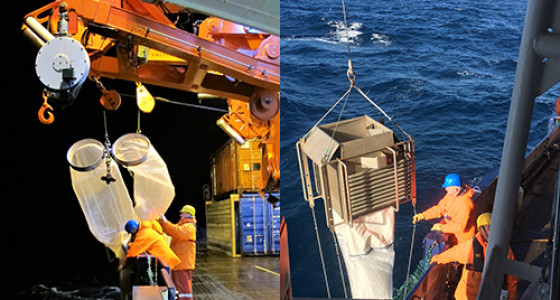
Salps are known to be important for their abilities to increase downward carbon flux. However, their neighbour, the krill, are just as important. The main prey food source for larger ocean predators – whales, seals, penguins, squid, and fish – krill are an integral element in the food web. Both creatures compete for the same phytoplankton and small zooplankton food source, and researchers were also focused on this tension. “In earlier research we undertook in 2002 and 2004, we found that salps had also shifted their distribution further south and we were catching them closer to the Antarctic Continent in areas that were traditionally dominated by krill. We need to know more about how this movement would affect the krill. Would their populations start to decrease? Or even disappear? If that happened how it would affect top predators eating krill?” Pakhomov dismissed the idea that predators could simply switch their diet. “Salps are not good for top predators; it is like eating jellyfish – mostly water. Thus, any decreases in krill population could cause a negative ripple effect up the food chain.” It is even more critical because whales are still recovering from overexploitation in 1950s and 1960s and any krill declines could jeopardize this.
“Furthermore, we need to know what will happen if, as the Southern Ocean warms due to climate change, salps continue to move south into krill areas. What will happen not just to the krill population, but to the whole pelagic ecosystem and overall biogeochemical cycling? And how will the role of the Southern Ocean change in the anthropogenic carbon dioxide absorption?”
Pakhomov is currently reviewing his datasets and preparing to publish the research that was generated during the expedition. “We are gathering for a workshop in November at the Alfred Wegener Institute for Polar Research in Bremerhaven, Germany, to go over the findings and draft the results, some of which are quite unique.”
One such finding is that while salps had been considered to be sequential hermaphrodites; changing to male after completing a female cycle, Pakhomov says they were able to document that salps may be true hermaphrodites because “some were already functional males before they had completed their female cycle.”
For those more interested in the climate change implications, Pakhomov indicated that they did find areas in the Southern Ocean where salps and krill were actually co-existing – still distinctly separated by depth or by small horizontal distances (i.e. one on shelf break and the other on shelf slope), but able to interact. “The implications of that require more research, but could be quite paradigm changing,” Pakhomov stated.
Tags:
Hakai Coastal Initiative’s Marine Food Webs Working Group
The Hakai Coastal Initiative’s Marine Food Webs Working Group is a collaborative research unit that aims to understand how marine food webs operate, with a particular focus on British Columbia’s coastal ocean. Started in August 2018, the Group is projected to run for several years.
This initiative is spearheaded by Brian Hunt from the University of British Columbia’s Institute for the Oceans and Fisheries, Colleen Kellogg from the Hakai Institute, and Vera Tai from Western University in Ontario. UBC Hakai Coastal Initiative post-doctoral researchers from Brian Hunt’s lab working in the Group are Caterina Giner, who specializes in protozoa and is aiming to establish the seasonal and interannual drivers of unicellular autotrophic or heterotrophic organism composition, and Jacqueline Maud, who is establishing what zooplankton are feeding on within the protozoan community. Rosie Savage from the University of Western Ontario is also involved, studying the relationship between parasites and the mortality of zooplankton in particular.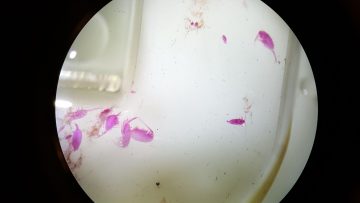
The Group has a strong focus on understanding connections between the planktonic organisms that form the base of the food web, including the connections between viruses, bacteria, microbial phytoplankton, protozoa, zooplankton, and fish. Using an integrated approach, the Group is focusing on understanding how these components are connected, how the environment determines these connections, and the impact of these connections on ecosystem health, productivity and ability to provide support for factors like salmon or herring growth. Research will be focussed on high-resolution samples collected in the Strait of Georgia by the Hakai Institute’s Quadra Island ocean observatory, and supported by the station’s state-of-the-art research facilities.
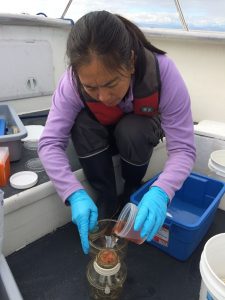 Globally, the connections between the lower trophic levels of marine food webs have not been clearly established, yet these connections are crucial: they determine the response of a system to change, particularly to climate change, and underpin marine food webs and the services that they provide. Understanding the connections between lower trophic levels may be the key to understanding why marine systems react in certain ways when pushed by specific changes, including warming, nutrient provisioning, and acidification. This in turn helps researchers understand the responses and state of higher trophic levels. Declines in salmon populations along the coast, for example, may be linked to the health of lower trophic levels. The information gained from this research can then be applied to ecosystem models for hindcasting or forecasting predictions of marine conditions in critical habitats such as the Strait of Georgia.
The Hakai Coastal Initiative’s Marine Food Webs Working Group will be using a range of research methods. These include cutting-edge molecular approaches to identify the composition of communities, and their response to the environment, and biogeochemical approaches that can trace food web linkages and inform researchers about the nutritional quality of food sources within ecosystems, such as the quality of zooplankton as prey for fish.
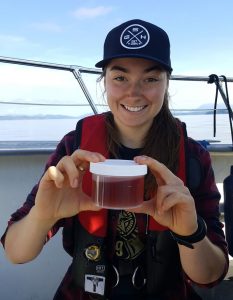 This research initiative is poised to significantly advance our understanding of how marine food webs operate, and how they will respond to changing ocean conditions.
By: Kristine Ho
Tags: Brian Hunt, British Columbia, coastline, faculty, fieldwork, food webs, Hakai Coastal Initiative, Hakai Institute, IOF postdoctoral fellows, Pelagic Ecosystems Lab, plankton, Research
Marine and Freshwater Miscellanea – FCRR 26(2)
This newly published Fisheries Centre Research Report (FCRR) represents, as IOF Director and Professor Evgeny Pakhomov puts it, “a vinegret* of contributions covering a variety of fish and fishery related topics.”
It presents older, but possibly still interesting, papers that remained unavailable, complemented by more recent pieces not suitable for peer-reviewed journals, but including data or views that some readers may find useful. The majority of chapters in this report are authored or coauthored by Daniel Pauly, and the only excuse that he thinks he has for this is that he is 72 years old and that he would not like to find, when he retires, too many manuscripts that he would have liked to share earlier.
It covers a wide range of topics, from the future of marine fisheries to the genetics of the Peruvian anchovy, and from the biomass of deep-sea benthos to fish respiration everywhere. Daniel’s views on the latter are different from those of mainstream physiologists, a contribution is presented on a topic that is rarely if ever, documented in details, i.e., the improvements to a paper that can result from thoughtful peer review.
Some of these articles may not have ‘made the cut’ for peer-reviewed literature, but do represent valuable pieces of research and an invaluable reference.
* Vinegret or Russian vinaigrette is a salad that includes diced cooked vegetables (beetroots, potatoes, carrots, peas), chopped onions, as well as sauerkraut and pickles, all sprinkled with vegetable oil.
Tags: Daniel Pauly, Evgeny Pakhomov, faculty, FCRR, freshwater, Publications