Appetite for luxurious shark fin soup drives massive shark populations decline
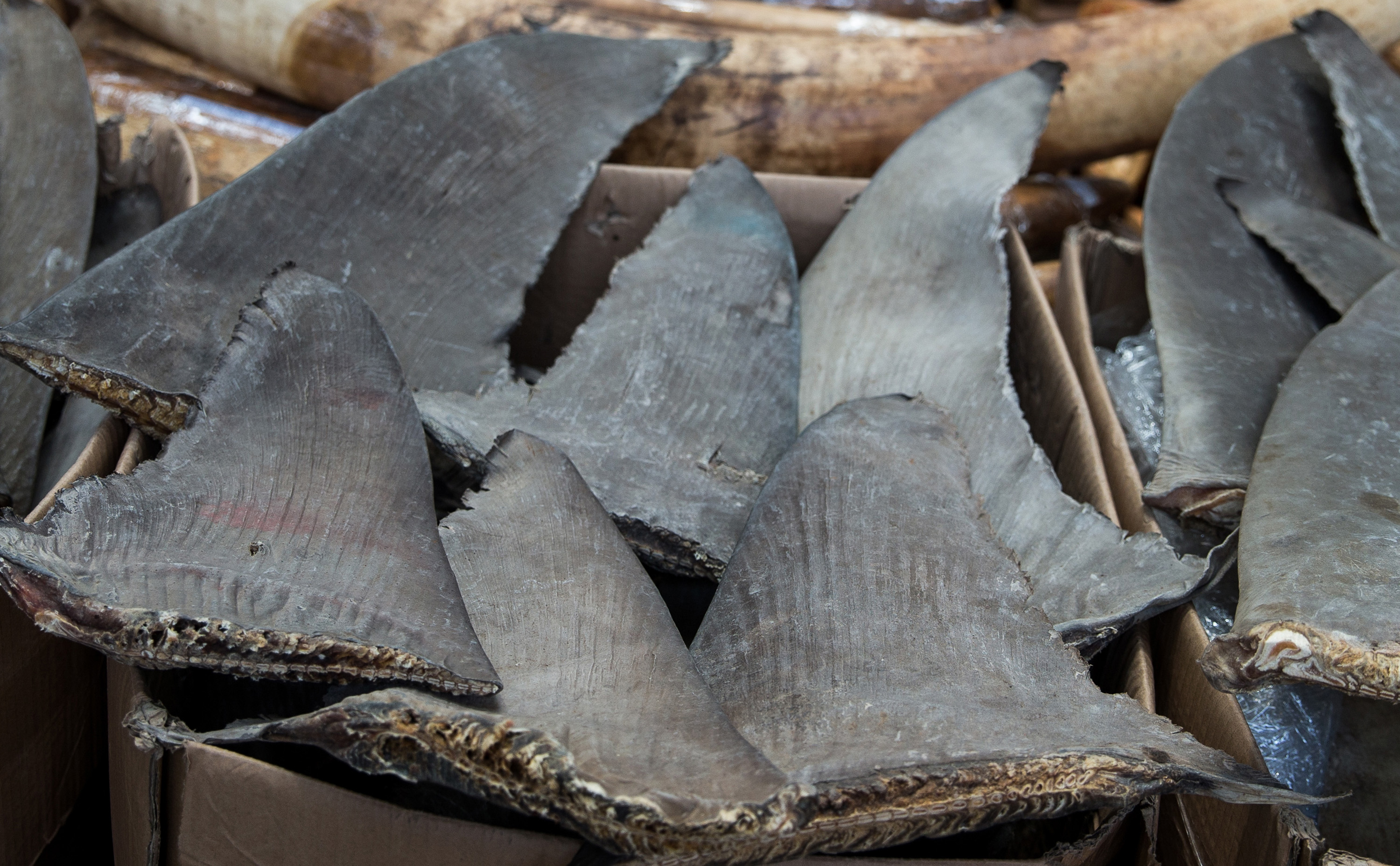
Seized dried shark fins displayed during a Hong Kong Customs and Excise Department presentation at Kwai Chung Customhouse in Hong Kong, China, 05 September 2018. Copyright notice: JEROME FAVRE
Consumers need to stop demanding shark fin soup and other products in the absence of robust laws and sustainable practices regulating shark overfishing, research co-authored by the Sea Around Us initiative at UBC has found.
The study, conducted by researchers from the University of Hong Kong, the Sea Around Us initiative at the University of British Columbia and WildAid HongKong, shows that wealthy consumers’ growing appetite for luxury items like shark fin soup has led to massive declines in populations of some shark species in recent years.
“Sea Around Us data show that shark catches amount to approximately 1.4 million tonnes per year, more than double what they were six decades ago,” said Daniel Pauly, study co-author and principal investigator with the Sea Around Us initiative at UBC’s Institute for the Oceans and Fisheries. “This overexploitation has led to almost 60 per cent of shark species being threatened, the highest proportion among all vertebrate groups.”
“Extinction must not make the decision for us,” co-author Daniel Pauly says.
The study argues that the problem lies with both legal and illegal fisheries, and how challenging it is to enforce sustainable fishing practices in the high seas. The overwhelming bulk of shark fins traded globally originate from the unmanaged fisheries of less economically developed countries like Indonesia, where annual shark catches exceed 100,000 tonnes.
India, Spain and Taiwan also play an important role in the netting of sharks and subsequent sale of their fins in international markets, particularly in Hong Kong from where they are later re-exported to mainland China.
“Hong Kong is the entry point for about half of all globally traded dried shark fins. They are the main ingredient of shark fin soup, which is a prestigious dish to ethnic Chinese both in China and abroad, eaten in banquets, Lunar New Year celebrations, or high-end restaurants,” said Yvonne Sadovy, lead author of the study and professor at the School of Biological Sciences at the University of Hong Kong. “The exclusiveness linked to the product combined with its limited natural supply increases its price and makes it an attractive trading good for business networks, particularly for those with shady or illegal practices.”
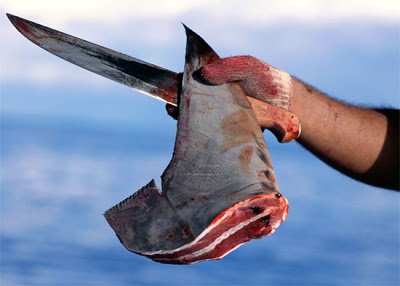 The study estimates that only 4,300 tonnes of dried fins are produced sustainably every year, while a further 25,000 tones originate from largely unsustainable and illegal fisheries. Telling the difference between the two is extremely difficult as the mixing of catches is a common practice that hampers traceability efforts.
“Shark finning and the mixing of catches tend to take place in the open seas or in remote ports, where there is little to no oversight. Moreover, authorities show little interest in controlling illegal wildlife trade or if they do, their enforcement capabilities are very limited,” said Pauly.
Waiting for multilateral organizations to develop and enforce rules regarding shark finning and regulate fin trade to protect the species is not an option because time is not a luxury many sharks have.
“Extinction must not make the decision for us. Consumers have to act fast and decide what is acceptable and what is not when it comes to luxury, vulnerable, uncontrolled species. The appetite for shark fin soup is growing in places like Vietnam and Macau but slowly declining in Hong Kong and mainland China, where young people are starting to see it as a cultural practice that is worth abandoning,” Pauly said.
The paper “Out of control means off the menu: The case for ceasing consumption of luxury products from highly vulnerable species when international trade cannot be adequately controlled; shark fin as a case study” was published in Marine Policy. DOI: https://doi.org/10.1016/j.marpol.2018.08.012
Tags: conservation, Daniel Pauly, extinction, faculty, Research, Sea Around Us, sharks
William Cheung named member of the College of New Scholars, Artists and Scientists

William Cheung
William Cheung has been named a Member of the Royal Society of Canada’s College of New Scholars, Artists and Scientists.
The College comprises top mid-career leaders in Canada and provides the RSC with a multigenerational capacity to help Canada and the world address major challenges and seize new opportunities including those identified in emerging fields.
Dr. Cheung is an Associate Professor in the Institute for the Oceans and Fisheries and has contributed much to the science of climate change; identifying effective solutions to address its impacts on ocean biodiversity and fisheries, and predicting the sustainability of future marine, fisheries and coastal systems. Internationally renowned, Dr. Cheung is highly effective in helping local and international communities understand how their actions are affecting the oceans, and informing policy and practice changes to ensure the sustainability of living marine resources.
Congratulations, William!
More information: https://research.ubc.ca/fourteen-ubc-faculty-members-elected-royal-society-canada
Tags: awards, College of New Scholars, Scientists and Artists (RSC), faculty, Royal Society of Canada, Scientists and Artists (RSC), William Cheung
Climate change fuels accumulation of pollutants in Chinook salmon, killer whales
University of British Columbia researchers studying the marine food web of the Northeast Pacific Ocean have found that the exposure and accumulation of chemical pollutants, such as polychlorinated biphenyls (PCBs) and organic mercury, will be exacerbated under climate change.
The study, published recently in Scientific Reports, also found that this would increase the accumulation and risk of exposure to these pollutants and their toxic health effects, on both mid-level predators like Chinook salmon as well as top predators like resident killer whales.
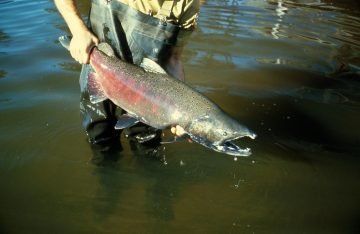 “This has serious implications,” said lead author Juan José Alava, a researcher at the UBC Institute for the Oceans and Fisheries’ OceanCanada Partnership and Nippon Foundation-UBC Nereus Program. “All of the southern resident killer whales that exist along the Pacific Northeast Coast eat Chinook salmon, which is their primary diet. These iconic whales are already facing many anthropogenic impacts—ship traffic, underwater noise, marine pollution—and they will be further impacted by increased pollutant bioaccumulation driven by climate change.”
Researchers focused the study on the Northeast Pacific marine ecosystems such as the Strait of Georgia, offshore waters of Haida Gwaii, the west coast of Vancouver Island and Puget Sound. They found that, for killer whales, concentrations of organic mercury are projected to increase by eight per cent and PCBs by three per cent in a “business as usual” or high CO2 emission scenario. However, in a low emission scenario where CO2 levels are strongly reduced, concentrations of organic mercury are projected to increase by one per cent and PCBs by less than one per cent. Worse, for Chinook salmon, the levels of pollutants are projected to be almost 10 per cent higher for both organic mercury and PCBs than levels for killer whales.
For killer whales, concentrations of organic mercury are projected to increase by 8% and PCBs by 3& in high CO2 emission scenario. For Chinook salmon, the levels of pollutants are projected to be almost 10% higher.
Alava noted that in recent years the Pacific Coast has seen a decline in the Chinook salmon population, likely due to the impact of ocean warming. Now this species of salmon will also likely be impacted by increased pollutants in their food web, magnified under climate change, the study has found.
“Our marine ecosystems are threatened by multiple global and local stressors, including climate change and pollution, from human activities acting simultaneously and interactively,” said co-author William Cheung, associate professor in the Institute for the Oceans and Fisheries, director of science at the Nippon Foundation-UBC Nereus Program, and a principal investigator of the OceanCanada Partnership at UBC. “Our study suggests that reducing pollution have the co-benefits of lower the threats of climate change to vulnerable animals such as salmon and killer whales.”
“This study underscores the urgent need for contaminant management and control and potential pollution mitigation policies including, limiting and preventing mercury and greenhouse gas emissions from human activities and fossil fuel and coal burning. This is of paramount importance as Canada has yet to accomplish the mitigation and reduction of CO2 levels committed at the Paris Agreement,” said Alava.
Funding for this study was provided by the Mitacs-SSHRC joint initiative, OceanCanada Partnership and Ocean Pollution Research Program, Coastal Ocean Research Institute (Ocean Wise/Vancouver Aquarium Marine Science Centre), as well as the Nippon Foundation-UBC Nereus Program.
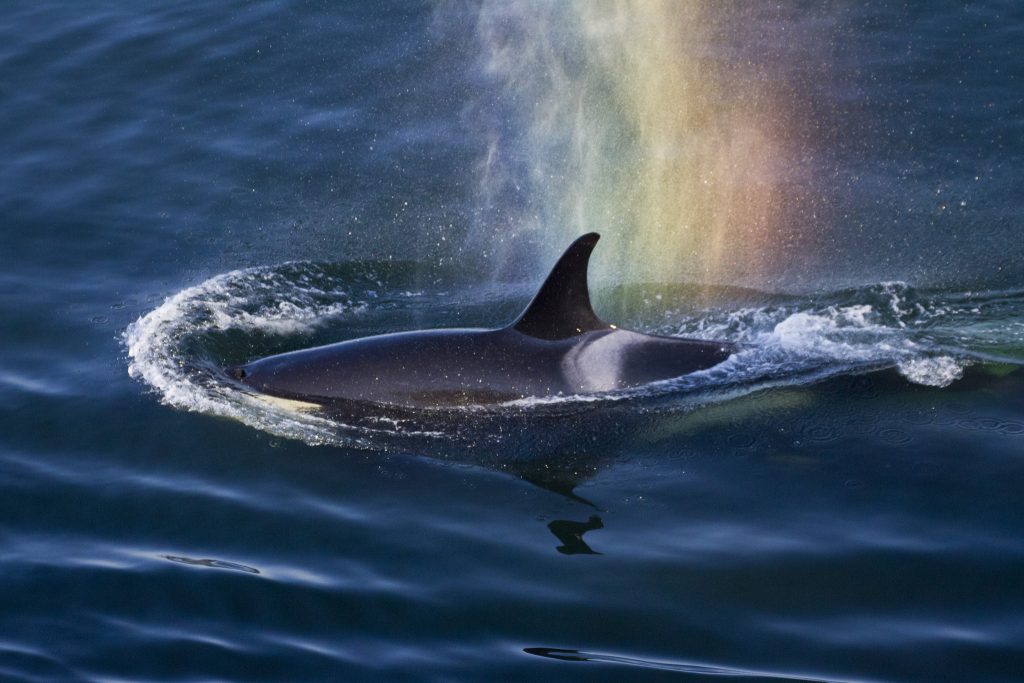
J16 making rainbows while surfacing, near Saturna Island’s East Point. Credit: Miles Ritter/Flickr
Tags: British Columbia, climate change, contaminants, faculty, IOF Research Associates, Juan Jose Alava, killer whales, Nereus Program, OceanCanada, pollution, Research, salmon, whales, William Cheung
Effective fisheries management can reduce extinction risk of marine fish stocks from climate change
Numerous studies have highlighted that climate change impacts will put vulnerable marine species at risk of local and even global extinction; however, local actions through effective fisheries management can reduce the probability of those species’ extinction risk by as much as 63 per cent, says a new UBC study.
Researchers looked at 825 exploited marine fish species across the global ocean, and analyzed their extinction risks due to climate change and fishing impacts. They calculated a conservation risk index for these species based on the ocean changes that they are, and will be, exposed to, their biological sensitivity to climate change, and potential ability to adapt. Their results showed that 499 of the assessed species are projected to experience very high risk from both overfishing and climate change under a ‘business‐as‐usual’ scenario, by 2050. They found that this risk level is equivalent to having at least one fifth of these species listed as vulnerable or endangered under the International Union for Conservation of Nature (IUCN) Red List of Endangered Species.
“We can save hundreds of fish stocks from becoming endangered species with sustainable fisheries and low greenhouse gas emissions.”
“Effective fisheries management plans, coupled with actions to limit greenhouse gas emissions, both separately, but especially in tandem, would have an immediate effect on the number of marine species that face extinction,” said William Cheung, lead author and Associate Professor in the Institute for the Oceans and Fisheries at the University of British Columbia. “We can save hundreds of fish stocks from becoming endangered species with sustainable fisheries and low greenhouse gas emissions.”
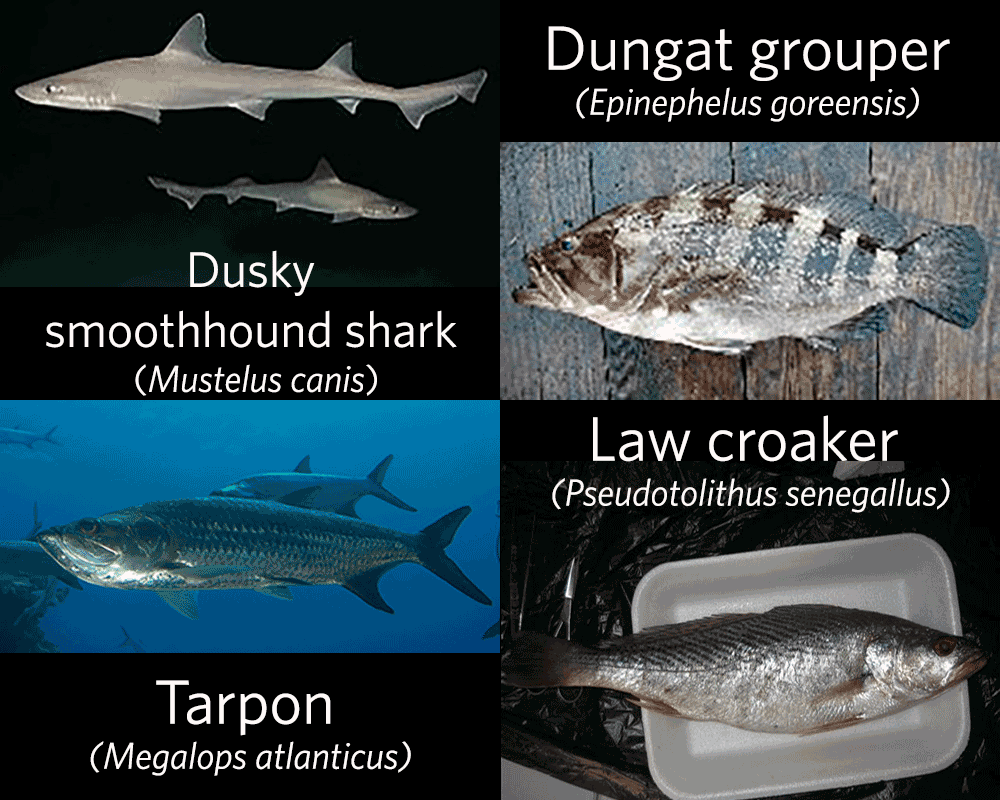 Sharks and rays have the highest extinction risk under ‘business as usual’ fishing and climate change scenarios. The Dusky smoothhound shark (Mustelus canis) is expected to be the hardest hit, with other species at high risk including Dungat grouper (Epinephelus goreensis), Tarpon (Megalops atlanticus), and Law croaker (Pseudotolithus senegallus). Many of these species are already considered endangered for non-climatic reasons, such as overfishing. This study indicated that the estimated combination of climate and fishing risks means that they are even more likely to become extinct.
The areas with more at‐risk species due to climate change are in the tropical and subtropical oceans, while those species at risk due to fishing are distributed more broadly, with higher concentration in the North Atlantic and South Pacific Ocean.
“Our study showed the need to support adaptation to climate change, while insuring effective fisheries management in these regions,” said Gabriel Reygondeau, a postdoctoral fellow at UBC’s Institute for the Oceans and Fisheries and co-author on the paper. “Some actions are already underway; for example, nine nations and the European Union agreed to prohibit commercial fishing in the central Arctic Ocean for at least 16 years starting in 2017. Similar proactive planning for the potential interactions between climate change and fishing is needed.”
Tags: climate change, extinction, faculty, fisheries management, Gabriel Reygondeau, IOF postdoctoral fellows, Nereus Program, Research, sustainability, William Cheung