Better protection needed for Scott Islands marine National Wildlife Area, scientists urge
Fifty-nine scientists from around the world are calling for better protection of British Columbia’s Scott Islands marine National Wildlife Area. The proposed regulations for Canada’s newest marine protected area were released for public review and comment on December 31, 2016, however, the proposed regulations failed to restrict or regulate damaging activities like bottom trawling, long-line and gill-net fisheries and shipping from the area. On January 30, 2017, the scientists sent a letter to the Hon. Catherine McKenna, Minister of Environment and Climate Change Canada calling for the prohibition of those commercial fishing activities, until it can be shown that they are not harmful to the seabirds or other marine life that use the Scott Islands. The letter also called for an outright prohibition of bottom trawling in the proposed marine National Wildlife Area.
“Bottom trawling is devastating for marine species and spaces. It involves dragging a very heavy net along the seafloor, removing everything in its path,” said Dr. Amanda Vincent, Professor in UBC’s Institute for the Oceans and Fisheries (IOF). “We know that bottom trawling destroys seafloor habitats like corals and sponges. These provide critical homes for a large number of species, including invertebrates and fishes that support the entire ecosystem of the Scott Islands, from birds to whales,” she added.

Cassin’s Auklet – Credit: Sabine Jessen
The Scott Islands is the largest seabird breeding colony in BC, home to 70% of Canada’s tufted puffins and more than 50% of the world’s Cassin’s auklets. It is also an important area for a number of other species at risk including sea otters, Steller sea lions, whales, and leatherback sea turtles. It is estimated that the number of breeding seabirds at the Scott Island has declined from 2.2 million to 1.4 million since the 1990s.
The Scott Islands would be the first marine National Wildlife Area to be established in Canada, and scientists and conservationists alike are concerned that the proposed regulations set a worryingly weak precedent for future marine protected areas.
In the letter, they “strongly urge[d] Environment and Climate Change Canada to improve the proposed regulations to provide effective in situ conservation and protection of both seabirds, other species at risk (which include sea otters, Steller sea lions, and several species of whales and leatherback sea turtles) and the broader marine ecosystems of the Scott Islands.”
Signatories to the letter include IOF’s Dr. Amanda Vincent, Dr. Daniel Pauly, Dr. Rashid Sumaila, and IOF and Institute for Resources, Environment and Sustainability professor, Dr. Kai Chan. Others from UBC include: Dr. Sarah Otto , Professor of Zoology; and, Dr. Mary O’Connor, Associate Professor, Department of Zoology & Associate Director, Biodiversity Research Centre.

Tufted Puffins – Credit: Sabine Jessen
Tags: Amanda Vincent, British Columbia, Daniel Pauly, faculty, Kai Chan, Marine protected areas, Rashid Sumaila, sustainability
Robert Peters Award – Society of Canadian Limnologists
This award recognizes the best aquatic sciences paper published in the preceding year by a Canadian student or a student working in Canada. The student must be an undergraduate or graduate student, and must be first author on the publication.
A paper can be considered for the Peters’ Award if it is published within the time period of one year prior to the deadline for nominations, and the first author is a student or has recently graduated. A paper is considered “published” once it is posted on-line by the journal or appears in hardcopy, whichever occurs first. A single body of work may only be considered for nomination once.
The value of the award is $500 and a complimentary one-year membership in the Society, to be presented at the annual meeting of SCL/CCFFR where the student must attend and present a summary of their paper.
Nomination package:
- The nomination consists of a submission of the paper, typically from the student’s supervisor.
- Nominations may be accompanied by a cover letter (not to exceed one page, single-spaced, 12-pt Times New Roman font, 1-inch margins) outlining the quality, importance and impact of the paper.
Deadline: Usually mid-May
Frank Rigler Award – Society of Canadian Limnologists
The Frank Rigler Award is the highest honour given by the Society of Canadian Limnologists.
It was first presented in 1984 to recognize and honour major achievements in the field of limnology by Canadians or those working in Canada. Emphasis in selection is given to established aquatic scientists with a proven record of contribution to the field of aquatic sciences, whose work is widely recognized for its influence and importance. The winner of this award will give an overview on their research during the plenary session of the annual meeting of SCL/CCFFR, and will receive complimentary registration at the meeting and a one-year membership with the Society.
Nomination package:
- A cover letter, not to exceed two pages in length (single-spaced, 12-pt Times New Roman font, 1-inch margins), describing clearly how the nominee has made a lasting contribution to the field of limnology, either as a Canadian citizen abroad or to the field of limnology in Canada. Contributions that should be highlighted in the nomination can include (but are not limited to) evidence of work that has a scope that is both broad and of high-impact; evidence of work that has directly influenced aquatic science policy, and major public outreach initiatives involving the candidate that increase awareness regarding the importance of freshwater resources to Canadians. The cover letter must also confirm the nominee’s commitment to attend the upcoming society meeting and, if selected, present the Rigler lecture.
- A CV covering the applicant’s full scientific career that highlights employment history, publication record, funding held, contributions to training of students, invited lectures and contributions to public outreach, honours and prizes, and journal editorships and reviewing.
Deadline: Usually mid-May.
SAVE OUR SEAS: Why is translating good science into good policy so hard?
Scientific evidence has been telling us for years that our oceans are in peril. So why have we not been able to rectify the situation?

We invite you to join Dr. Daniel Pauly, internationally-acclaimed fisheries scientist and principal investigator of the Sea Around Us, in a discussion that will bring to light the perilous state of the world’s oceans today.
Dr. Pauly will touch upon what actions would really need to be taken – by policy makers and citizens alike – in order for the overwhelming evidence of damage to our oceans to be translated into policy and practice to save them from a dire future.
Can we save our oceans from becoming so overfished and polluted that we will be telling our next generation of children, borrowing the title of Dr. Pauly’s book, to “eat your jellyfish”?
About the Speaker:
Internationally celebrated fisheries scientist Dr. Daniel Pauly is a professor in UBC’s Institute for the Oceans and Fisheries. Currently the Principal Investigator of the Sea Around Us Project, Dr. Pauly has devoted his life to studying, documenting and promoting policies to mitigate the impact of fisheries on the world’s marine ecosystems.
Date, Location and Tickets
March 28, 2017
6:30 – 8:30 p.m. (Reception to follow)
Science World
Tickets (free of charge) are required
This event is presented by UBC’s Office of the VP Research and Office of the Provost & VP Academic in partnership with the Peter Wall Institute for Advanced Studies and Alumni UBC.
Tags: awards, Daniel Pauly, Sea Around Us, Seminars and events
Daniel Pauly named “Scientist of the Year” by Radio Canada
“C’est un honneur,” Dr. Daniel Pauly, University Killam Professor with the Institute for the Oceans and Fisheries and the Sea Around Us Principal Investigator, said after being named “Scientist of the Year” by Radio Canada’s Les Années-lumière.
Pauly is being recognized for his lifelong research efforts on the human impacts on global fisheries, which hit a high note in 2016 with two major publications, both co-authored with Dirk Zeller: The Nature Communications paper “Catch reconstructions reveal that global marine fisheries catches are higher than reported and declining” and the Global Atlas of Marine Fisheries, released by Island Press.
Yanick Villedieu, host of Les Années-lumière, explained that the award aims at highlighting the work of a French-speaking scientist who, throughout his/her career, but particularly in the past year, had a major discovery, achievement, or publication of national and international significance.
After reviewing the most important science news stories of the last 12 months and conducting a series of consultations with science journalists from Découverte (Radio-Canada television), Québec Science, and Découvrir magazine, Dr. Pauly was selected by the show’s production team as this year’s awardee.
Following the awards ceremony, Pauly and Villedieu sat down for an hour-long interview with a live audience interested in knowing more about the scientist’s trajectory and ongoing research projects. The interview will be aired on Sunday January 22, 2017 at 12 p.m. EST.
Later that day (at 6:30 p.m. EST), Découverte plans to air a series of filmed interviews with Dr. Pauly, which will close with a flourish the honours conferred upon him by Radio Canada.
The “Scientist of the Year” award has been granted for the past 30 years to outstanding individuals from a variety of fields that range from genomics to oceanography.
With this distinction, Dr. Pauly joins a stellar list of renowned researchers such as biologist and oceanographer Louis Fortier, biologists Pierre Béland, J.-André Fortin, and Claude Villeneuve, hematologist Guy Sauvageau, ecologist Joël Bêty, among others.
Tags: awards, Daniel Pauly, faculty
Rashid Sumaila wins Benchley Ocean Award for Excellence in Science
UBC Institute for the Oceans and Fisheries professor Ussif Rashid Sumaila has won a prestigious Peter Benchley Ocean Award, in recognition for his work on sustainable fisheries around the world.
Often referred to as the “Academy Awards for the ocean,” the Peter Benchley Ocean Awards are the world’s preeminent ocean awards and are unique in acknowledging outstanding achievement across many sectors of society leading to the protection of oceans, coasts and the communities that depend on them.
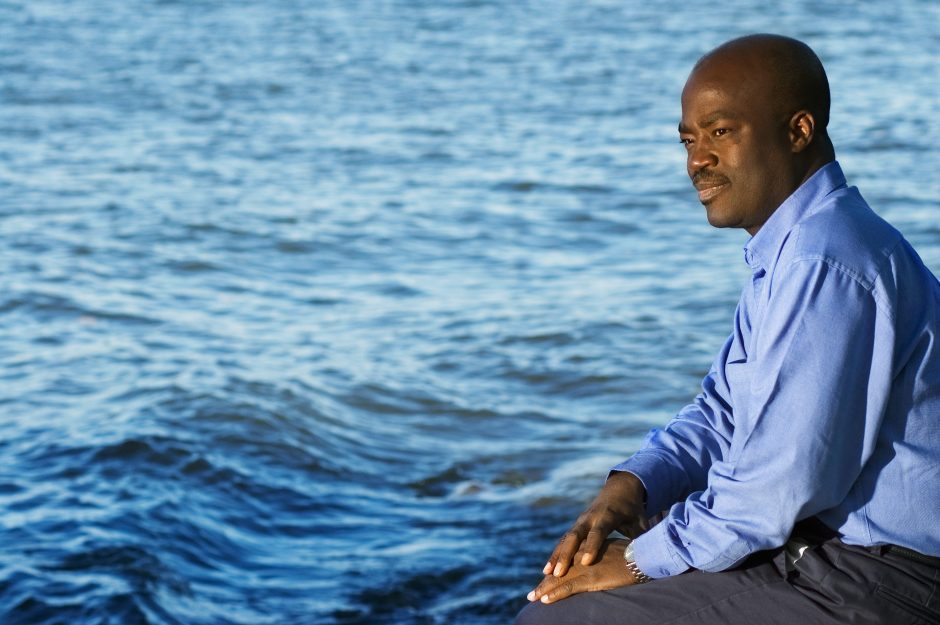
Dr Rashid Sumaila
Dr. Sumaila is the recipient in the 2017 “Excellence in Science” category, which is given to an individual who “has advanced the cause of understanding ocean processes, marine ecology and conservation biology.”
Of Dr. Sumaila’s selection, the Benchley Awards committee wrote: “Dr. Sumaila is Professor and Director of the Fisheries Economics Research Unit at the University of British Columbia. He received his Ph.D. from Bergen University, Norway, and holds a B.Sc. with honors from Ahmadu Bello University, Nigeria. Dr. Sumaila is deeply interested in how economics, through integration with ecology and other disciplines, can be used to help ensure that ocean resources are sustainably managed for the benefit of both current and future generations. His key recent contributions include 1) applying game theory to fisheries; 2) rethinking the nature of the discount rates applied in marine resource valuations, and formulating a highly original alternative, i.e., “intergeneration discount rates”; 3) understanding the nature, amounts and effects of government subsidies on global fisheries; 4) estimating the multiple benefits that would be obtained globally by rebuilding fish stocks and setting up marine reserves, including conceiving of the High Seas as a large marine reserve. His work is highly regarded by policy makers at the highest levels, resulting in invitations to give talks at the United Nations, the White House, the U.S. Congress, the European Parliament, the African Union, the British House of Lords, and the Canadian Parliament.”
To date Benchley Award winners have included five Heads of State, U.S. Secretaries of State and Defense, senators, marine scientists, journalists, explorers, youth leaders, and citizen activists.
Co-founded by ocean conservation and policy advocate Wendy Benchley and author and Blue Frontier Executive Director David Helvarg, the awards are named in honor of Peter Benchley (the author of Jaws) who worked for 40 years educating the public on shark and ocean conservation issues through his numerous books, films, documentary programs, articles for National Geographic, and public appearances.
Dr. Sumaila will receive his award at a gala ceremony being held on May 11th in Washington, D.C., at the Smithsonian’s National Museum of Natural History and Sant Ocean Hall.
Benchley Ocean Awards media release
Tags: awards, faculty, Rashid Sumaila
Order of Canada
The Order of Canada is the cornerstone of the Canadian Honours System, and recognizes outstanding achievement, dedication to the community and service to the nation. The Order recognizes people in all sectors of Canadian society. Their contributions are varied, yet they have all enriched the lives of others and made a difference to this country. Since its creation, more than 6,000 people from all sectors of society have been invested into the Order.
Any Canadian is welcome to nominate a deserving individual as a candidate for appointment to the Order of Canada.
Who is eligible?
All living Canadians are eligible for the Order of Canada, with the exception of federal and provincial politicians and judges while in office. Non-Canadians can be considered for “honorary” appointments if they have made a sustained and exceptional contribution to Canada. Members of the Royal Family can hold “extraordinary” appointments. There are no posthumous appointments.
If a candidate has been previously considered but not appointed to the Order of Canada, a new nomination can be brought forward five years after the last nomination.
Motto and Levels
The Order of Canada’s motto is DESIDERANTES MELIOREM PATRIAM (They desire a better country). Her Majesty The Queen is the Sovereign of the Order, and the governor general is the chancellor and Principal Companion of the Order.
Companion (C.C.)
Order of Canada, Companionrecognizes national pre-eminence or international service or achievement;
Officer (O.C.)
Order of Canada, Officerrecognizes national service or achievement; and
Member (C.M.)
Order of Canada, Memberrecognizes outstanding contributions at the local or regional level or in a special field of activity.
Deadline: Nominations are accepted on an ongoing basis throughout the year.