The AAAS Newcomb Cleveland prize is awarded to the author or authors of an outstanding paper published in the Research Articles or Reports sections of Science. Each annual contest starts with the first issue of June and ends with the last issue of the following May.
An eligible paper is one that includes original research data, theory, or synthesis; is a fundamental contribution to basic knowledge or is a technical achievement of far-reaching consequence; and is a first-time publication of the author’s own work. Reference to pertinent earlier work by the author may be included to give perspective.
Requirements
Throughout the year, readers of Science are invited to nominate papers appearing in the Research Articles or Reports sections. Nominations must be submitted in the online form. Final selection is determined by a panel of distinguished scientists appointed by the editor-in-chief of Science.
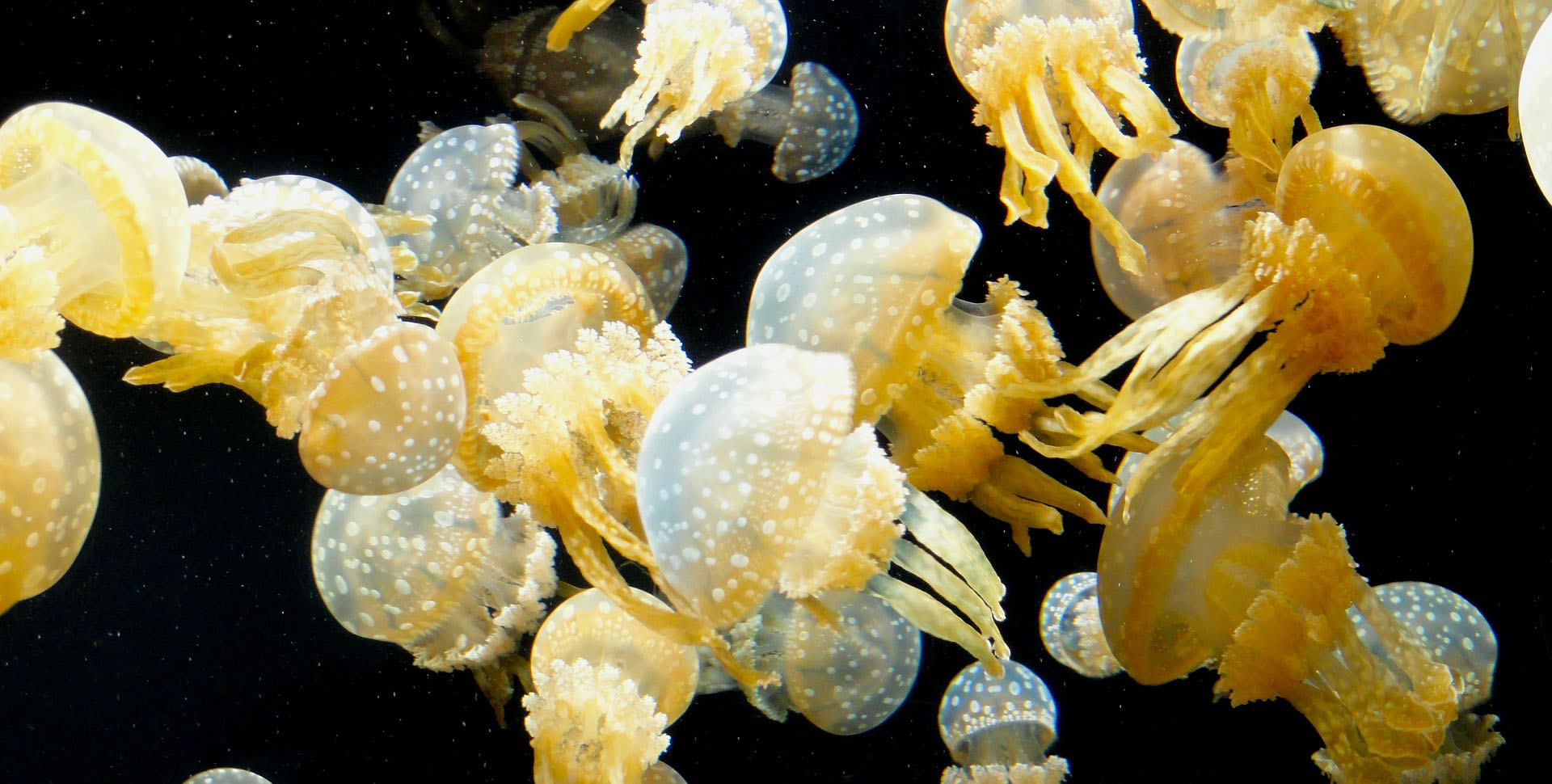
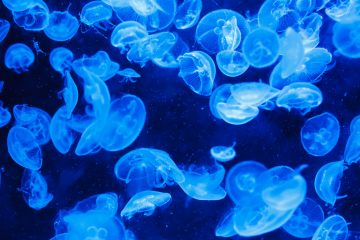
When it comes to jellyfish, Lucas Brotz is rapidly making a name for himself as an international expert. Even David Suzuki called him ‘Canada’s foremost jellyfish researcher.’ For the last ten years he has been studying the enigmatic invertebrates, gauging their populations and the growth of jellyfish fishing around the globe.
Brotz, who recently completed his doctoral degree at the Institute for the Oceans and Fisheries, spoke about jellyfish population dynamics, jellyfish fisheries, his Michael A. Bigg Award for Student Research win, and the growing taste for jellyfish.
Are jellyfish populations on the rise?
Overall, yes, jellyfish populations are increasing.
Working with members of the Sea Around Us, and my supervisor, Dr. Daniel Pauly, we used a global network of sixty-six Large Marine Ecosystems and we found information on jellyfish populations for about forty-five of them. In those forty-five we found data for increasing populations in about 60% of them, over the last 60 years. While there were some areas were they were decreasing (about 10%) or remaining stable or so variable that there was no trend (30%), overall we are seeing a strong global trend of increases in jellyfish populations and jellyfish blooms. The other thing we noticed is that this increase is happening in disparate locations around the world. Not just in one location; we saw increases in the Mediterranean and the Black Sea, also around Namibia in Africa, the Bering Sea, even Hawai’i and Antarctica.
What is causing this increase?
Some of the population changes are definitely linked to a number of anthropogenic factors. The big five are global warming, overfishing, pollution, coastal development, and translocation of invasive species.
Global warming sees the temperature of the water rising, causing some jellyfish to increase their reproduction or expand their ranges. Conversely, some jellyfish that thrive in cold waters may be negatively affected; however what we are seeing in many areas is a reduction in diversity of jellyfish types but an increase in abundance.
A lot of fish eat jellyfish or are direct competitors for food and as the Sea Around Us figures show, we remove more than 100 million tonnes of fish from the oceans every year. This overfishing frees jellyfish from predation and competition, allowing their populations to build.
When pollution such as fertilizers and other chemicals enter the ecosystem, it causes eutrophication, basically a depletion of oxygen in the water. It is not that jellyfish thrive in low oxygen environments, but they are very tolerant, and can even store oxygen in their tissues, like a little scuba tank.
Coastal development has actually been a boon for jellyfish. As part of their reproductive cycle, many species develop larvae, which become polyps and then grow asexually into baby jellyfish. For polyps to grow they need the right environment; proper water temperatures, salinity, available food, etc., and in many cases they like to be right up underneath structures. So when humans develop a coastline there are huge amounts of shaded habitat – marinas, piers, breakwaters, infrastructure from oilrigs and aquaculture. On many structures all around the world scuba divers are going underneath and discovering they are brimming with jellyfish polyps.
Finally, translocation of invasive species is having a huge effect. If a shipping tanker pumps in water in one location, to use as ballast for example, they will pump that out in other locations and all the creatures that were in that water go with it. We’ve seen instances where a jellyfish that is not native to a sea or an ocean show up there and thrive, bloom out of control.
Humans are having a huge impact on jellyfish populations; how are jellyfish affecting us?
Well, everyone knows that jellyfish can sting people and so those numbers are increasing. They can interfere with a number of other industries as well, getting caught in fishers’ nets and intake pipes in boats. Every year we hear about power plants, built near the ocean to take advantage of cooling sea water, going into near meltdowns because of their intake pipes are clogged with jellyfish. They can also interfere with aquaculture farming.
On the plus side, they are also very helpful. They are food for a lot of marine creatures, fish, even the critically endangered leatherback sea turtle that eats almost nothing but jellyfish.
Research on jellyfish has led to breakthroughs in biotechnology that led to a couple of Nobel Prizes. There has been some work with jellyfish in the biomedical world, looking at how it can be used for arthritis research and in cancer research. They have been investigated for their material properties in construction, and they are also huge tourist attractions, both in their natural environment and in aquariums. They are fishmeal for farm animals, like chickens and pigs. And they are also being fished specifically as food for humans.
Jellyfish fisheries are becoming pervasive around the globe.
Fishers prepare to unload their catch in Ecuador, photo by Evelyn Ramos
There have been at least 20 countries involved in jellyfish fisheries, either in the past or currently, and that number is growing. Jellyfish have been served for a very long time, mainly in Asia, but spreading around the world. We are consuming many more jellyfish than people actually think; the global catch of jellyfish for human consumption is now exceeding 1 million tonnes. That is pretty significant because it exceeds the catches for what we consider popular seafood here in North America, like scallops or lobster.
The major jellyfish fishery is in China; they catch more than half the world’s consumption. Jellyfishing also occurs in other Asian countries including Japan, Thailand, Indonesia, and the Philippines. We are now seeing them develop in Mexico, Ecuador in South America, even one in the United States where a number of shrimpers in the Gulf of Mexico have converted their boats and at certain times of the year to fish for jellyfish.
Certainly in the Americas, the jellyfish fishing industry is in its early stages. It has varying degrees of success in the USA and especially Mexico, proving to be a boon for local fishers, however no market has yet developed for jellyfish from fishing nations like Argentina, Peru, or Canada.
How is jellyfish eaten? The most common way to serve jellyfish is thinly sliced into strips and served on its own with some soy sauce or sesame oil, or as an ingredient to a more elaborate dish like a stew. They have a taste of the sea, and the salts or chemicals used in processing, with a unique texture – chewy and crunchy. It reminds me of al dente pasta.
Even within the Asian market there are variations; the Japanese prefer a bit more crunch than the Chinese, so it depends on the species, the recipes and the target market. Here in Vancouver you can go to Chinatown and get a package to thaw or soak overnight. There are even snack products that you can buy and eat right out of package.
Still, I think there is a lot of work to be done by food scientists and food engineers to figure out what are the best ways to prepare and serve edible jellyfish. And as for it catching on with North American consumers, I am not sure it will happen any time soon.
Congratulations on winning the Michael A. Bigg Award for student research.
Lucas Brotz wins Michael A. Bigg Award
I am very humbled. To receive this from the Coastal Ocean Research Institute and the Vancouver Aquarium is a huge honour – I did my undergraduate degree in astrophysics and wanted to be an astronaut, and then I worked at the Aquarium and realized that underwater and outer space were very similar. Both are unexplored realms, inhospitable to humans, with no oxygen. We know more about the surface of the moon than we do about the ocean floor, and that really piqued my interest. To come back many years later and to be acknowledged by the Aquarium, a place that helped shaped my career, is a wonderful validation.
From astronaut to aquanaut
We have yet to find an alien in outer space, but underwater, I can’t think of a more alien creature than the jellyfish. It has been a pleasure to study them and there is so much more to learn.
Fifty-nine scientists from around the world are calling for better protection of British Columbia’s Scott Islands marine National Wildlife Area. The proposed regulations for Canada’s newest marine protected area were released for public review and comment on December 31, 2016, however, the proposed regulations failed to restrict or regulate damaging activities like bottom trawling, long-line and gill-net fisheries and shipping from the area. On January 30, 2017, the scientists sent a letter to the Hon. Catherine McKenna, Minister of Environment and Climate Change Canada calling for the prohibition of those commercial fishing activities, until it can be shown that they are not harmful to the seabirds or other marine life that use the Scott Islands. The letter also called for an outright prohibition of bottom trawling in the proposed marine National Wildlife Area.
“Bottom trawling is devastating for marine species and spaces. It involves dragging a very heavy net along the seafloor, removing everything in its path,” said Dr. Amanda Vincent, Professor in UBC’s Institute for the Oceans and Fisheries (IOF). “We know that bottom trawling destroys seafloor habitats like corals and sponges. These provide critical homes for a large number of species, including invertebrates and fishes that support the entire ecosystem of the Scott Islands, from birds to whales,” she added.
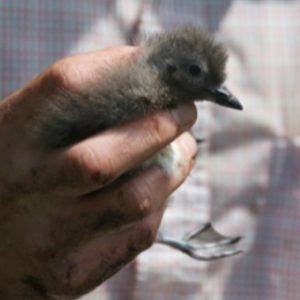
Cassin’s Auklet – Credit: Sabine Jessen
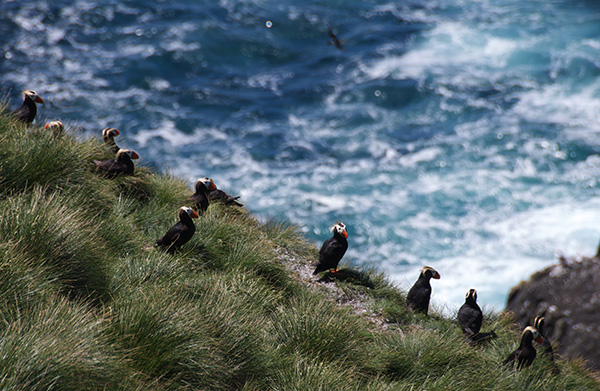
The Scott Islands is the largest seabird breeding colony in BC, home to 70% of Canada’s tufted puffins and more than 50% of the world’s Cassin’s auklets. It is also an important area for a number of other species at risk including sea otters, Steller sea lions, whales, and leatherback sea turtles. It is estimated that the number of breeding seabirds at the Scott Island has declined from 2.2 million to 1.4 million since the 1990s.
The Scott Islands would be the first marine National Wildlife Area to be established in Canada, and scientists and conservationists alike are concerned that the proposed regulations set a worryingly weak precedent for future marine protected areas.
In the letter, they “strongly urge[d] Environment and Climate Change Canada to improve the proposed regulations to provide effective in situ conservation and protection of both seabirds, other species at risk (which include sea otters, Steller sea lions, and several species of whales and leatherback sea turtles) and the broader marine ecosystems of the Scott Islands.”
Signatories to the letter include IOF’s Dr. Amanda Vincent, Dr. Daniel Pauly, Dr. Rashid Sumaila, and IOF and Institute for Resources, Environment and Sustainability professor, Dr. Kai Chan. Others from UBC include: Dr. Sarah Otto , Professor of Zoology; and, Dr. Mary O’Connor, Associate Professor, Department of Zoology & Associate Director, Biodiversity Research Centre.
This award recognizes the best aquatic sciences paper published in the preceding year by a Canadian student or a student working in Canada. The student must be an undergraduate or graduate student, and must be first author on the publication.
A paper can be considered for the Peters’ Award if it is published within the time period of one year prior to the deadline for nominations, and the first author is a student or has recently graduated. A paper is considered “published” once it is posted on-line by the journal or appears in hardcopy, whichever occurs first. A single body of work may only be considered for nomination once.
The value of the award is $500 and a complimentary one-year membership in the Society, to be presented at the annual meeting of SCL/CCFFR where the student must attend and present a summary of their paper.
Nomination package:
The nomination consists of a submission of the paper, typically from the student’s supervisor.
Nominations may be accompanied by a cover letter (not to exceed one page, single-spaced, 12-pt Times New Roman font, 1-inch margins) outlining the quality, importance and impact of the paper.
The Frank Rigler Award is the highest honour given by the Society of Canadian Limnologists.
It was first presented in 1984 to recognize and honour major achievements in the field of limnology by Canadians or those working in Canada. Emphasis in selection is given to established aquatic scientists with a proven record of contribution to the field of aquatic sciences, whose work is widely recognized for its influence and importance. The winner of this award will give an overview on their research during the plenary session of the annual meeting of SCL/CCFFR, and will receive complimentary registration at the meeting and a one-year membership with the Society.
Nomination package:
A cover letter, not to exceed two pages in length (single-spaced, 12-pt Times New Roman font, 1-inch margins), describing clearly how the nominee has made a lasting contribution to the field of limnology, either as a Canadian citizen abroad or to the field of limnology in Canada. Contributions that should be highlighted in the nomination can include (but are not limited to) evidence of work that has a scope that is both broad and of high-impact; evidence of work that has directly influenced aquatic science policy, and major public outreach initiatives involving the candidate that increase awareness regarding the importance of freshwater resources to Canadians. The cover letter must also confirm the nominee’s commitment to attend the upcoming society meeting and, if selected, present the Rigler lecture.
A CV covering the applicant’s full scientific career that highlights employment history, publication record, funding held, contributions to training of students, invited lectures and contributions to public outreach, honours and prizes, and journal editorships and reviewing.
Scientific evidence has been telling us for years that our oceans are in peril. So why have we not been able to rectify the situation?
We invite you to join Dr. Daniel Pauly, internationally-acclaimed fisheries scientist and principal investigator of the Sea Around Us, in a discussion that will bring to light the perilous state of the world’s oceans today.
Dr. Pauly will touch upon what actions would really need to be taken – by policy makers and citizens alike – in order for the overwhelming evidence of damage to our oceans to be translated into policy and practice to save them from a dire future.
Can we save our oceans from becoming so overfished and polluted that we will be telling our next generation of children, borrowing the title of Dr. Pauly’s book, to “eat your jellyfish”?
About the Speaker:
Internationally celebrated fisheries scientist Dr. Daniel Pauly is a professor in UBC’s Institute for the Oceans and Fisheries. Currently the Principal Investigator of the Sea Around Us Project, Dr. Pauly has devoted his life to studying, documenting and promoting policies to mitigate the impact of fisheries on the world’s marine ecosystems.
Date, Location and Tickets
March 28, 2017 6:30 – 8:30 p.m. (Reception to follow)
Science World
“C’est un honneur,” Dr. Daniel Pauly, University Killam Professor with the Institute for the Oceans and Fisheries and the Sea Around Us Principal Investigator, said after being named “Scientist of the Year” by Radio Canada’s Les Années-lumière.
Yanick Villedieu, host of Les Années-lumière, explained that the award aims at highlighting the work of a French-speaking scientist who, throughout his/her career, but particularly in the past year, had a major discovery, achievement, or publication of national and international significance.
After reviewing the most important science news stories of the last 12 months and conducting a series of consultations with science journalists from Découverte (Radio-Canada television), Québec Science, and Découvrir magazine, Dr. Pauly was selected by the show’s production team as this year’s awardee.
Following the awards ceremony, Pauly and Villedieu sat down for an hour-long interview with a live audience interested in knowing more about the scientist’s trajectory and ongoing research projects. The interview will be aired on Sunday January 22, 2017 at 12 p.m. EST.
Later that day (at 6:30 p.m. EST), Découverte plans to air a series of filmed interviews with Dr. Pauly, which will close with a flourish the honours conferred upon him by Radio Canada.
The “Scientist of the Year” award has been granted for the past 30 years to outstanding individuals from a variety of fields that range from genomics to oceanography.
With this distinction, Dr. Pauly joins a stellar list of renowned researchers such as biologist and oceanographer Louis Fortier, biologists Pierre Béland, J.-André Fortin, and Claude Villeneuve, hematologist Guy Sauvageau, ecologist Joël Bêty, among others.

 Global warming sees the temperature of the water rising, causing some jellyfish to increase their reproduction or expand their ranges. Conversely, some jellyfish that thrive in cold waters may be negatively affected; however what we are seeing in many areas is a reduction in diversity of jellyfish types but an increase in abundance.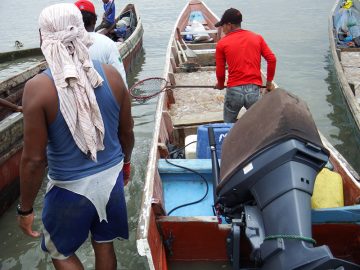
 The most common way to serve jellyfish is thinly sliced into strips and served on its own with some soy sauce or sesame oil, or as an ingredient to a more elaborate dish like a stew. They have a taste of the sea, and the salts or chemicals used in processing, with a unique texture – chewy and crunchy. It reminds me of al dente pasta.