Tags: Daniel Pauly, Dirk Zeller, faculty, fisheries management, marine catches, Publications, Sea Around Us
Aerial drone offers insights into bowhead whale behaviour
The bowhead whale is the longest-living marine mammal in the world, yet many answers remain about the biology and feeding behaviour of this elusive animal.
Recently, a research team undertook what is believed to be the first intensive effort to study bowhead whales with the use of an aerial drone in the Eastern Canadian Arctic.
Using drone technology, the team captured rare high-quality images and videos of Eastern Canada-West Greenland bowhead whales during their summer feeding period in Cumberland Sound, Nunavut (just a few kilometers shy of the Arctic Circle).
“We can observe their underwater behaviour like never before, providing new insights into their feeding and social activities.”
“Much of what we know about their behaviour has come from boat-based or aerial observations from small planes,” said UBC researcher and zoology PhD candidate Sarah Fortune. “Now, thanks to the availability of drone technology and the clear water in Cumberland Sound, we can observe their underwater behaviour like never before, providing new insights into their feeding and social activities.”
Fortune, who was stationed in Pangnirtung, an Inuit hamlet, partnered with local community members who have expertise in guiding, fishing and hunting for this project.
The drones provided a safe, affordable method to obtain aerial images and video of the bowhead whales, without disturbing them in their natural habitat. The technology allowed the researchers and community members to observe behaviours in real-time, something that they would not have been able to do using conventional tagging methods and boat-based observations.
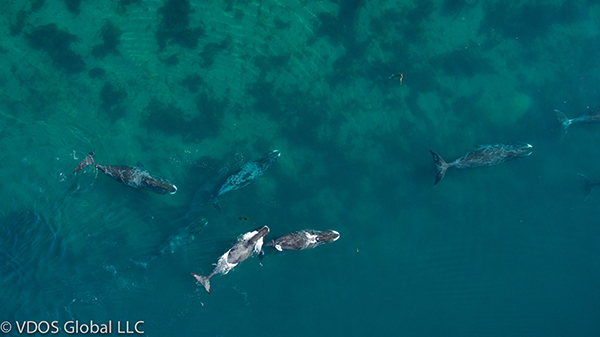 It was the social behaviour that most fascinated Fortune. “Although it is common to find small groups of whales traveling together, we hadn’t observed how often they swim in coordinated patterns, constantly touching or rubbing one another. The team was also able to watch the whales’ daily activity patterns and found that they spent the early morning feeding in deep water and then rested, often in large groups, in shallow, coastal waters during the afternoon.”
“Not only were we able to make important observations about their foraging strategy, we were also able to collect data to help with species conservation,” said Fortune. “The pilot, Thomas Seitz (VDOS Global LLC), took thousands of images of the encountered whales, which will be used by Bill Koski (LGL Limited) to determine population size (using individual markings), age-structure, and body condition. This information will be essential to monitoring population status and health over time.”
Fortune’s research is supervised by UBC professor Andrew Trites, Institute for the Oceans and Fisheries, and Mark Baumgartner, Woods Hole Oceanographic Institution, and supported by LGL Limited (Bill Koski), and VDOS Global LLC (Brian Whiteside and Thomas Seitz), Fisheries and Oceans Canada (Steve Ferguson) and WWF-Canada (Brandon Laforest).
Video footage available here
Images available here
Please credit: LGL Limited, UBC, VDOS Global, Fisheries and Oceans Canada and WWF-Canada when using this media.
Permits: Special Flight Operation Certificate File Number 5812-11-682, University of British Columbia Animal Care Amendment A14-0064-A002, Department of Fisheries and Oceans License to Fish for Scientific Purposes S-16/17 1005-NU and Animal Use Protocol FWI-ACC-2016-09.
Tags: Andrew Trites, Arctic, bowhead whales, cetaceans, faculty, IOF students, Marine Mammal Research Unit, marine mammals, whales
Project Seahorse work leads to huge international change, as Thailand announces it is suspending seahorse exports.

Dr. Amanda Vincent
Project Seahorse, a marine conservation research unit based at the University of British Columbia’s Institute for the Oceans and Fisheries, is applauding Thailand’s decision to end seahorse exports until it can trade in a sustainable manner, without damaging their wild populations. We spoke to Dr. Amanda Vincent, Director, Project Seahorse and Professor, Institute for the Oceans and Fisheries about the decision.
Thailand has announced it is suspending seahorse exports. What does this mean?
Thailand is by far the world’s largest exporter of wild seahorses, representing 90% of the trade. What they announced at today’s CITES (Convention on International Trade in Endangered Species of Wild Fauna and Flora) meeting is that they have decided to suspend all of its international trade in these quirky fishes until it can sort out an effective, sustainable way to sell them abroad without damaging their wild populations.
This trade suspension means that the country will stop exporting seahorses, probably for several years, but will one day return to international trade in seahorses.
What role did Project Seahorse play in achieving this trade ban?
The Project Seahorse team, based at UBC and with its partner, the Zoological Society of London, played a major role in assisting Thailand to tackle this important conservation issue head on.
Our work on the international level has been pioneering; we are the globally recognized expert group on 350 species of fish (seahorses, pipefishes, sea dragons and their relatives), and we worked with CITES to develop the first ever global trade agreement regulations the export of marine fishes.
At the request of CITES, Project Seahorse worked with Thailand’s Department of Fisheries on tools and approaches for export management, as well as studying Thailand’s seahorse populations, fisheries and trades. Meeting CITES recommendations on the complex and very large trade in these animals was a big challenge, and we understand why Thailand has decided that a trade suspension would allow it more time to get export regulations right. Now we are eager to help Thailand obtain what it needs in terms of tools, resources, and support to manage seahorse exports sustainably.
How large is the international trade in seahorses?
It is large and complex, estimated at more than tens of millions of individuals per year, involving more than 80 countries, and more than 41 species. The majority of exports come from Southeast Asia or West Africa, with Mainland China, Hong Kong, and Taiwan as the primary importers. Seahorses are used primarily in dried form for traditional medicine, live in ornamental aquarium displays, and as curios and souvenirs.
Thailand is by far the world’s most significant exporter of seahorses; the source of more than three-quarters of the seahorse in international trade each year. Official CITES data show that Thailand has exported about 5 million animals per year since 2004, all of them dried and all of them wild. Our analysis of Thailand’s fisheries suggests the real numbers are actually much higher.
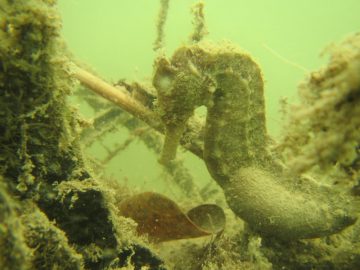
Hippocampus kuda. Photo: Lindsay Aylesworth/
Project Seahorse
Which species will be impacted by this move?
Seven species of seahorses inhabit Thailand’s national waters. Five have been recorded in trade, and four (Hippocampus kelloggi,, Hippocampus kuda, Hippocampus spinosissimus, and Hippocampus trimaculatus) dominate global trade volumes. All will be affected.
What is the biggest risk to the seahorse population in Thailand?
Seahorses are caught directly, for the live trade, but that is only a small part of the fishery.
Thai fishers capture the great majority of seahorses by accident, brought up in non-selective fishing gears such as trawls and gillnets. Bottom trawls, in particular, are very damaging and destructive. They scrape the ocean floor, taking everything in their path. About 85-95% of the weight in trawl nets is marine life they didn’t mean to catch. Actually, some trawl fisheries have given up even targeting any particular species and just grab what they can get.
We are heartened that Thailand has recognized that these non-selective gears are causing ecosystem damage, as well as impacting their fisheries. They are, thankfully, stopping the trade so that they can develop action plans that will better manage not just the future of the seahorse trade, but also the catches that Thai fisheries depend on as a source of income.
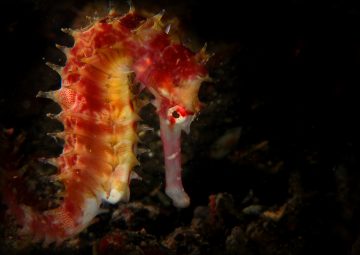
Hippocampus histrix. Photo: Rudi Rombouts/
Guylian Seahorses of the World
So you want to re-open the trade? Why is Project Seahorse promoting sustainable use instead of an outright ban?
Generally speaking, sustainable use offers more potential for long-term conservation. While bans certainly have their uses, they are not a panacea. One often has to deal with ensuing illegal catch and trade, and with angry fishers and traders. After all, fisheries are of great economic importance.
It is better for both wildlife and people to seek a balance between safeguarding a species or space and using it as a resource. People who depend on a resource can become marvellous guardians. Moreover, having their buy-in is vital to stimulate compliance with regulations; enforcement of unpopular management decisions is very problematic, and commonly fails.
Select Media Coverage
- Thailand Suspends Exports of Seahorses, National Geographic, October 3
- Thailand suspends seahorse trade amid conservation concerns, The Washington Post, September 29
- Thailand suspends seahorse trade as population threatened, Metro News, September 29
- Thailand suspends seahorse trade amid conservation concerns, CTV News, September 29
- Thailand suspends seahorse trade amid conservation concerns, Voice of America, September 29
- Move to stop vast trade in threatened seahorses, DIVE Magazine, September 29
- IUCN behind major advance for seahorse conservation, IUCN, September 28
Tags: Amanda Vincent, CITES, faculty, Project Seahorse, seahorses, sustainability
Daniel Pauly named UBC University Killam Professor
Tags: awards, Daniel Pauly, faculty, Sea Around Us
Future fisheries can expect $10-billion revenue loss due to climate change
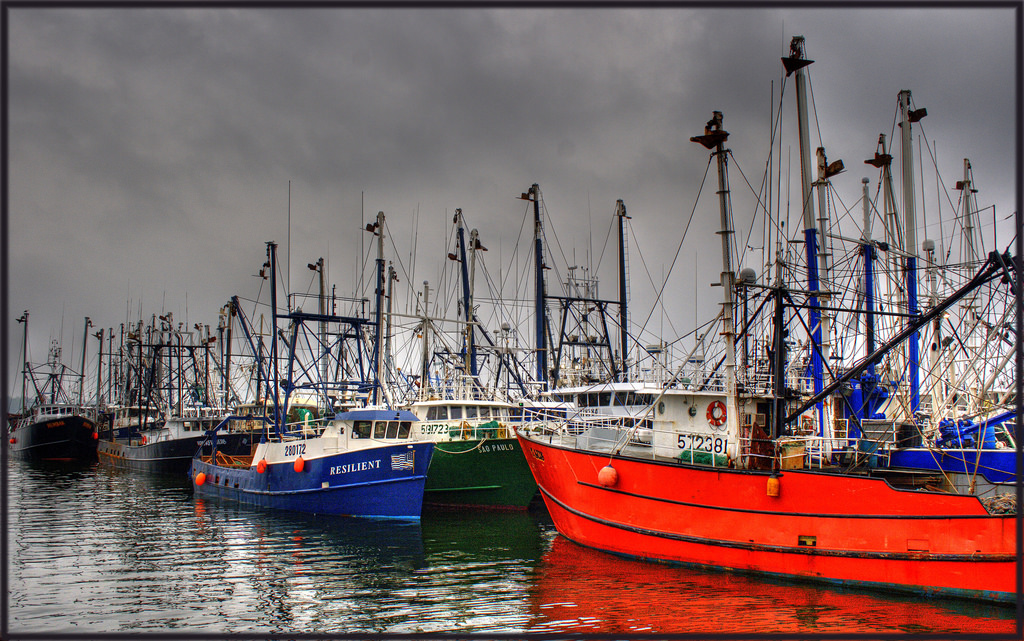
twoblueday/Flickr, CC2.0.
Global fisheries stand to lose approximately $10 billion of their annual revenue by 2050 if climate change continues unchecked, and countries that are most dependent on fisheries for food will be the hardest hit, finds new UBC research.
Climate change impacts such as rising temperatures and changes in ocean salinity, acidity and oxygen levels are expected to result in decreased catches, as previous research from UBC’s Institute for the Oceans and Fisheries has found. In this study, the authors examined the financial impact of these projected losses for all fishing countries in 2050, compared to 2000.

Vicky Lam
“Developing countries most dependent on fisheries for food and revenue will be hardest hit,” said Vicky Lam, a postdoctoral fellow at UBC’s Institute for the Oceans and Fisheries, and the study’s lead author. “It is necessary to implement better marine resource management plans to increase stock resilience to climate change.”
While many communities are considering aquaculture, also known as fish farming, as a solution to ease the financial burden of fishing losses and improve food security under climate change, when researchers examined the growing industry, they found it may exacerbate the negative impact on revenues.

William Cheung
“Climate adaptation programs such as aquaculture development may be seen as a solution,” said William Cheung, associate professor at UBC’s Institute for the Oceans and Fisheries and a study co-author. “However, rather than easing the financial burden of fishing losses and improving food security, it may drive down the price of seafood, leading to further decreases in fisheries revenues.”
The researchers used climate models from the Intergovernmental Panel on Climate Change to examine the economic impact of climate change on fish stocks and fisheries revenues under two emission scenarios. In a high emission scenario, the rates continue to rise unchecked, while a low emission scenario meant ocean warming is kept under two degrees Celsius.

Rashid Sumalia
“Global fisheries revenues amount to about $100 billion every year,” said co-author, Rashid Sumaila, professor at UBC’s Institute for the Oceans and Fisheries and Liu Institute for Global Studies. “Our modeling shows that a high emissions scenario could reduce global fishing revenue by an average of 10 per cent, while a low emissions scenario could reduce revenues by 7 per cent.”
The researchers found the countries that rely highly on fish are the most vulnerable, including island countries like Tokelau, Cayman Islands and Tuvalu. Meanwhile, many developed countries, such as Greenland and Iceland, could see revenue increases as fish move into cooler waters.
The study was published today in Scientific Reports.
Background
This study was a collaborative effort between Nippon Foundation-Nereus Program and OceanCanada Partnership.
Nippon Foundation-Nereus Program
The Nereus Program, a collaboration between the Nippon Foundation and the University of British Columbia Institute for the Oceans and Fisheries, has engaged in innovative, interdisciplinary ocean research since its inception in 2011. The program is currently a global partnership of six leading marine science institutes with the aim of undertaking research that advances our comprehensive understandings of the global ocean systems across the natural and social sciences, from oceanography and marine ecology to fisheries economics and impacts on coastal communities. Visit nereusprogram.org for more information.
OceanCanada Partnership
OceanCanada is a Partnership of 18 institutions across the nation dedicated to building resilient and sustainable oceans on all Canadian coasts and to supporting coastal communities as they respond to rapid and uncertain environmental changes. Our research synthesizes social, cultural, economic and environmental knowledge about oceans and coasts nationally (and globally). Over the life of the project and beyond, we are taking stock of what we know about Canada’s three oceans, building scenarios for the possible futures that await our coastal-ocean regions, and creating a national dialogue and shared vision for Canada’s oceans. Visit http://oceancanada.org/ for more information.
Tags: climate change, faculty, food security, IOF postdoctoral fellows, Nereus Program, OceanCanada, Rashid Sumaila, William Cheung
Daniel Pauly named Legend of Canadian Fisheries Science and Management

Daniel Pauly
The Canadian Aquatic Resources Section (CARS) of the American Fisheries Society has named Dr. Daniel Pauly a “Legend of Canadian Fisheries Science and Management.”
The Canadian Aquatic Resources Section launched this recognition program in 2014, for Canadian fisheries professionals, particularly those who have had a long and illustrious history in fisheries science and management, with scientific discoveries, assessment tools, and contemporary management strategies attributed to them. Recognizing these individuals and highlighting their accomplishments will ensure that the next generation of fisheries professionals remain connected to the past and are aware of truly legendary figures in Canadian fisheries science and management.
Internationally celebrated fisheries scientist, Dr. Daniel Pauly, is a professor in UBC’s Institute for the Oceans and Fisheries. Currently the Principal Investigator of the Sea Around Us Project, Pauly has devoted his life to studying, documenting and promoting policies to mitigate the impact of fisheries on the world’s marine ecosystems.
Dr. Pauly joins fellow 2016 inductees Jack Reuben Way Vallentyne (DFO/IJC), Steven Campana (DFO/University of Iceland), and Don McPhail (UBC). IOF’s Dr. Carl Walters was an inductee in 2014.
Tags: awards, Daniel Pauly, faculty, Sea Around Us
High seas fisheries management could recoup losses due to climate change

Photo: Altafalvi, Wikimedia Commons.
Closing the high seas to fishing could increase fish catches in coastal waters by 10 per cent, helping people, especially the most vulnerable, cope with the expected losses of fish due to climate change, new UBC research finds.
William Cheung
“Many important fish stocks live in both the high seas and coastal waters. Effective management of high seas fisheries could benefit coastal waters in terms of productivity and help reduce climate change impacts,” said lead author William Cheung, associate professor and director of science of the Nippon Foundation-Nereus Program at UBC’s Institute for the Oceans and Fisheries.
The high seas are areas of ocean outside the jurisdiction of any country and cover nearly two-thirds of the ocean’s surface.
Researchers used computer models to predict catches of 30 important fish stocks that live in both the high seas and coastal waters in 2050 under three different management scenarios: closing the high seas to fishing, international cooperation to manage fishing, and maintaining the status quo.
They found that both strengthening governance and closing the high seas to fishing increased the resilience of coastal countries to climate change, especially in tropical countries where there is a high dependence on fisheries for food and livelihood.
Vicky Lam
“The scenarios of closing the high seas may greatly reduce the issue of inequity of benefits and impacts among different countries under climate change,” said co-author Vicky Lam, a postdoctoral fellow at UBC’s Institute for the Oceans and Fisheries.
Climate change is expected to disproportionately impact countries in the South Pacific, Indo-Pacific, West African coast and west coast of central America. Previous UBC research shows that if carbon dioxide levels continue to rise on the current trajectory and the Earth warms, these countries could face a 30 per cent decrease in fish stocks as fish migrate to cooler waters.
Rashid Sumalia
“The high seas can serve as a fish bank of the world by providing the insurance needed to make the whole global ocean more resilient,” said paper co-author Rashid Sumaila, professor at UBC’s Institute for the Oceans and Fisheries and director of the OceanCanada Partnership, one of the research funders. “By closing the high seas to fishing or seriously improving its management, the high seas can help us mitigate and adapt to the effects of climate change on marine ecosystems.”
The study was published today in Fish and Fisheries.
About the Nippon Foundation Nereus Program
The Nereus Program, a collaboration between the Nippon Foundation and the University of British Columbia Institute for the Oceans and Fisheries, has engaged in innovative, interdisciplinary ocean research since its inception in 2011. The program is currently a global partnership of six leading marine science institutes with the aim of undertaking research that advances our comprehensive understandings of the global ocean systems across the natural and social sciences, from oceanography and marine ecology to fisheries economics and impacts on coastal communities. Visit nereusprogram.org for more information.
This research was supported by the Nippon Foundation, the Natural Sciences and Engineering Research Council of Canada, and the Social Sciences and Humanity Research Council of Canada through the OceanCanada partnership grant project.
Tags: climate change, faculty, fisheries management, IOF postdoctoral fellows, Nereus Program, OceanCanada, Rashid Sumaila, Vicky Lam, William Cheung
Award for Excellence in Public Outreach (AFS)
American Fisheries Society
Presented to an AFS member who goes the “extra mile” in sharing the value of fisheries science/research with the general public through the popular media and other communication channels. The awardee will receive a letter of recognition informing them of the award and inviting them to attend the annual AFS meeting (at recipient’s expense) for the formal presentation. The recipient will receive a plaque and will be honored in Fisheries Magazine.
Nomination package:
- Two or more individuals may act as nominators, but at least one nominator must be an AFS member.
- Entries must include a biographical sketch of the nominee (not to exceed 3 pages)
- Supporting evidence of communicating the value of fisheries issues/research to the general public through the media and other communication channels,
- Any evidence of teaching others about communication with the public.
Deadline: Usually early-April
Past IOF winners
Rashid Sumaila (2013)