Increasing temperatures and salinity result in decreased ecosystem diversity, UBC study finds.
Ecosystems can be impacted and changed by a lot of different things, including human activities, stormwater runoff, contaminants, invasive species, and climate change.

Photo from Adobe Stock ©Ruben
Climate change especially can disturb sensitive ecosystems and can cause increases in water temperature, sea ice loss, ocean deoxygenation, and changes in seawater salinity. In the Arctic, the impacts of climate change are more severe compared to the global average. This poses big problems for not only animals like the beluga whale and Arctic cod, but also the Indigenous people who have been closely dependent on Arctic biodiversity for food and culture for millennia.
Using ecosystem modeling, UBC researchers explored the effects of climate change in the Canadian Arctic, including the area on the Beaufort Sea shelf — the Tarium Niryutait Marine Protected Area.
The study, published in the ICES Journal of Marine Science, found that higher water salinity and temperatures decreased ecosystem diversity and changed the trophic levels, biomass, and consumption rates of some marine mammals and fish groups, including: beluga whales, Arctic cod, and polar cod.
“In higher temperatures, fish have higher metabolic demands which can cause stress responses in the animals.” said lead author Kristen Sora, a PhD student at the UBC Institute for the Oceans and Fisheries. “This may have detrimental consequences for the fish, marine mammals and other animals in the Arctic.”
Canadian Arctic waters

Photo from Adobe Stock ©Scalia Media
The Beaufort Sea Shelf and Slope (BSS) is a part of the Arctic Ocean, right off the Yukon and Northwest Territory’s northern coast. It’s a rich marine environment and home to migratory birds, bowhead whales and many marine mammals, including belugas and polar bears.
The Tarium Niryutait Marine Protected Area (TN MPA) was designated in August 2010 and was Canada’s first Arctic marine protected area. It was created to help protect beluga whales and their ecosystems while also respecting Inuvialuit cultural and spiritual connections to the land and ocean, and ensuring that these traditions and practices continue.
“The Arctic Ocean is under a lot of pressure right now and with climate change, it’s only going to get worse,” said principal investigator, Dr. William Cheung, professor and director of the Institute for the Oceans and Fisheries. “This will severely challenge the unique marine biodiversity in the area, as well as the Indigenous and other communities that depend on it for food, livelihood, and culture.”
The UBC study examined the BSS and TN MPA over 50 years to identify changes and trends in food webs and key species under climate change to compare the individual and cumulative effects of different climate change related factors.
“This study helps us understand changes in the Arctic ecosystems under climate change, and will help governments, local communities and Indigenous communities to develop adaptation strategies for conservation, food security and sovereignty,” said Cheung.
Indigenous Peoples in the Arctic

Photo from Adobe Stock ©ti1993
The Inuvialuit, Gwich’in and other Indigenous peoples lived along the Mackenzie river for thousands of years, and there are over 40 Indigenous groups that live along the Arctic. Indigenous Peoples in the Arctic have lived on the land for a millennia but due to colonization and climate change, are being rapidly pushed out of their lands, cultural and spiritual practices and ways of life.
“Climate change has disproportionate impacts on vulnerable communities, including Indigenous Peoples,” said Cheung. “We hope that the findings from this study could help support Indigenous and local communities to develop effective climate adaptation strategies for food security, wellbeing and conservation.”
Impacts on marine mammals and fish
Climate change creates widespread stress on aquatic health across the Arctic Ocean and changes ice and flow patterns in rivers, reduces snow-cover and water levels in deltas, and impacts water quality in northern parts.

Photo from Adobe Stock ©Scalia Media
This has potentially devastating impacts for the fish and marine mammals in the area, including the thousands of beluga whales belonging to the Eastern Beaufort Sea population who return to the shallow and warm Mackenzie River Estuary, including the TN MPA.
In the summer and fall, migratory fish move out of the Mackenzie River and follow currents along the shore to feeding and rearing areas in the TN MPA.
What next?
We still don’t understand a lot about Arctic ecosystems, and the impacts of temperature and salinity are not well defined in the Arctic, which makes conservation science uncertain. These UBC researchers are now looking to the Tarium Niryutait and the Anguniaqvia niqiqyuam Marine Protected Areas in the Beaufort Sea and Amundsen Gulf to understand more about this diverse and vulnerable region.
“Climate change is a huge threat and we need to understand as much as we can about its impacts on the environment,” said Sora. “Our next steps are going to be trying to learn more about different species’ risks and vulnerabilities to climate change.”
Historical climate drivers and species’ ecological niche in the Beaufort Sea food web was published in the ICES Journal of Marine Science.
Tags: Beaufort Sea Shelf and Slope, beluga whales, Canadian Arctic, cod, Colette Wabnitz, CORU, Indigenous culture, Indigenous fisheries, Indigenous history, IOF students, marine mammals, Research, Solving FCB, Tarium Niryutait Marine Protected Area, whales, William Cheung
Kii’iljuus Barbara Wilson receives Honorary Doctorate
 Congratulations to IOF Adjunct faculty member, Dr. Kii’iljuus Barbara Wilson, who has received an Honorary Doctorate from Simon Fraser University.
Dr. Kii’iljuus is a faculty member in the Centre for Indigenous Fisheries (CIF) and a Haida Matriarch. A Haida Kuuljaad and an accomplished scholar who lives her Kuuniisii (ancestors) ancient knowledge by challenging western science to uphold climate justice, advance food sovereignty, and truth and transparency in governance, Dr. Kii’iljuus uplifts all beings in her many spheres of influence and devotes much of her time to sharing knowledge, wisdom, and joy with students and the entire CIF team.
She received her honorary doctorate at a special convocation ceremony at from Simon Fraser University, held on June 12, 2024. She was invited to deliver a keynote speech to esteemed guests and fellow graduates, and shared words of brilliance, wisdom, and hope with all.
We extend our deepest gratitude, love, and sincere congratulations to her on this momentous accomplishment!
Tags: adjunct faculty, Centre for Indigenous Fisheries, Haida, honours, Kii’iljuus Barbara Wilson
IOF faculty members receive funding from Government of Canada

Dr. Marie Auger-Méthé
Dr. Auger-Méthé is an associate professor in the Institute for the Oceans and Fisheries and UBC’s Department of Statistics, whose research is broadly focused on developing and applying statistical tools to infer behavioural and population processes from empirical data. Most of her work is interdisciplinary in nature and at the intersection between ecology, statistics, and marine sciences. While she is mostly interested in marine and polar species (e.g., narwhals and polar bears), the methods she develops are usually applicable to a wide range of species and ecosystems.
Dr. Auger-Méthé was recently awarded UBC’s Charles A. McDowell Award for Excellence in Research, which recognizes demonstrated excellence in pure or applied scientific research by a young faculty member.
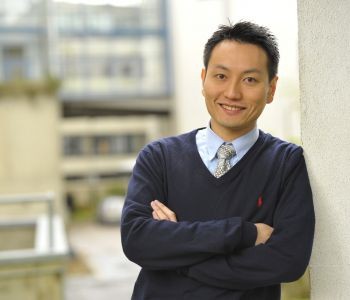
Dr. William Cheung
Dr. Cheung is a Professor and Director of the Institute for the Oceans and Fisheries, the University of British Columbia. He studies the nexus of food-climate-biodiversity in the ocean. He is the Principal Investigator of the Changing Ocean Research Unit at UBC. He serves as Director for a 6-year SSHRC Partnership “Solving the Sustainability Challenges at the Food-Climate-Biodiversity Nexus”. He is an international leader in developing and using scenarios and models to explore solution options and pathways to desirable and sustainable ocean futures. His work addresses policy-relevant research questions and cuts across multiple disciplines, from oceanography to ecology, economics and social sciences. His research ranges from local to global scales. He recently received a Doctor Honoris Causa – France’s highest education honor – from the Institute Agro-Rennes. He has received multiple international and national awards and recognitions, including the Prix d’Excellence Award of the International Council for the Exploration of the Seas, the E. R. Steacie Memorial Fellowship, and was named as the top 20 world’s most influential climate scientists by Reuters.
 Dr. David Rosen, Assistant Professor in the Institute for the Oceans and Fisheries’ Marine Mammal Energetics And Nutrition (MMEAN) Lab received Discovery Grant funding for his “Physiological impacts of climate change on marine mammals” project.
Dr. Rosen’s primary research is on aspects of the bioenergetics (energy requirements and expenditures) of marine mammals. He uses this approach to understand the root causes of population changes by investigating the interactions between the physiology of individual animals and biotic and abiotic environmental changes. The work directly contributes to the conservation and management of marine resources.
Government of Canada announcement
Tags: awards, British Columbia, Canada, Canada Research Chair, conservation, CORU, David Rosen, Discovery Grants, fish, funding, heatwaves, Marie Auger-Methe, marine mammals, MMean Lab, NSERC, SERG, Solving FCB, statistical ecology, William Cheung
Basic income could solve global poverty and stop environmental destruction, study finds
 Providing a basic income could boost global gross domestic product (GDP) by $US163 trillion while acting to curb environmental degradation, UBC research has found.
An analysis of 186 countries found that providing basic income, or regular, set payments to all adults in the world, could boost global GDP by about 130 per cent. For every dollar invested, approximately US$4 to $7 of economic impacts could be generated, according to the study published today in Cell Reports Sustainability, which the researchers believe is the largest of its kind to date.
“Environmental damage and poverty both pose huge risks to society,” said senior author Dr. Rashid Sumaila, a professor in the UBC Institute for the Oceans and Fisheries (IOF) and the school of public policy and global affairs. “By requiring that major polluters pay to clean up their own messes, or the ‘Polluter Pay Principle’, you have a creative approach to address both issues by de-incentivizing environmental pollution through taxation and the removal of existing environmentally harmful subsidies, and using those funds to support a basic income.”
Benefits versus costs
Providing a basic income to everyone in the world living below the poverty line could boost global GDP by $49 trillion or about 39 per cent of current GDP.
The researchers estimated the cost of offering a basic income to the entire global population to be about $41.6 trillion, or about 30 per cent of current GDP. When provided to just those living below the poverty line, the cost was $7.1 trillion.

Professor Rashid Sumaila. ©Justin Man
“Basic income could also potentially contribute in helping to counteract rising inequality in the face of shocks and extreme events,” said co-author Dr. Carl Folke, co-founder of the Stockholm Resilience Centre.
Financing basic income while reducing environmental harm
The researchers noted that there are a number of ways to finance basic income that also reduce environmental degradation, but focussed specifically on carbon taxes given the global push to reduce emissions. While the research looks at a flat tax on carbon production, governments could design taxes to target major polluters and degraders of biodiversity including the oil and gas industry.
Implementing a flat tax of $50 to $100 per tonne of carbon emitted through fossil fuel use could raise about $2.3 trillion, enough to fully fund basic income for people living below the poverty line in Asia, Europe, and North America combined.
Another source of financing could come from redirecting environmentally harmful fisheries subsidies, or government payments that incentivize overcapacity and lead to overfishing, said co-author Dr. Louise Teh, IOF research associate. “In a recent study, we showed that the amount spent on harmful fisheries subsidies in 11 out of the world’s 30 least developed coastal countries would be enough to lift their fishers out of extreme poverty.”
Barriers beyond financial cost
Challenges to implementing a basic income extend beyond the financial cost and include implementation difficulties and perceptions that it may weaken incentives to work and save. However, real-world examples of its efficacy exist, including in Alaska, where part-time work increased by 17 per cent when basic income was implemented, and in Indonesia, where implementation contributed to a decline in deforestation. Successful implementation depends on many factors, including financial considerations and political resolve. Governments must ensure they design effective programs, the researchers say.
While basic income might seem like an extraordinary measure, it could serve as a proactive economic strategy, providing a more universal social safety net while fortifying against future disasters, including pandemics such as COVID-19 and climate disasters. “In short, extraordinary times call for commensurate measures,” said Dr. Sumaila.
Tags: biodiversity, Blue economy, environment, FERU, fisheries economics, Louise Teh, low-income fishers, ocean economy, Rashid Sumaila, Solving FCB
Ecosystem Modelling with EwE – new textbook
 Open UBC has published Dr. Villy Christensen and Dr. Carl J. Walters’ new open source textbook Ecosystem Modelling with EwE.
It can be accessed online, free of charge, at https://pressbooks.bccampus.ca/ewemodel. Printed versions were released June 1, 2024, through bookstores and Amazon. Please note: there is a charge for a hard copy.
This book will be used for future FISH 501 courses, and for the IOF ecosystem modelling micro certificate course.
If you are interested in this subject matter, access it free of charge at: https://pressbooks.bccampus.ca/ewemodel
Tags: Carl Walters, Ecopath, Ecopath with Ecosim (EWE), Publications, Villy Christensen
New FCRR: Gill size and temperature as governing factors in fish growth: A generalization of von Bertalanffy’s growth formula (2nd edition)
 Once upon a time, before Dr. Daniel Pauly became a doctoral student, he spent two years doing fisheries work in Indonesia. He was surprised to discover a near absence of information on the growth of tropical fish. Thus, upon his return to Kiel University’s Institute of Marine Sciences, he decided to find out how fish grew; the idea was that if general patterns emerged, they could be applied to the many species in Indonesia and elsewhere in the tropics. His doctoral dissertation was, consequently, built around identifying the factors that govern fish growth.
Using published data on the growth parameters of over 500 fish species in more than 1500 populations, Dr. Pauly was able to show that local conditions can influence the growth patterns of fish, but that their intrinsic growth performance is not at the mercy of such local conditions. These patterns, he showed, are determined by a major anatomical feature – the surface area of their gills.
Thus, he set the foundations of what is now known as the Gill-Oxygen Limitation Theory (GOLT), which proposes that as two-dimensional surfaces, gills can’t keep up with the growth of three-dimensional bodies of fish. This constraint means that fish must work hard to extract – via their gills – the oxygen they need to grow and maintain their body functions.
Dr. Pauly seems to be the first to have postulated, in 1979, that Pütter’s and von Bertalanffy’s equations make sense only if their “breakdown” consists of the spontaneous denaturation of proteins and nothing else. Also, given that the surface area of gills cannot – as a surface – keep up with the weight of the fish and other water-breathers, Pauly’s reconceptualization explains why the growth of fish and other water-breathers gradually slows down as they get larger because their gills deliver less oxygen per weight to their bodies. This explains why fish generally remain smaller when in warmer temperatures, as spontaneous denaturation is extremely sensitive to temperature.
At the time, however, these ideas – which are not really intuitive – were not well understood and researchers continued to argue about the mechanisms at play in the growth of fish and other aquatic organisms. For 30 years, Dr. Pauly continued working on his theory but mostly as a side project. By the late 2000s, however, global warming gave the GOLT a new breath of life.
For example, fishers, aquaculturists and fisheries scientists started noticing that fish remain smaller when the waters they live in become warmer and less oxygenated. In terms of the GOLT, this is due to their 2D gills supplying a smaller amount of oxygen to 3D bodies that require more of it. Thus, fish stop growing at smaller sizes because they need more oxygen for their maintenance and invest less in growth.
Numerous scientists working on issues of this sort started validating the principles of the GOLT using their own data. At the same time, the theory also elicited critiques, most of which, unfortunately, were not based on actual premises of the GOLT, but subjective perceptions derived from it, which do not represent what the theory is about.
Given these two trends, Dr. Pauly decided it was time to revive his doctoral thesis, as those drawn to applying the GOLT to their research would be able to better understand how it was developed. A ‘new’ version of such ‘founding document,’ thus, has been created to make it readily available online.
Edited as a Fisheries Centre Research Report, the content of the dissertation remains the same as that in the 1979 typewritten version, but with minor typographical errors corrected and tables and figures reorganized for clarity.
Two forewords, one by Dr. William Cheung, renowned climate change researcher and director of UBC’s Institute for the Oceans and Fisheries, and the other by Dr. Johannes Müller, an environmental historian at Leiden University, reflect on the relevance and applicability of the thesis content and, therefore, of the GOLT.
“It is not often that one sees the second edition of a doctoral thesis, let alone one that is 45 years old,” Dr. Pauly wrote in his preface. “However, there are good reasons why this work, originally conceived as providing a methodology for inferring the growth parameters of fish exploited by tropical fisheries, is being re-issued when our main environmental problem is global warming.”
Full article from Sea Around Us
Tags: Daniel Pauly, FCRR, fish, Gill Oxygen Limitation Theory (GOLT), physiology, Publications
Gideon Mordecai is named as an Action Canada Fellow
 Institute for the Oceans and Fisheries Research Associate, Dr. Gideon Mordecai, has been named as one of Action Canada’s Fellows.
Each year Action Canada selects emerging leaders from across Canada to become Action Canada Fellows. They represent all sectors, including business, NGOs, science, government and academia. What they share in common is a commitment to Canada and a demonstrated engagement with public policy.
Dr. Mordecai’s research focuses on the ecology of viruses, i.e. their interactions with each other, their hosts, and the environment. He moved to Canada for a post-doctoral position at the University of British Columbia in 2016, where he discovered 15 new viruses in salmon. He went on to receive a Liber Ero Fellowship, which supports emerging conservation leaders in Canada. His most recent research applies viral genome sequencing to assess the transmission risk posed to wild Pacific salmon by Atlantic salmon aquaculture in BC. He has authored over 30 publications as well as served as an expert witness for two Federal Court cases in Canada. In his current position as a Research Associate with the Institute for the Oceans and Fisheries, Dr. Mordecai is partnered with the Pacific Salmon Foundation, and is part of a collaboration which is applying innovative molecular technologies to determine the cumulative factors that influence the survival of Pacific salmon.
Tags: awards, Gideon Mordecai, honours, IOF Research Associates, salmon, viruses
Pelagic Ecosystems Lab wins BC Conservation & Biodiversity Award

Photo by RDNE Stock project/Pexels
The BC Conservation & Biodiversity Awards celebrate the 2024 Award recipients, all based in BC, who are recognized for their exceptional efforts in enhancing BC’s natural environment and safeguarding its wilderness and biodiversity through their charitable work.
The project work will be undertaken by Lab member Deniz Coskumer, as part of her MSc work, and guided by the Lab’s Principal Investigator, Dr. Brian Hunt.
Tags: awards, biodiversity, Brian Hunt, British Columbia, eDNA, environmental DNA, faculty, IOF students, Pelagic Ecosystems Lab, Research, zooplankton, Zooscan
Project Seahorse at Faculty and Staff Sports Day
The Project “Seahorse squad” had a great day at UBC’s Faculty and Staff Sports Day on May 6, 2024
 |
 |
 |
 |
 |
 |
 |
 |