Feast and famine for juvenile salmon as they navigate BC’s complex coastal waters
British Columbia has one of the most complicated coastlines on earth: a maze of islands, channels, and fjords track the inside passage to Alaska, periodically ripped by tidal rapids that stir up cold water from the deep. New research from UBC’s Institute for the Oceans and Fisheries (IOF)’s Pelagic Ecosystem Lab shows that zooplankton communities are profoundly shaped by these dynamic conditions, creating a mosaic of foraging conditions for the juvenile salmon that depend on them for sustenance.
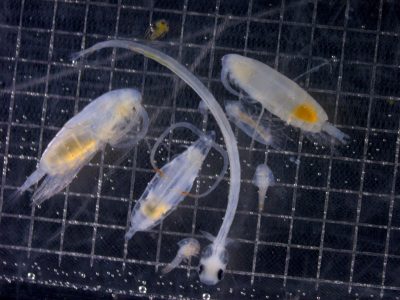 Zooplankton is a catch-all term for an incredibly diverse group of organisms that are positioned near the bottom of the food chain in marine ecosystems. They graze on much smaller phytoplankton, producing energy from these tiny plants accessible to the rest of the ecosystem. Most marine animals consume zooplankton during at least some stage of their life cycle. Pacific Salmon are particularly dependent on them, with zooplankton being their primary food source as juveniles, extending into adulthood for most species. A good supply of zooplankton is essential for juveniles to grow quickly, get big enough to escape predators, and improve condition enough to survive their first winter at sea. Changes in the supply of coastal zooplankton is therefore critical to their survival.
A lot of research has focused on declines in zooplankton supply due to climate change as a cause of salmon declines. While important, little attention has been paid to how this supply might vary along the salmon migration route. However, new research by IOF researchers in partnership with the Hakai Institute shows that juvenile salmon can experience both feast and famine in the BC’s coastal waters. In narrow passageways like the Discovery Islands and Johnstone Strait, the tidal currents run strong and the resulting deep mixing regularly transports phytoplankton away from the surface into the dark depths where they are not able to photosynthesize. This leads to a phytoplankton desert in what is normally a very productive coastal ocean.
“Scarce phytoplankton is bad news for zooplankton, and so is being swept through narrows channels filled with benthic predators like anemones and pelagic consumers like fish,” said Dr. Evgeny Pakhomov, co-Principal Investigator of the study, Director of the Institute for the Oceans and Fisheries and professor in IOF and the UBC Department of Earth, Oceans and Atmospheric Sciences.
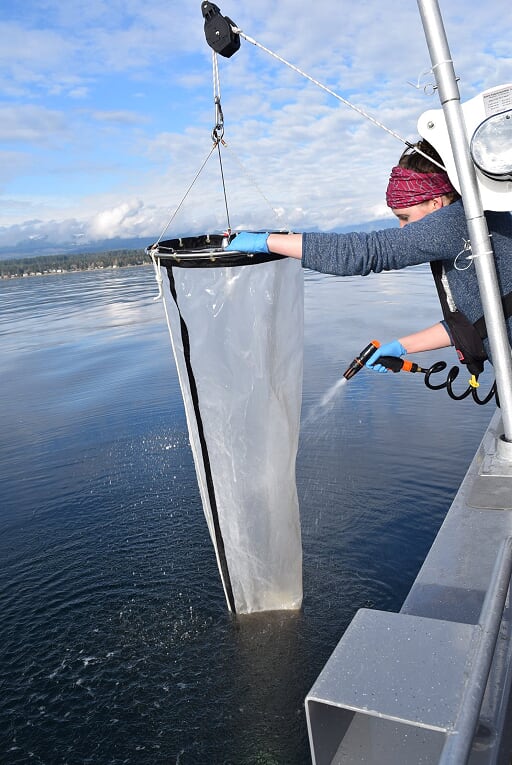 The study found that the supply of nutritious zooplankton is greatly reduced in both number and size in these tidal passages. “The high prevalence of small zooplankton species in the tidally mixed regions indicated that large (i.e., better quality food for consumers) zooplankton aren’t being retained in the area, which is bad news for the juvenile salmon that have to spend at least 150 km swimming through these conditions” says Natalie Mahara, the study’s lead author and a recent IOF Master’s graduate. “We found a much higher number of large zooplankton in the northern Strait of Georgia and Queen Charlotte Strait, where surface waters are more stable and have higher phytoplankton production.”
“When we sampled juvenile sockeye salmon migrating through Johnstone Strait and Discovery Islands we found that there were a lot of empty stomachs. The juvenile fish were struggling to find enough food in these tidally mixed regions,” says Dr. Brian Hunt, Principal Investigator of the study and assistant professor at the Institute for the Oceans and Fisheries. “Based on tagging studies it is estimated that it takes about 10-12 days to migrate through the area. This is a long time to be go under-fed and makes it all the more important that they are able to feast before and after the journey.”
“One of our big concerns now is that warming oceans are decreasing the productivity of the normally productive waters on either side of Johnstone Strait and Discovery Islands. More famine and less feast is a major concern for the early marine survival of juvenile salmon,” Hunt concluded.
Mahara N, Pakhomov EA, Dosser HV, Hunt BPV (2021) How zooplankton communities are shaped in a complex and dynamic coastal system with strong tidal influence. Estuarine, Coastal and Shelf Science 249:107103
Tags: Brian Hunt, British Columbia, Evgeny Pakhomov, food webs, Hakai Institute, Pacific, plankton, salmon
PROFILE: Ocean Leaders step outside the lab to connect with communities and solve ocean problems
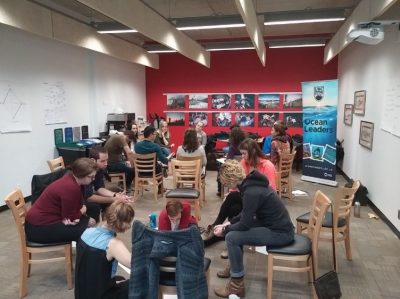 The Training Our Future Ocean Leaders (Ocean Leaders) program challenges graduate students and post-doctoral fellows to translate marine research and theory into action.
Now in its fourth year, Ocean Leaders teaches students from across disciplines in the natural and social sciences how to communicate marine research to a broad audience, how to craft and analyze ocean policy, and how to collaborate with people from diverse academic backgrounds and with diverse priorities when it comes to maintaining the health of Earth’s oceans.
Getting the chance to attend the program and become an ocean leader was one of the reasons that Roshni Mangar, a second-year master’s student studying at the Institute for the Oceans and Fisheries (IOF), chose to complete her degree at the University of British Columbia (UBC).
“One of my motivations in applying to grad school was to produce more actionable science and to convert that science into policy. The Ocean Leaders program provided a space for me to learn the necessary skills to make this happen,” Mangar said.
 To complete the program, students must contribute to a community project where they are tasked with locating and then implementing solutions to a real-world oceans problem. Mangar and her teammates (Meaghan Efford, Fanny Couture and Matias Oddo) worked with West Coast Environmental Law, a non-profit environmental law group, to create an ArcGIS story map for the Tsleil-Waututh First Nation. Viewers can scroll down the ArcGIS story map webpage and scan highlighted areas on the map to see how fish populations, vegetation, infrastructure, fishing methods, and human settlements have changed over time in the Burrard Inlet, the place that Tsleil-Waututh people have called home for millennia.
“I’m an international student, so doing this project helped me connect to the Vancouver area. It gave me the chance to interact with the Tsleil-Waututh Nation, to understand their perspectives, and also learn more about Vancouver’s history as well as the history of local First Nations,” Mangar said.
For their community projects, this year’s students have just begun finding ways to solve the problem of ships dumping waste off the coast of B.C., examining what can be done to stop Styrofoam washing up on B.C.’s shores, and measuring the potential social and environmental costs of trapping carbon dioxide from the atmosphere and storing it in the ocean.
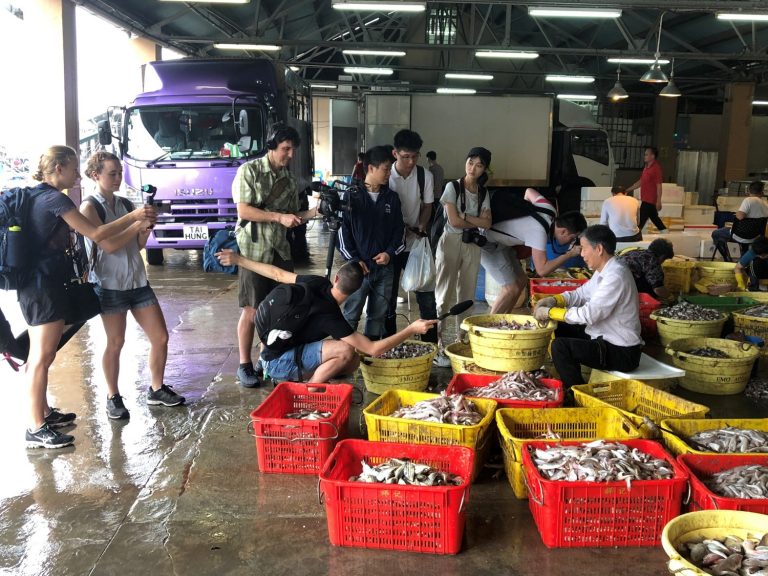 Ocean leaders in training also get to journey outside the lab and use their science skills to explore creative, non-academic science communication. Caroline Graham, a recent graduate of the oceans and fisheries master’s program, travelled to China to collaborate with UBC journalism students and faculty and produce an award-winning story for NBC News about the costs of the fishmeal industry.
“I got a first-hand look at the fishmeal industry in China, and an opportunity I never thought I’d have as a grad student to see inside the journalism world and participate as a scientist,” Graham said. “Getting to see the scale of things was exciting and terrifying.”
Past students have also told their (occasionally terrifying) research stories on stage to live audiences in a collaboration with the non-profit science storytelling group, Story Collider.
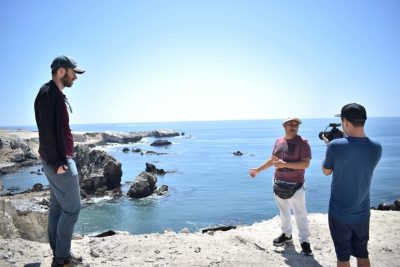 Storytelling is a regular part of the program, as students and faculty gather once a month to entertain one another and share stories about their research and life journeys in story time sessions.
“I enjoyed these sessions, because sometimes I view professors or researchers as perfect individuals, but everyone makes mistakes,” Mangar said. “The sessions gave me the chance to learn about the different paths the faculty or researchers have taken to get to where they are.”
Dr. Simon Donner, the Director of Ocean Leaders program and Professor in the Institute for the Oceans and Fisheries and the Department of Geography at UBC, said that he plans to embed the training offered by Ocean Leaders into the IOF’s master’s degree program so that all students completing their degrees will leave with foundational knowledge of how to communicate science and work with diverse stakeholders to craft good policy.
“Solving the problems of tomorrow isn’t about being a lone hero. It’s about bringing everybody along. How do you work with the community?” Donner said. “What do you do when all of the stakeholders don’t agree? How do you translate your scientific knowledge to people that might not always want to hear it? That’s what the program is about.”
“The people emerging from this program are marine experts that know how to bring different stakeholders together to solve the challenges of tomorrow,”Donner added. “They’re ready to both be academics and work with governments, NGOs and private industry to solve ocean problems, not just study them theoretically.”
Tag: Aboriginal fisheries, China, fieldwork, fishmeal, Indigenous fisheries, IOF students, Ocean Leaders, Research, science communications, Simon Donner, Tsleil-Waututh Nation
Rashid Sumaila named University Killam Professor
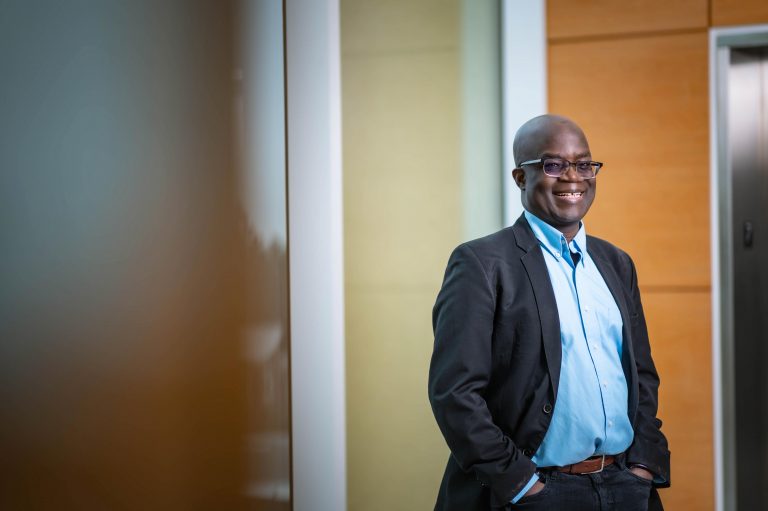 Dr. Rashid Sumaila, professor in UBC Science’s Institute for the Oceans and Fisheries, as well as the School of Public Policy and Global Affairs in the Faculty of Arts, is one of six faculty members who have been named by UBC as a University Killam Professor. The University Killam Professorship is the highest honour that UBC can confer on a faculty member, and recognizes exceptional teachers and researchers who are leaders in their fields, and who have received international recognition for their talents and efforts.
“I feel massively honoured by this recognition,” said Dr. Sumaila. “This achievement would not have been possible without the support of my students, postdocs, research associates and collaborators worldwide.”
Prof. Sumaila is one of the world’s most innovative researchers on the future of the oceans. A Canada Research Chair (Tier I) in Interdisciplinary Ocean and Fisheries Economics, he is also Director of the Fisheries Economics Research Unit and the SSHRC sponsored OceanCanada Partnership. His research integrates social, economic and fisheries sciences to build novel pathways towards sustainable fisheries. Focusing on bioeconomics, marine ecosystem valuation and the analysis of global issues such as fisheries subsidies, IUU (illegal, unreported and unregulated) fishing and the economics of high seas and deep seas fisheries, his work has challenged today’s approaches to marine governance, generating exciting new ways of thinking about our relationship to the marine biosphere. This includes his ‘fish bank’ concept for the high seas that has the potential to significantly advance ocean conservation on a global scale, and using “intergeneration discount rates” for natural resource projects.
Dr. Sumaila complements his research with leadership in, and development of, interdisciplinary, multi-institutional research partnerships. He was the coordinating author of the fisheries chapter of UNEP’s Green Economy Report, part of the group that developed UNEP’s Global Biodiversity Outlook 3 and 4, and also served as the Team Leader of the International Centre for Trade and Sustainable Development (ICTSD) and the World Economic Forum’s E15 Initiative Fisheries and Oceans expert group. He serves on the High-Level Panel (HLP) on Global Assessment of Resources for Implementing the Strategic Plan for Biodiversity 2011-2020 , participated on the UN expert panel to develop a conceptual framework for the work of the International Panel for Biodiversity and Ecosystem Services of the UN (IPBES), and was recently asked to join the Expert Group for the High Level Panel on Building a Sustainable Ocean Economy, struck by the Prime Minister of Norway and President of the Republic of Palau. In addition, he continues to be active at the science-policy interface, bringing his expert scientific knowledge into policy and governance discussions through collaboration with NGOs, national governments, and international organizations such as the OECD, the African Union, and World Trade Organization.
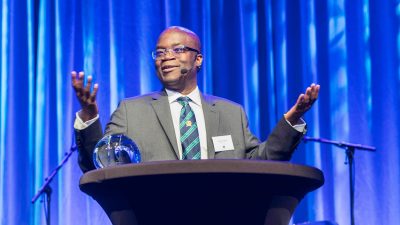 Given his stature as both a researcher and a partnership builder, Dr. Sumaila has given numerous public lectures around the world, including, notably serving as “Scene-Setter” for US Secretary of State John Kerry’s 2016 Our Ocean Conference, as well as making presentations at the White House, the U.S. Congress, the Canadian Parliament, the British House of Lords, the St James Palace (at the invitation of Prince Charles), the European Parliament, the African Union, and the United Nations. Dr. Sumaila regularly conducts outreach activities to economically disadvantaged populations such as small-scale fishers in Africa and indigenous peoples in Canada.
Beyond those traditional engagements, Dr. Sumaila engages with media because he believes he has an obligation to present his work to the wider public and engage with society. He has made over 500 media appearances, with the goal of informing policy makers and the public, and his work has generated a great deal of interest by international media, including, the New York Times, The Economist, International Herald Tribune, Financial Times, Wall Street Journal, Globe and Mail, VOA, CBC News, and the Vancouver Sun.
Among his other distinctions, Dr. Sumaila was inducted as a Fellow of the Royal Society of Canada in 2019, and won the Volvo Environment Prize and the Peter Benchley Ocean Award for Excellence in Science in 2017. He also serves on the Board of Directors of Oceana, and the Science Advisory Board of WWF-Canada as well as several journal editorial boards including those of Science Advances, Environmental & Resource Economics, and Marine Policy.
Dr. Evgeny Pakhomov, Director of the Institute for the Oceans and Fisheries said that Dr. Sumaila “is a truly remarkable scientist and teacher, outstanding scholar and human being. He is very deserving of the designation of University Killam Professor, and we are very happy for this extraordinary colleague, whom we are also happy to call a friend.”
In conjunction with receiving the University Killam Professorship, Dr. Sumaila will deliver a public lecture on his research. Details for this lecture will be announced in the coming months.
UBC Vice President, Academic announcement of 2021 University Killam Professors
More information about UBC’s University Killam Professors.
Tags: awards, faculty, FERU, OceanCanada, Rashid Sumaila
Daniel Pauly awarded Beverton Medal by Fisheries Society of the British Isles
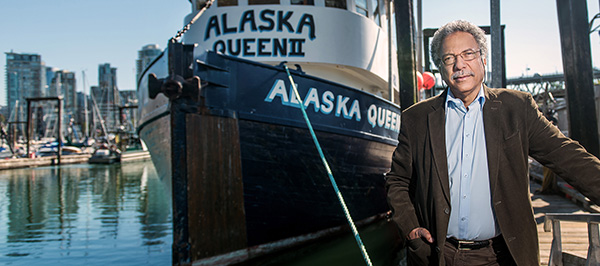
Daniel Pauly. Photo by Paul Joseph.
The Beverton Medal is FSBI’s most senior award and highest honour and it is usually presented, together with the FSBI and Le Cren medals, at the Society’s annual International Symposium. Given the ongoing restrictions due to the COVID-19 pandemic, this year’s awardees will receive the medals in advance and participate in the virtual symposium later in July.
Dr. Pauly has been granted the Beverton Medal – among many other achievements – for being one of the first scientists to point out that fishing dramatically affects fish stocks.
Pauly identified global trends in fishing and developed the concept of fishing down the food web. The idea of shifting baselines, or the floating frame of reference of young researchers for what an original fish stock actually represents, also belongs to him.
The Society’s announcement points out that besides the most-cited shifting baselines concept, another major achievement in the career of the Sea Around Us‘ PI is the development of his ‘Pauly equation,’ a simple equation for calculating natural fish mortality that gave rise to his idea of collating and disseminating data on the economically most important fish in a database – FishBase – so that they would also be available to scientists in developing countries.
“Daniel Pauly is a passionate scientist who enters into discussion with society. His mission is to secure the oceans so that future generations, rich and poor, can continue to catch and eat fish,” the Fisheries Society of the British Isles said.
The FSBI considers him the most influential scientist in the field of fisheries biology, having received 37 prizes and awards since 2000. The announcement also highlights the fact that Dr. Pauly was knighted as Chevalier de la Légion d’Honneur in 2017 by the French government.
Also in 2017, the Fisheries Society of the British Isles presented Pauly with the Le Cren Medal, an award that was shared with FishBase, the biodiversity information system he co-created together with Rainer Froese.
IOF researchers use salmon scales to track sockeye in the high seas
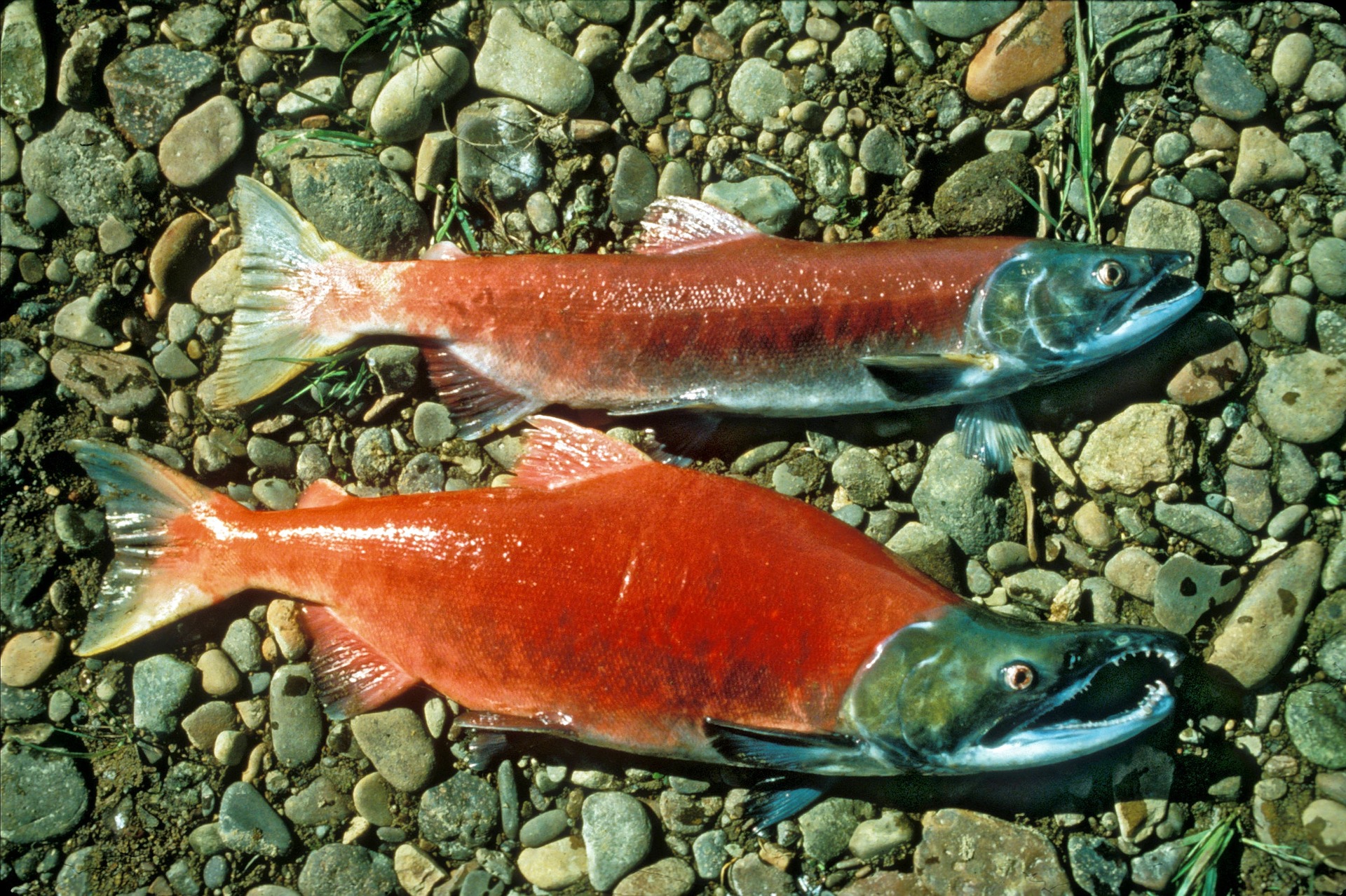
Image by Kevin Phillips from Pixabay
by Riley Tjosvold
Fisheries researchers have long grappled with the question of where specific salmon stocks go when they leave rivers and streams and migrate into the ocean. The problem: studies in which researchers sample fish at sea, or track fish using tags, can be labour-intensive and costly. However, a cheaper, faster – and hotter—method of investigating where salmon stocks spend their time shows promise, and it uses a material that some fisheries management groups have been collecting for over a century: salmon scales.
In a study, published in late 2020 in Ecology and Evolution, Institute for the Oceans and Fisheries (IOF) researchers used the stable isotopes preserved in salmon scales to locate the regions where a number of different North Pacific sockeye salmon stocks forage for food.
The process is complex and fascinating: certain carbon isotopes are absorbed by phytoplankton during photosynthesis and then travel through the food web into salmon. The ratio of the isotopes stays consistent from one food source to the next, but different regions of the ocean have unique carbon isotope “signatures.” This is because water temperature affects the amount of carbon dioxide (the chemical compound from which the isotope originates) that gets dissolved in the ocean and ultimately how much carbon dioxide is available to phytoplankton. The isotope signature is preserved in salmon scales and can be measured by an isotope ratio mass spectrometer, a machine that burns the scales at high temperatures.
The researchers collected hundreds of scale samples – some dating as far back as the 1960s — from archives across the North Pacific.
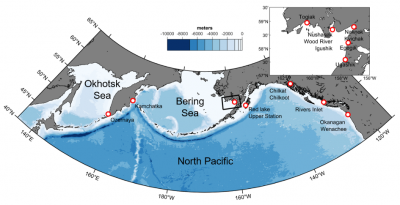
Map of the study area with locations of the sockeye salmon stocks investigated.
After analyzing the isotopes, they checked their measurements against the isotope signatures of different regions of the North Pacific.
“What surprised us is that we were able to trace the different stocks, especially where they forage,” said Evgeny Pakhomov, professor and director of the IOF and one of the study’s co-investigators. “We know that fish are going into the open ocean, and our perception and vision into this is that when salmon go into the open ocean they mix together. What this paper is telling us is that it looks like different stocks of salmon are feeding in different places.”
Knowing where different salmon stocks travel to forage will be essential for identifying the unique environmental threats they will face as oceans become more inhospitable due to climate change and other cumulative impacts to ocean habitats.
“What’s cool about this is it enables us to start partitioning out the distribution of these stocks,” Hunt said. “We can start looking at variability in environments experienced by different stocks, and that can take us one step further to knowing the effects of the open-ocean part of their life history on their survival and growth… This is a great first step in thinking about regional effects on fish.”
Understanding why fish grow the way they do and getting serious about it
The distribution and concentration of dissolved oxygen and water temperature in the oceans and freshwaters are usually far more influential in shaping the growth and reproduction of fish than the distribution of their prey.
In a new paper in Science Advances, Daniel Pauly, principal investigator of the Sea Around Us initiative at UBC’s Institute for the Oceans and Fisheries, argues that scientists need to avoid attaching human attributes to fish and start looking at their unique biology and constraints through a different lens.
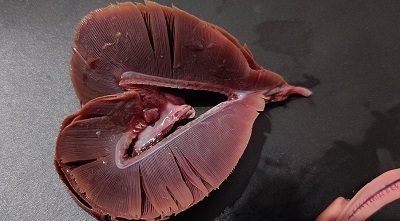
Fish gills. Image by Krishna satya 333, Wikimedia Commons

The GOLT emphasizes that gills are surfaces through which water must flow – a bit like the wind through blinds. Gill surface area grows in two dimensions, that is, in length and width, but they cannot keep up with bodies that grow in three dimensions, length, width and also depth. Thus, as fish get bigger, they have less gill surface area and their gills provide less oxygen per unit volume or weight.
“The problem is that many colleagues fail to understand the basic geometry of gills, and argue that, as fish grow bigger and, thus, require more oxygen, they can just grow larger gills,” Pauly said. “But they can’t pack their heads full of gills because, if that were to happen, water wouldn’t be able to flow through.”
Pauly’s research indicates that the gill issue is a constraint, not something fish can evolve out of. This means that once their gills reach a point where the oxygen they supply cannot support a bigger body, they stop growing.
“This is particularly important in the context of climate change because warm waters contain less oxygen. This means that gills have less oxygen to supply to bodies that require more oxygen at higher temperatures”, Pauly said, “This double whammy occurs because fish, in contrast to human and other mammals, cannot maintain their body temperature constant, and higher water temperatures accelerate their metabolisms.”
Higher temperatures force fish to stop growing at a smaller size, given the little oxygen available to them. This has important implications for fisheries and aquaculture.
Despite having many applications, the GOLT has been the subject of criticisms. In the new paper, Pauly responds to these challenges point by point.
“In contrast to regular scientific papers, the ‘data’ here are published arguments against the GOLT and their counterarguments, presented in table form. These arguments are not serious; they are more like barnacles on the hulls of a boat, which slow it down but do not sink it”, Pauly said. “They are based on a lack of understanding of key geometrical and biological concepts. Thus, it was important to clear them out so that the GOLT can start to be seriously studied, and its real problems addressed.”
The fact that the Gill Oxygen Limitation Theory is mainly qualitative and makes few quantitative predictions, is one of the real problems that Pauly himself has noticed and would like his colleagues to address, as well as the fact that it doesn’t deal with bioenergetics and the role food plays in the life of fish.
“Food is necessary for life and the GOLT is structured around the notion that there is enough food but what if there isn’t enough food? The relationships between food and oxygen will have to be studied, too,” he said.
The paper “The Gill Oxygen Limitation Theory (GOLT) and its critics” was published in Science Advances.
Tags: climate change, Daniel Pauly, faculty, fish, physiology, Research, Sea Around Us
To schedule interviews with Daniel Pauly, please contact Valentina Ruiz-Leotaud v.ruizleotaud[at]fisheries-2023.sites.olt.ubc.ca
STUDENT PROFILE: Natalie Benoit
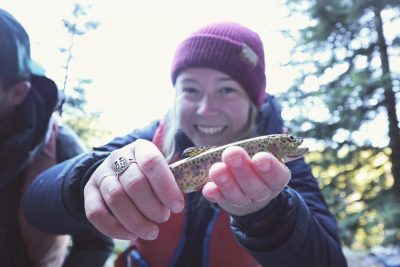 Natalie Benoit is a first-year Master’s student at the Institute for the Oceans and Fisheries (IOF), working with the Hakai Institute‘s Juvenile Salmon Program on Quadra Island. Her field research is based in the Strait of Georgia and Johnstone Strait, where she collects samples of environmental DNA (or eDNA) from Pacific salmon. eDNA is microscopic pieces of genetic material left behind when the fish travel through water. Her work with the Hakai Institute uses laboratory and field experiments to explore whether eDNA could be used to accurately measure the abundance and distribution of juvenile salmon out-migrating into the Pacific Ocean.
What sparked your interest in coming to the IOF?
I try to keep in the loop with current research and events in the salmon world and there are so many interesting studies coming out of UBC right now; it’s a great place for cutting-edge research for marine and freshwater species. I’m studying salmon monitoring via eDNA, which is a technique that has gained significantly more attention within recent years. I like the idea of something that’s new and exciting. I was connected to the IOF through a professor in UBC’s Faculty of Forestry. That is where I did my undergraduate degree and began working with salmon, and when I decided I wanted to pursue fisheries research in graduate studies IOF was a good fit.
How has the IOF helped you pursue your research and career goals?
It’s given me a very unique opportunity. My project is with both UBC and the Hakai Institute and the IOF has a strong relationship with Hakai, and with many other groups. I have been able to work with Hakai alongside UBC and learn countless new research techniques. As well, it has allowed me to foster incredible connections to extremely accomplished and inspiring scientists at both UBC and the Hakai Institute. This has truly jumpstarted my scientific career.
Why are you interested in studying salmon?
Pacific salmon are ecologically and physiologically fascinating to me. They are anadromous species, travelling through both fresh and salt water. Some travel over 3,000 kilometres to spawn in their natal rivers. In their travels through the ocean and rivers, they influence the entire ecosystem around them. They do this by impacting the marine and freshwater food web. They also effect the terrestrial landscape by increasing the nutrient composition in riparian zones. Additionally, these keystone species have a lot of history on the B.C. coast. Specifically, they hold incredible importance to the First Nations in the Pacific Northwest.
I think they are the most interesting species due to their ecological, cultural, and economic importance. However, I may be a bit biased.
What’s been the biggest challenge for you since starting the program?
I had much stronger field background than lab background when I started. My lack of lab experience almost deterred me from taking this project on. I had to learn the basics. Due to the pandemic, I had a unique opportunity to get the majority of lab work competed for my thesis. Since beginning in May of 2020 I have spent countless hours in the lab. I started with some basic techniques and now feel very confident in advanced practices.
I’m glad that the lab work didn’t dissuade me. I’ve learned an incredible amount, thanks to my supervisor and the very helpful technicians at the Hakai Institute. I also learned how much I like the lab work!
Related stories:
- Super Salmon Science
- Juvenile Salmon Survival Program gains funding from MITACS and the Tula Foundation
Tags: fieldwork, Hakai Institute, IOF students, Pacific, Pelagic Ecosystems Lab, salmon
STUDENT PROFILE: Ana Pozas
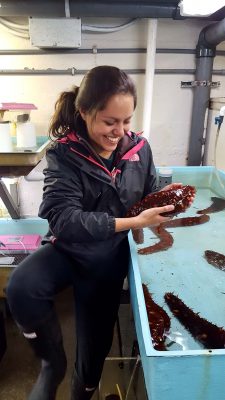 Ana Pozas is a first-year Master of Science student at the Institute for the Oceans and Fisheries (IOF). She’s doing her research under the supervision of IOF assistant professor David Rosen in the Marine Mammal Energetics and Nutrition (MMEAN) lab, studying the diets of California sea lions. After finishing her biology degree at UBC (where she had the chance to do a project with Dr. Rosen at the Vancouver Aquarium), Ana was offered a position at the MMEAN research unit to complete her master’s degree.
What made you interested in studying sea lions?
People say this a lot, but they’re kind of the dogs of the sea. It’s very easy for people to connect with dogs – they’re something familiar that most people love and are interested in, which can carry through to sea lions. To me that always reminds me that the ocean is not such a scary place and that there’s so much to learn still, and I hope others can also see that. They can represent something close to home, but in the marine world.
Did you have much first-hand experience with sea lions before coming to the IOF?
During my undergrad program, I did a four-month co-op with The Nature Conservancy in the Gulf of California in Mexico. That was a great experience where I realized that I really liked marine biology and conservation. That’s where I had contact with California sea lions, which was in the wild, first-hand, swimming with them, but nothing to do with research until my project with Dr. Rosen at UBC.
When I worked with Dr. Rosen for one of my course projects, we had to do a behavioural research study. We did 50 hours’ worth of observations of the species that we had chosen. I focused on the sea lions at the Aquarium. I watched and recorded their behaviour, analyzed data, and answered some questions. It was nice staying connected to the animals I had seen in the wild.
What research are you doing now at the IOF?
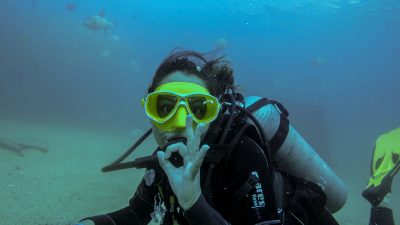 Unfortunately, I am unable to go out and do fieldwork because of COVID. I’m working with data that already exists; doing a meta-analysis of data on the diet and population changes of California sea lion rookeries in the Gulf of California and the Pacific coast.
While many populations on the coast are increasing, in the Gulf they’re decreasing. I’m working with a researcher in Mexico who has a lot of diet data that I’m going to be combining with population data to see how the zones differ in terms of population and to understand whether the population differences have something to do with the quality of the fish they’re eating.
What can you tell me about your time at the IOF so far?
I feel like right now as a first-year student it’s nice to be taking the FISH 500 course and feel that professors are rooting for us and for me. They are very aware that we’re starting off, beginning to think about big projects, and exploring different areas with our own interests and skills.
Related story: SPOTLIGHT: Marine Mammal Energetics and Nutrition Lab carries on with research despite COVID-19 setbacks
Tags: David Rosen, IOF students, Marine Mammal Research Unit, marine mammals, MMean Lab, Pacific, sea lions