Let’s celebrate women in science today and everyday!
Julia Adelsheim
Julia Adelsheim (she/her) is a master’s student in the Marine Mammal Research Unit at the IOF. She is constructing a new bioenergetic model to investigate how changes in prey characteristics interact with each other and ultimately affect the energy balance of individual sea otters, while accounting for sex, age, and reproductive status. This will help understand sea otter population dynamics, range expansion, and conservation.
Selected publications:
Adelsheim was featured on the Society for Marine Mammalogy’s podcast Marine Mammal Science in the episode called “Sea Otters! Sea Otters! Sea Otters!”.
Verónica Relaño Écija
Verónica Relaño Écija is a marine scientist and conservationist in the Sea Around Us unit at the IOF. Écija passionate about improving marine life and society as a whole. She is interested in enhancing marine biodiversity, development economics, and understanding causal relationships, and focuses on (marine) protected areas, ecological connectivity, fishery economics and people.
Selected publications:
Verónica Relaño Écija directed the documentary “El Pueblo es El Mar,” which tells the stories of different coastal communities and stakeholders in the Argentinian province of Río Negro along the Atlantic coast of northern Patagonia. The documentary explores the communities’ perspectives, and raises awareness about the ecological, social, and economic value of the San Antonio Bay Marine Protected Area.
Sarah Harper
Sarah Harper (she/her) is a postdoctoral fellow with Wildlife Conservation Society and the University of Victoria. Harper’s doctoral research has highlighted contributions by women in fisheries economies globally, and she has many publications on topics related to gender, fisheries, and economics. Harper investigated fisheries subsidies and equity under the supervision of Dr. U. Rashid Sumaila, and contributed to the debate on fisheries policies and subsidy reform.
Selected publications:
An initiative of the Gender in Aquaculture and Fisheries Society (GAFS) to help elevate the women who fish all around the world, bringing attention to their importance in the fisheries sector and beyond. Harper contributed to this project along with Ayodele Oloko, and the video includes pictures taken by Andrew Trites.
Harper and Colette Wabnitz wrote a chapter about the Blue Economy in the book The Ocean and Us. The recently released book was written entirely by women who are deeply invested in the health of the ocean and all those it supports.
Karly McMullen
Karly McMullen is a master’s student in the Ocean Pollution Research Unit at the IOF. McMullen’s research aim is to advance the understanding of marine microplastic pollution and their implications. McMullen took part in an oceanographic research expedition throughout Ecuador’s continental coast and the waters of the Galápagos Islands to assess microplastic distribution and availability, and to infer the bioaccumulation of microplastics in the Galápagos penguin and the potential risks to the species.
Selected publications:
McMullen was an author on the paper “Multiple anthropogenic stressors in the Galápagos Islands’ complex social–ecological system: Interactions of marine pollution, fishing pressure, and climate change with management recommendations.” The paper discussed the impact of anthropogenic pollutants and their associated ecotoxicological implications for Galápagos species in the face of climate change stressors.
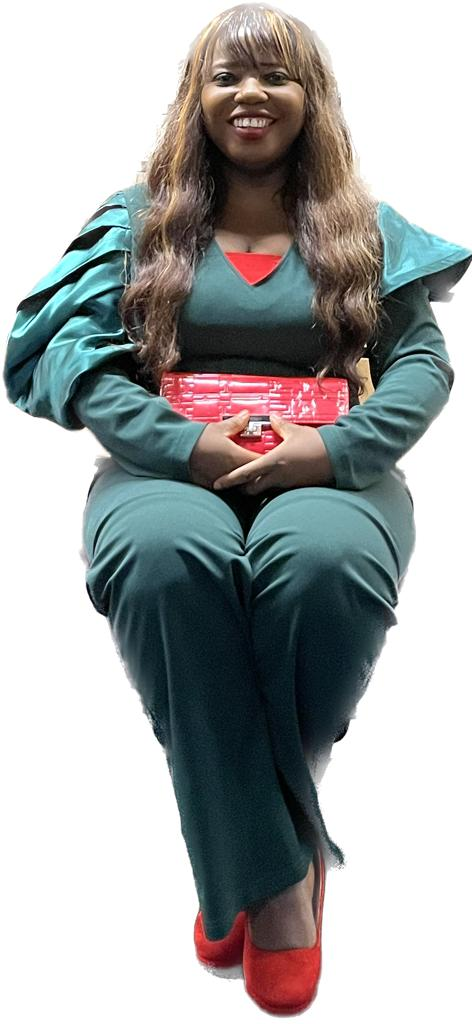
Ayodele Oloko
Ayodele Oloko is a social scientist with great interest in women’s empowerment, climate change, and fisheries. Oloko is interested in exploring the role of social norms in mediating human interactions with fisheries resources, and their potential to improve contributions to food and livelihood security. Oloko wants to enlighten the world about the vulnerabilities and resilience of women fisher folk in developing countries to poverty, with an interest in these topics stemming from decades of research on Traditional Ecological Knowledge, Gender, and Fisheries.
Selected publications:
Oloko was the lead author of “The Challenges and Prospects of Women Fisherfolk in Makoko, Lagos State, Nigeria” which described how women with different sized businesses conducted their fish trade along with their reproductive roles. The paper investigated the coping strategies of women fisherfolk use to tackle the cultural and institutional factors that threaten their pursuit of a sustainable livelihood.
An initiative of the Gender in Aquaculture and Fisheries Society (GAFS) to help elevate the women who fish all around the world, bringing attention to their importance in the fisheries sector and beyond. Oloko contributed to this project along with Sarah Harper, and the video includes pictures taken by Andrew Trites.
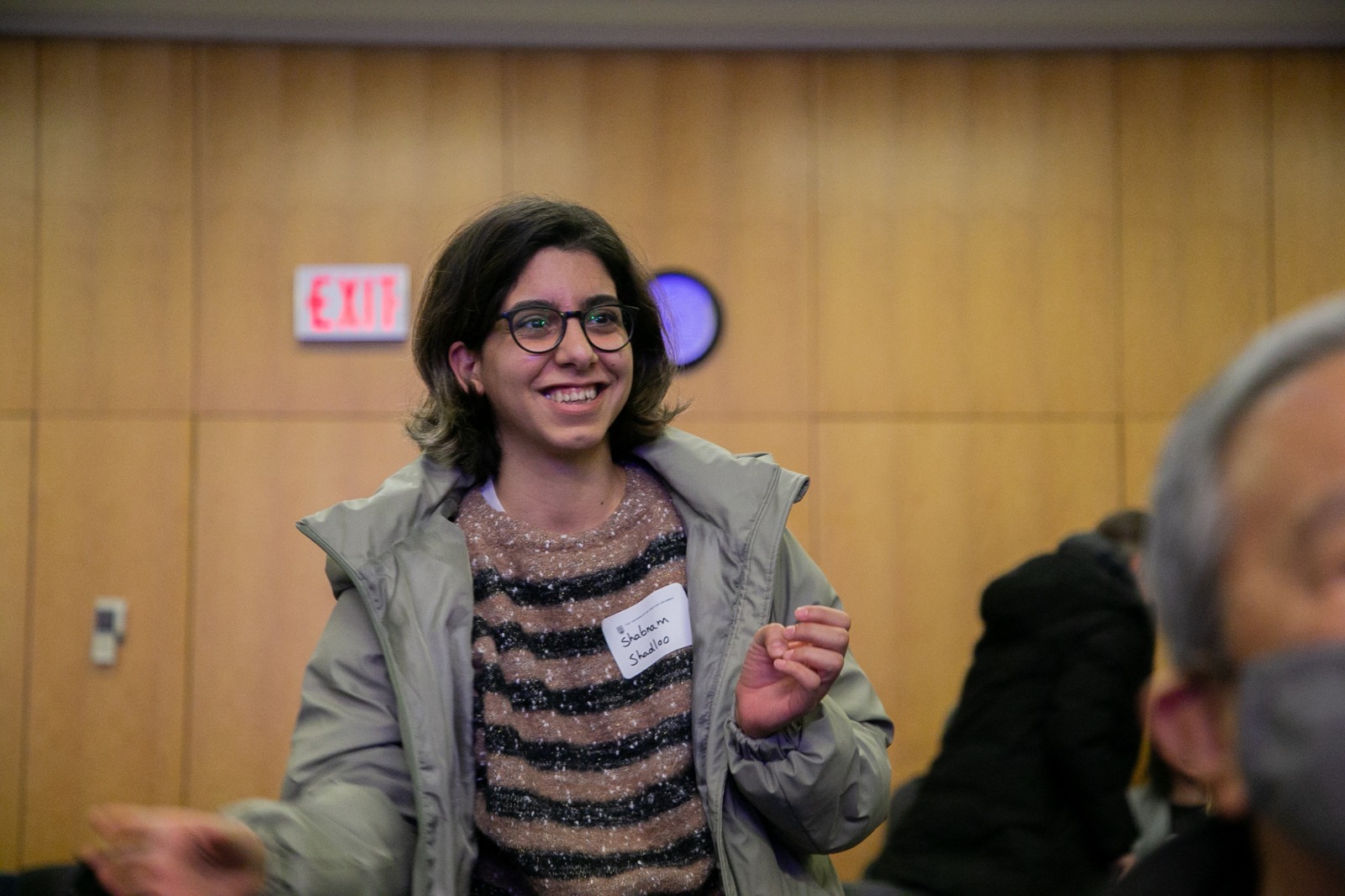
Shabnam Shadloo
Shadbnam Shadloo (she/her) is a PhD student in the Statistical Ecology Research unit at the IOF. She is going to work on the “foraging ecology of the glaucous-winged gull (Larus glaucescens) and its health as an indicator of the ecosystem” around the Salish Sea. She will develop a method to identify glaucous-winged gulls’ foraging behaviour using movement data. Shadloo will also assess the sources of some zoonotic diseases, such as Toxoplasmosis and avian influenza, and the association of human settlements with the occurrence of these diseases.
Selected publications:
Shadloo was the lead author in the paper “Prediction of habitat suitability for the desert monitor (Varanus griseus caspius) under the influence of future climate change.” The study of the suitable habitats of the desert monitor were evaluated in Iran, and 10 environmental factors for three time periods were considered.
Shadloo was the lead author in the paper “Prediction of habitat suitability for Wild Goat, Capra aegagrus (Erxleben, 1777) in Kavir National Park, Semnan Province, Iran.” The paper studies the desirable habitats of Kavir National Park for Wild goat in two distinguished warm and cold seasons.
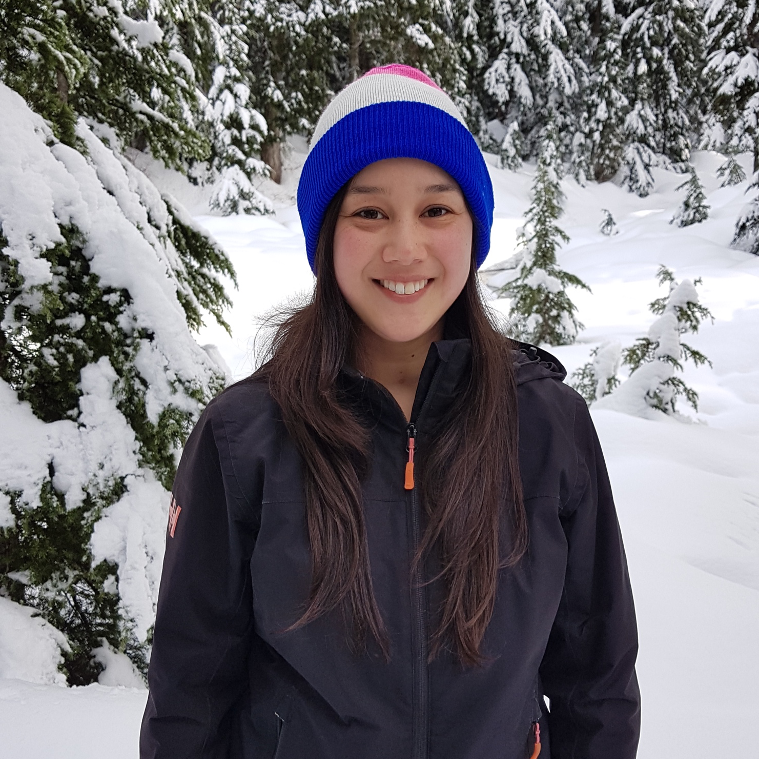
Kristen Sora
Kristen Sora (she/her) is a PhD student in the Changing Ocean Research unit at the IOF. She is studying the multi-stressor impacts on the Canadian Beaufort Sea marine ecosystem at various biological scales. Sora will develop and apply food web models and associated indices using the platform Ecopath with Ecosim to understand system dynamics. The food web models will investigate possible changes in the Beaufort Sea ecosystem structure and function under changing environmental and human drivers and the implications for the TN MPA and its management.
Selected publications:
Sora was the lead author of the paper “Evaluation of the Beaufort Sea shelf structure and function in support of the Tarium Niryutait Marine Protected Area.” The paper describes the ecological dynamics of the Canadian Beaufort Sea Shelf ecosystem and the Tarium Niryutait Marine Protected Area under changes in sea surface temperature and sea ice extent.
Sora will be presenting at the “ ECCWO5 symposium” in Bergen, Norway. The symposium will have experts to help better understand climate impacts on ocean ecosystems, the ecosystem services they provide, and the people, businesses and communities that depend on them.
Sora has an upcoming paper called “Influence of historical climate drivers on the Beaufort Sea Shelf marine food web.”
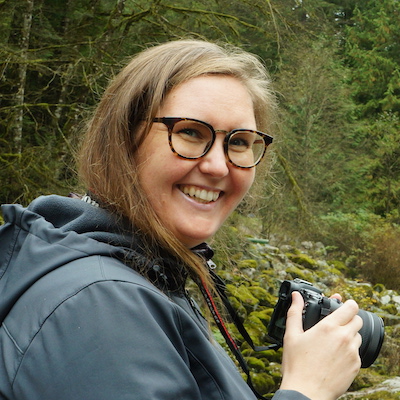
Rhea Storlund
Rhea Storlund is a PhD student in the Marine Mammal Research Unit at the IOF. Storlund’s research is “Circulation during diving: aortic bulb comparisons among marine mammals and cardiovascular responses in Steller sea lions.” Storlund’s objective is to examine how the structure and function of the aortic bulb and cardiac electrical activity of marine mammals are related to their dive behaviour and health. This has implications for understanding marine mammal foraging ecology and the ability of marine mammals to respond to disturbances when diving.
Selected publications:
Storlund was featured on the Society for Marine Mammalogy’s podcast Marine Mammal Science in the episode called “Pinniped cardiovascular physiology”.
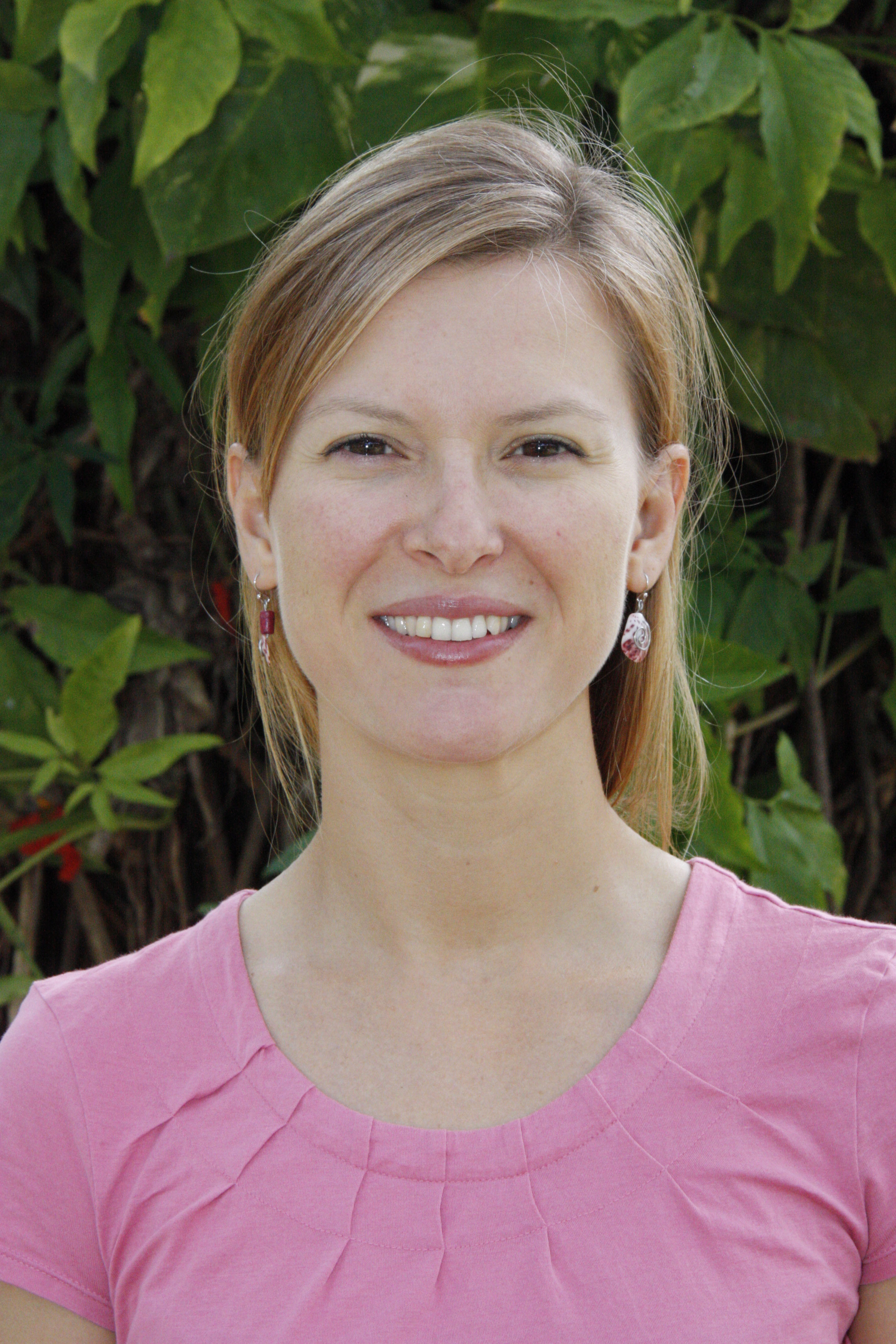
Colette Wabnitz
Colette Wabnitz is a marine scientist, and research associate at the Changing Ocean Research Unit at the IOF and a part of the NF-UBC Nereus Program. She is interested in understanding the functioning of ecosystems, how these may respond to human pressures and natural forcing, and the design, together with government, industry, NGOs and local communities, of appropriate measures for the sustainable use of their resources, and the long term conservation of their services. She has worked with fisheries in a variety of settings and engaging stakeholders from a wide diversity of backgrounds in Canada, the Caribbean, Middle East, South Pacific and West Africa.
Selected publications:
Wabnitz and Sarah Harper are working on the gender report for the ORRAA. These include country fact sheets that provide an overview of the role of seafood production in a given set of countries, with a focus on gender dimensions, highlighting opportunities to strengthen gender equity and women’s empowerment in the sector and beyond. The products that are up and coming will be released later this spring.
Harper and Colette Wabnitz wrote a chapter about the Blue Economy in the book The Ocean and Us. The recently released book was written entirely by women who are deeply invested in the health of the ocean and all those it supports.
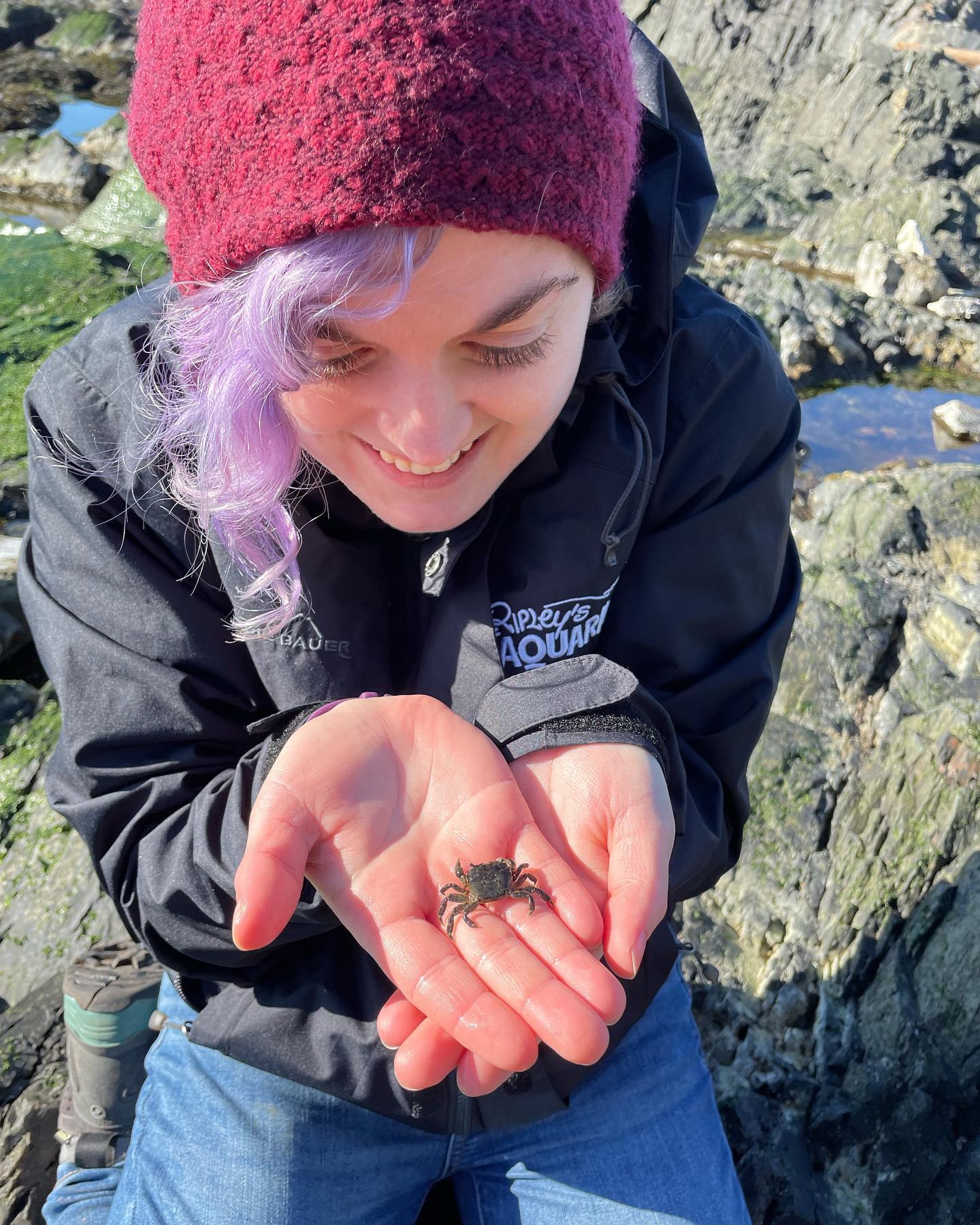
Melanie Warren
Melanie Warren (she/her) is a master’s student in the Sea Around Us unit at the IOF. Before UBC, Warren was an aquarist taking care of seadragons, cuttlefish, and turtles. She also worked in coral rescue and sea turtle rehabilitation. Her master’s research will investigate the gill-oxygen limitation theory and its application to sharks, rays and chimaeras.
Selected publications:
Warren was one of the authors of the paper “Length–Weight Relationships and Growth Parameters of Common and Leafy Seadragons (Syngnathidae) from a Public Aquarium.” The paper collected data of the common seadragon and the leafy seadragon based on specimens raised in the Birch Aquarium at Scripps, La Jolla, California.
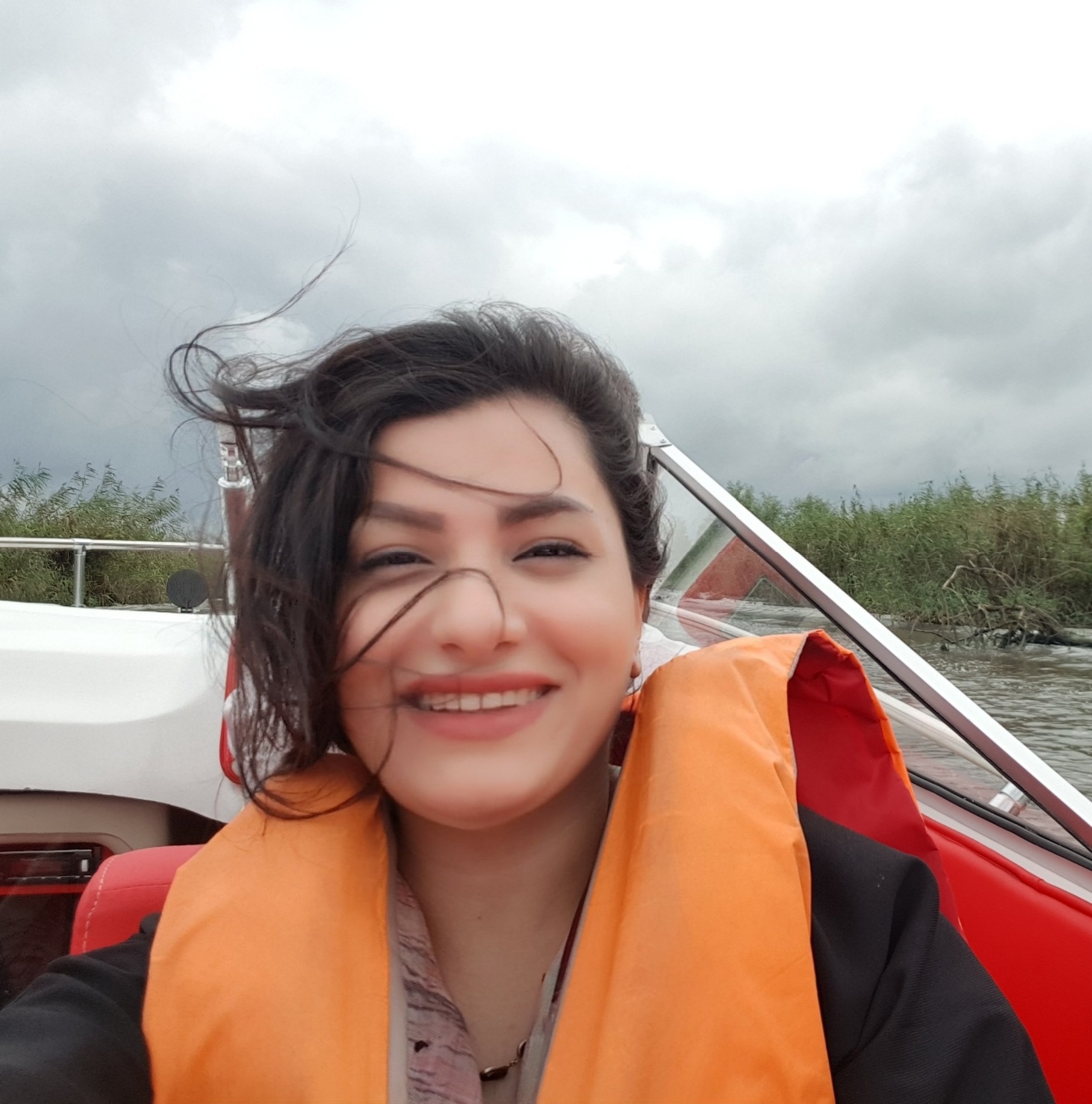
Zeinab Zoveidadianpour
Dr. Zeinab Zoveidadianpour is a postdoctoral research fellow at Simon Fraser University and an international researcher working under the supervision of Dr. Juan Jose Alava at the IOF. She specializes in marine ecotoxicology and risk assessment, with over a decade of experience in studying various contaminants in seawater, sediments, and biota. Zoveidadianpour’s aims to engage local people, citizens, businesses, and policymakers to take action through knowledge exchange and co-creation of solutions to chemical pollution.
Selected publications:
Zoveidadianpour was the lead author of an investigation of polycyclic aromatic hydrocarbons in Iran. It is a comprehensive investigation of PAHs’ occurrence and distribution in the water, sediment, and fish samples of Musa estuary was conducted.
2023 Tyler Prize for Environmental Achievement: Daniel Pauly and Rashid Sumaila are winners
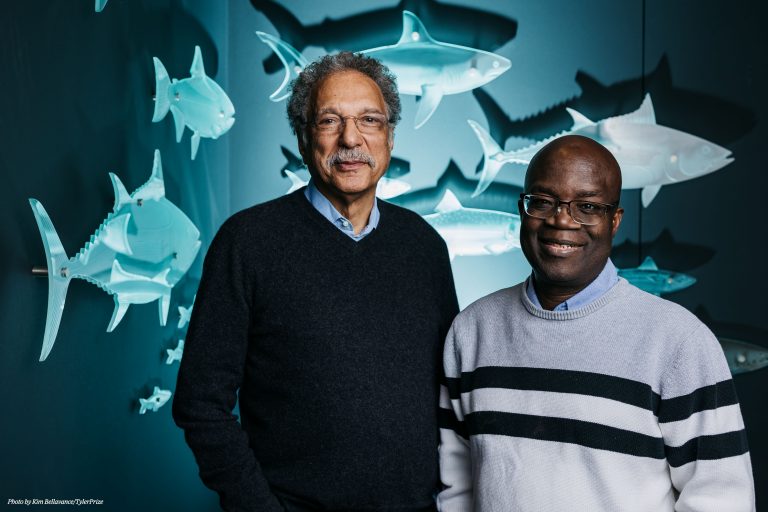
Dr. Daniel Pauly and Dr. Rashid Sumaila
The award, administered by the University of Southern California, has often been described as the ‘Nobel Prize for the Environment.’
Both are University Killam Professors at the University of British Columbia, and long-time colleagues at its Institute for the Oceans and Fisheries. They said that winning this prize gives them an opportunity to spread an urgent and evidence-based message: all fishing on the high seas should be banned.
“Creating no-take marine reserves is something we must do. Banning fishing in the high seas, which is the area outside the 200-nautical-mile zones of maritime countries, will create a critically-needed ‘fish bank’ for the world,” said Sumaila, who is the Canada Research Chair in Interdisciplinary Ocean and Fisheries Economics, and is jointly appointed at UBC’s School of Public Policy and Global Affairs.
“If we don’t stop overfishing, we will lose marine stocks essential for food security and biodiversity, and the ocean’s ability to effectively regulate global temperatures,” added Pauly, who is the Founder and Principal Investigator of the UBC research initiative Sea Around Us.
The UBC Institute for the Oceans and Fisheries professors say winning this prize gives them an opportunity to spread an urgent and evidence-based message: all fishing on the high seas should be banned.
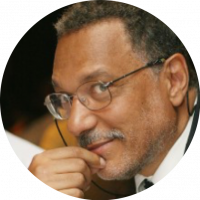 Dr. Pauly has spent much of his four decades of research documenting the rapid decline of marine and fresh-water fish. He gained worldwide recognition for popularizing the term ‘Shifting Baselines’ – which explains how knowledge of environmental declines fades over time, leading to a misguided understanding of change on our planet. He has been the world’s most-cited fisheries scientist since 2010.
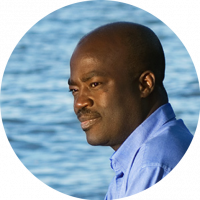 Dr. Sumaila’s research focuses on bioeconomics, marine ecosystem valuation and the analysis of global issues such as fisheries subsidies, marine protected areas, illegal fishing, climate change, marine plastic pollution, and oil spills. The question of how to “bequeath a healthy ocean to our children and grandchildren, so they too can have the option to do the same” – is what drives his life’s work. Sumaila has experience working in fisheries and natural resource projects in around the world, which has made him the world’s most cited fisheries economist, natural resource economist, and ocean policy expert.
Both have published extensively on the ecological and economic effects of the overfishing on the high seas. “A high seas fishing ban is one of the most effective ways to reverse the damage inflicted on the ocean through decades of unsustainable overfishing, mostly at the hands of wealthy Western countries,” Pauly said. “Our modeling shows that closing the high seas would result in no loss in total global catch – just a more equitable distribution. Most commercially fished species move back and forth between the high seas and coastal areas, where they can be caught in a country’s exclusive economic zone (EEZ).”
Sumaila added that support for a high seas fishing ban continues to grow – and that the closing of Antarctica’s Ross Sea in 2016, which created the world’s largest marine protected area – served as a valuable model. “More than 190 countries committed to the 30×30 agreement at the Convention of Biodiversity Conference of the Parties (COP15) in December – to protect 30 percent of their land and waters by 2030… so there are 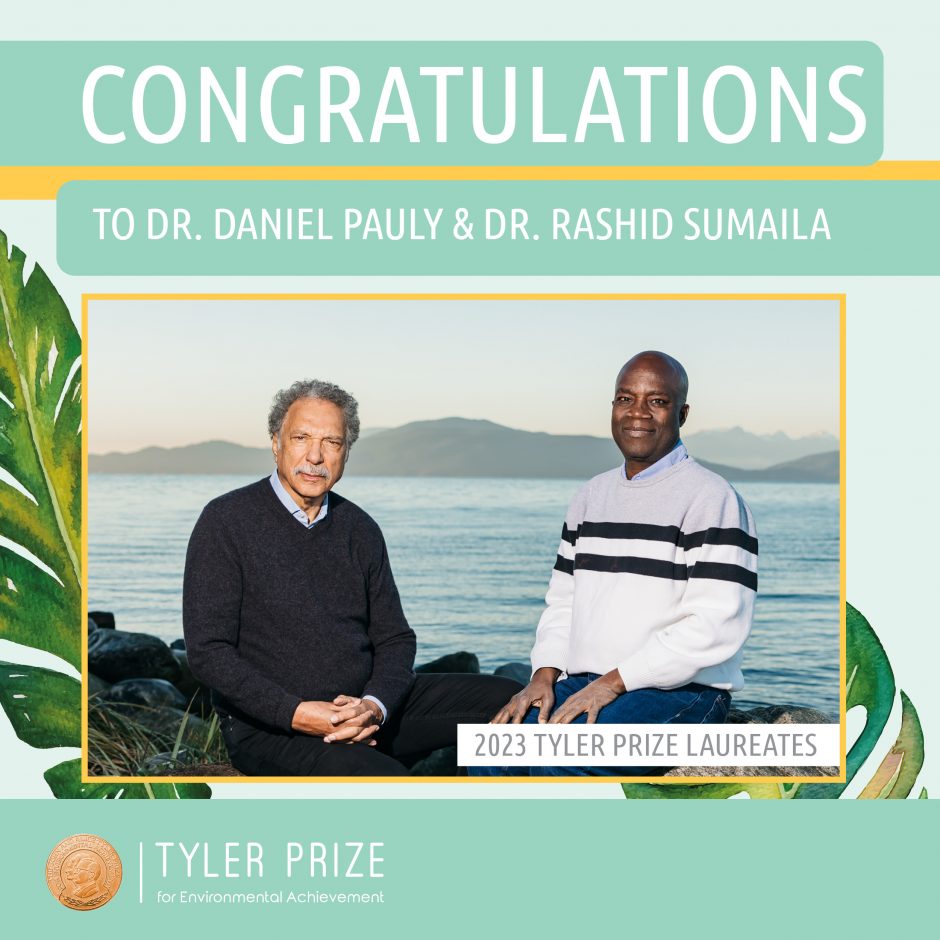 good signs of progress,” Sumaila said. “But we must move faster. Overfishing increases global emergencies such as climate change, biodiversity loss and food insecurity – particularly for already vulnerable communities, such as Indigenous Peoples and populations in the Global South.”
“Rashid and Daniel are an incredible duo — their work has had an immense impact on our understanding of ocean fisheries and marine sustainability, and generated a wealth of policy outcomes around the globe,” said Professor Meigan Aronson, Dean, UBC Science. “We couldn’t be prouder of this recognition from the Tyler Prize Executive Committee.
Chair of the Tyler Prize for Environmental Achievement, Julia Marton-Lefèvre said that she is honored to bestow this historic recognition upon scientists dedicated to protecting natural resources for future generations. “Our lives and livelihoods depend on the ocean, which covers more than 70 per cent of Earth. The Tyler Prize Executive Committee recognizes Professors Pauly’s and Sumaila’s outstanding individual and complementary achievements towards the conservation of this global life-source. By pioneering analytical approaches and knowledge platforms to assess the global state of world fisheries, they have discovered viable solutions, offering policymakers a realistic pathway towards the sustainable management of ocean fisheries,” Marton-Lefèvre said.
On April 27, 2023, the Laureates will deliver a public presentation on their work at the University of Southern California.
Tags: awards, biodiversity, conservation, Daniel Pauly, environment, High Seas, overfishing, Rashid Sumaila
Food quality matters for southern resident killer whales, UBC study states
For southern resident killer whales, the fattier the prey the better.
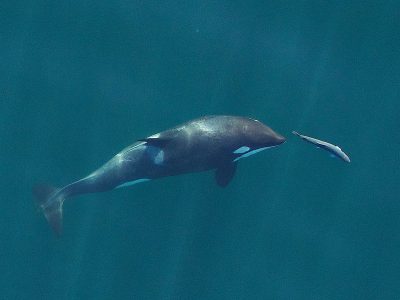
A southern resident killer whale, ‘L121’, with fish. Credit: NOAA, Ocean Wise
“This research helps us quantify the energetic requirements of the southern residents,” said Jacob Lerner, lead author of the study and a doctoral student in the Pelagic Ecosystems Lab at the Institute for the Oceans and Fisheries. “For example, if the southern residents ate just low-lipid salmon, they would have to eat around 80,000 more Chinook salmon every year than if they just ate high-lipid salmon.”
Southern resident killer whales are an iconic species in British Columbia’s Salish Sea and down the northeastern Pacific coast. With black and white markings, these marine mammals can weigh up to 12,000 pounds and be up to 26 feet long. They are fierce, social creatures that live and hunt in family group pods. And, sadly, there are only 73 left in the world.
Critically endangered by a number of anthropogenic factors, including noise pollution and high levels of water contaminants, their decline is mostly based on the limited availability of their preferred prey – Chinook salmon. However, there are many distinct populations of Chinook salmon available throughout the year, some with stock-specific differences in energy density, and not all in decline.
“We began with an initial hypothesis that these salmon were all created equal, that they all have the same value to resident killer whales. And we quickly realized that this is not true at all,” said Lerner. “They all have different levels of lipid content.”
Quantifying that lipid content is important as it directly relates to the caloric value of a salmon, assigning its value as prey. Specific estimates of lipid content for Chinook populations with different distributions, or run-timings, could be used to inform trends in killer whale populations, properly time fisheries closures, or even decide which hatcheries to augment to increase high quality food availability for southern residents, Lerner said.
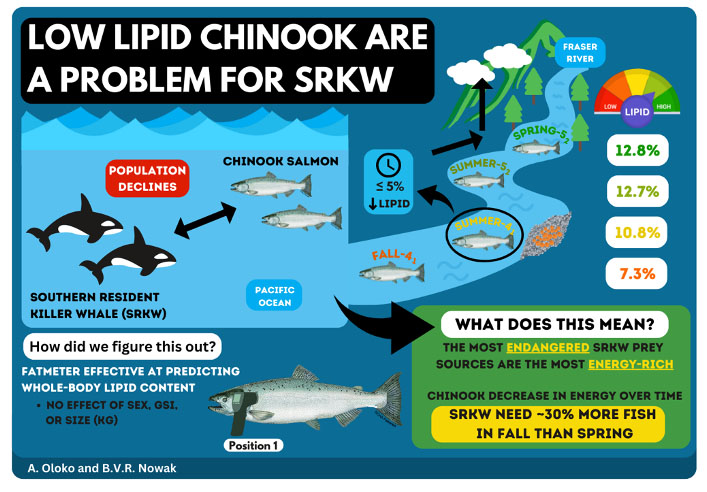
Infographic © Ayodele Oloko and Benia Nowak
“Southern resident killer whales used to come here earlier in the spring season when they could eat early migrating Chinook salmon,” said Brian Hunt, associate professor in the Institute for the Oceans and Fisheries. “Those early Chinook were very energy dense as they need to fuel their long freshwater migration back to their spawning grounds, but those stocks have been declining. With the whales coming later, they mainly have access to Chinook from the lower Fraser. These fish don’t migrate very far, and have lower energy density.”
As a major source of prey for southern residents, estimates of lipid content from Fraser bound Chinook salmon may be one of the keys to helping both threatened species. “We identified a spectrum of high, medium and low-lipid Chinook populations from the Fraser that can be used to better inform energetics models and manage both species,” Lerner stated, “We also identified life history parameters for the salmon to predict where on this spectrum they may fall.”
Though the study has quantified lipid content in Fraser River Chinook, and shown new light on its life history drivers, there is still little information on how ocean conditions influence this energy accumulation.
“We plan to keep monitoring Fraser Chinook salmon fat content,” said Hunt. “And one of questions we want to answer is how changing ocean conditions might be affecting their energy accumulation. Our concern is that ocean warming and food web shifts in the North Pacific Ocean are leading to lower energy accumulation in Chinook salmon. This will have implications for both the Chinook themselves – will they have enough energy for return migration and spawning? – and the killers whales that depend on them.”
‘Seasonal variation in the lipid content of Fraser River Chinook Salmon (Oncorhynchus tshawytscha) and its implications for Southern Resident Killer Whale (Orcinus orca) prey quality‘ was published in Scientific Reports.
Tags: biology, Brian Hunt, British Columbia, faculty, fish, fish stocks, food webs, IOF students, killer whales, Pacific, Research, salmon, whales
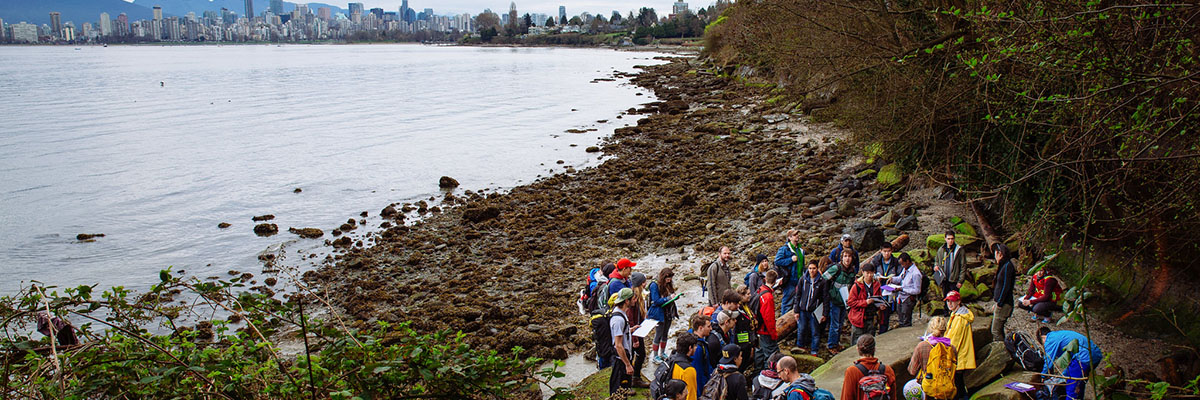
Team of four marine biologists taking on the Atlantic Ocean Challenge
Row, row, row your boat / across the open sea…
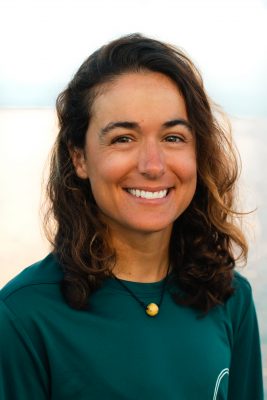
Lauren Shea
©Lindsey Hawkin Stigleman
That was Lauren Shea’s first thought on seeing teams in their rowboats coming into English Harbour, Antigua, after their trans-Atlantic trek.
The UBC Institute for the Oceans and Fisheries Master’s student learned about the Talisker Whisky Atlantic Challenge while working as Chief Mate aboard a sailing school ship in Antigua. “I talked to a fellow crew member and thought “that sounds awful”, she said. However, after spending the first year of the pandemic sailing around the Atlantic she became less skeptical.
“Everyone was gathered in the harbour, boats were parading in, ships were blowing their horns and setting off flares, as a team of men came in on their rowing boat, and I turned to the people beside me and said I’m going to do this. I’m going to make an all-women’s team, and raise money for ocean conservation.”
She sent messages to Noelle Helder, a fellow student from her undergraduate program at the University of South Florida, and Chantale Bégin, who had been one of their instructors at the university, asking if they were interested, and then carried on with her day.
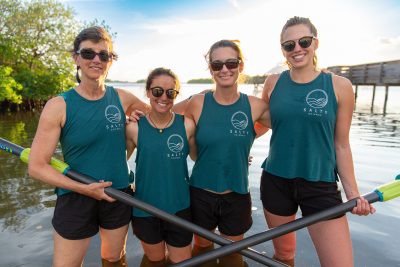
Salty Science team (l to r): Isabelle Côté, Lauren Shea, Chantale Bégin, and Noelle Helder
©Lindsey Hawkin Stigleman
The hard work began
They spent most of 2022 finding sponsors and raising funds to cover registration costs, purchasing the boat (nicknamed Emma), and preparing for the 40 to 60-day trek from the Canary Islands, off the coast of northwest Africa, to Antigua in the Caribbean. “We have to be self-sufficient. We‘ll live 24 hours a day on that boat for the duration of the trip with no support boat.”
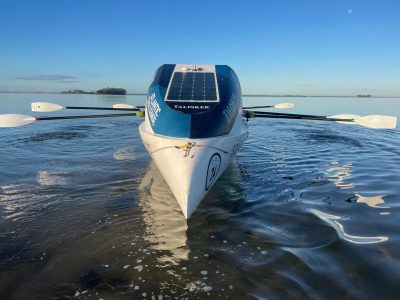
Salty Science’s rowboat, Emma
©Salty Science
It will be an arduous trip. Not only are there challenges with coastal navigation, “there is also the risk of rough weather in the open ocean. I’ve experienced it sailing, but in an open, 28-foot rowboat? The boat is self-righting, so if it capsizes it will roll back over. Every team prepares to capsize at some point and you can deploy various tools to slow yourself down and decrease this risk, but really it comes down to training for what you would do, and hoping for the best,” said Shea.
And the team has been training. None of the team were rowers, Shea noted, and even so ocean rowing is much different than flat water or indoor rowing. Early on, they found a physical trainer and rowing specialist who has been essential for their physical and mental preparation. The team has been training on land and on sea for eighteen months now, including night sessions, and plans to do trips around the Florida coast, where the boat is currently based, and hopefully multi-day trips this summer.
“We are four women. We are four marine biologists, we are three academic generations, and we are very aware that we are acting as role models.”
“Once we set off, the plan is for each team member to spend two hours rowing and two hours off. It is not much time to sleep, but cumulatively, we hope to get enough sleep. We also plan to eat at least 4,000 calories a day, most of it dehydrated, high-calorie meals donated by generous sponsors,” Shea said. “And yes, we’ve also done a lot of team-building as well; we are going to be alone together on a 28 foot boat, 24 hours a day for almost 2 months. We’ve discussed what it looks like when you’re not having a good time and how you want your team mates to approach you in those situations. We’re preparing the best we can.”
Supporting ocean conservation
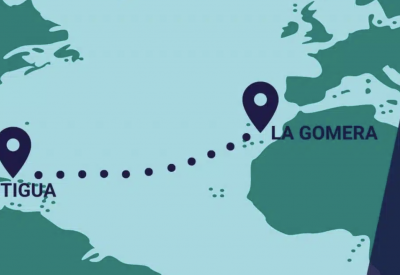
Race route
©Salty Science
Dr. Isabelle Côté highlighted the three organizations the team selected. “GreenWave is focused on ocean sustainability, training people to do integrated aquaculture, developing ecosystems that are really sustainable, and empowering people in impoverished regions. Shellback is a small non-governmental organization that trains undergraduate students to collect data underwater and then connects them with Eastern Caribbean governments that need the information.
“The third one is very close to my heart, which is British Columbia’s Bamfield Marine Science Centre, which is in my opinion, one of the best field stations on the West Coast. It is life-changing for students who attend. Often the students – from K-12 to university – have had little experience with the ocean, and they learn, and when they learn they start caring. But there is a financial barrier for many, and we are working to raise funds to ensure a broader group of experiences for students.”
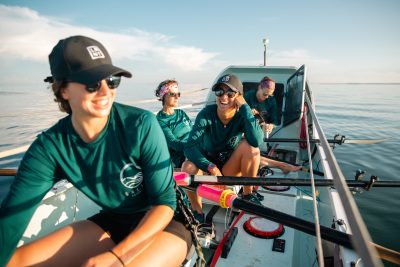
Salty Science
©Lindsey Hawkin Stigleman
Shea agrees, “I’m excited because my team is made up of a pretty remarkable group of people. We may not break any records, but we have an opportunity to do the challenge, raise money, and generate a platform for underrepresented groups in marine conservation.”
Shea notes that the team has a lot to do before the race start in December 2023. “We’ve been training intensely, taking courses, planning, strategizing, and fundraising for more than 2 years, and still have a lot of do. Then there is the race. And then after the race, well, we’ll be exhausted and need to rest, but we’ve been joking that we’ll immediately sign up for something even bigger next. I hear they are putting together a similar race in the Pacific,” she mused.
Support Salty Science
The Salty Science team is looking for your support! There are various ways to donate: starting by a simple donation, sponsoring one of the 5,000 kilometres they must cover, offering in-kind sponsorship and corporate sponsors. More information about the race and how to donate is available at https://saltyscience.org/.
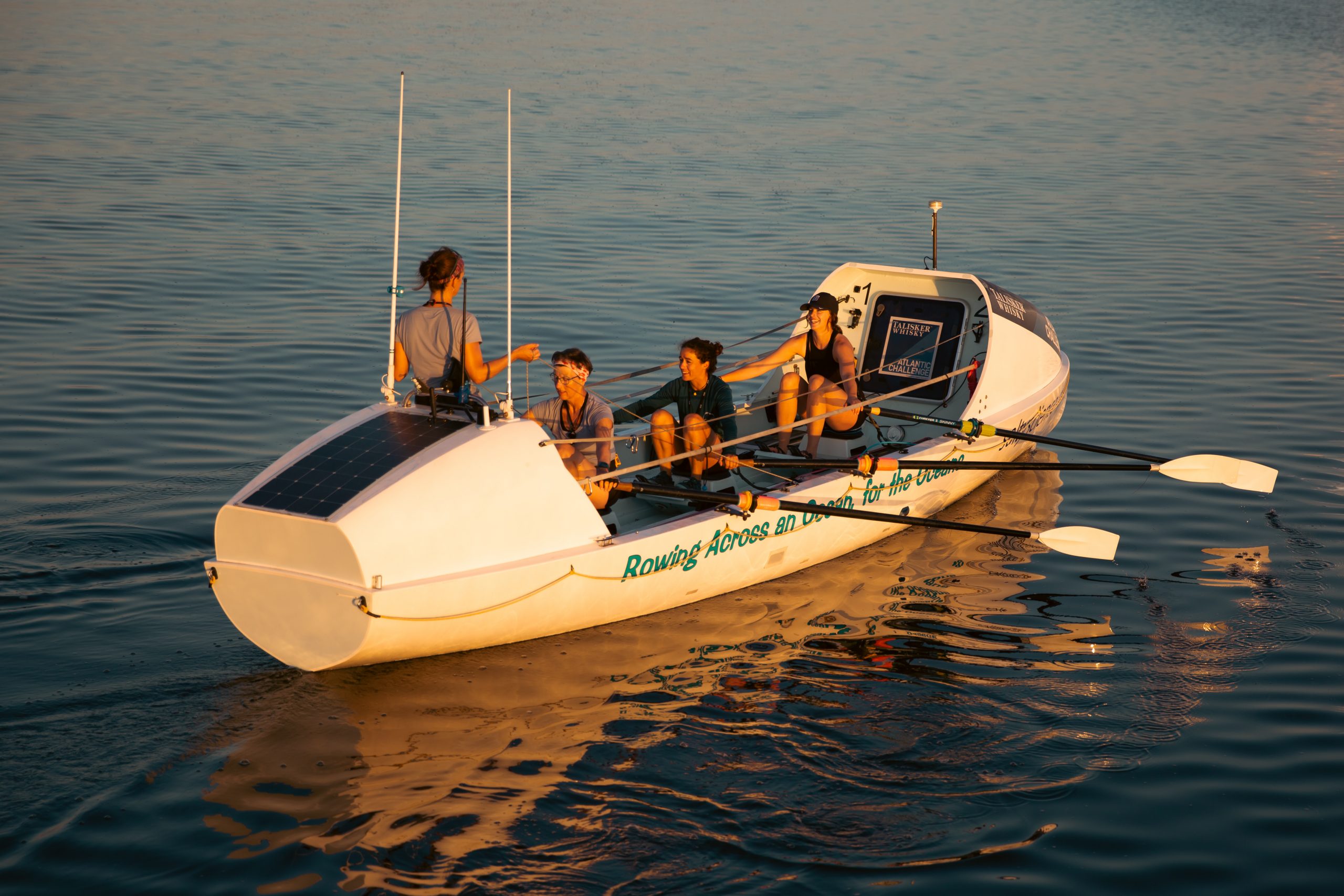
©Lindsey Hawkin Stigleman
Tags: Atlantic, conservation, crowdfunding, International Day of Women and Girls In Science, IOF students, ocean, rowboat, team
Amanda Vincent receives the 5th Dawkins Prize for Conservation and Animal Welfare
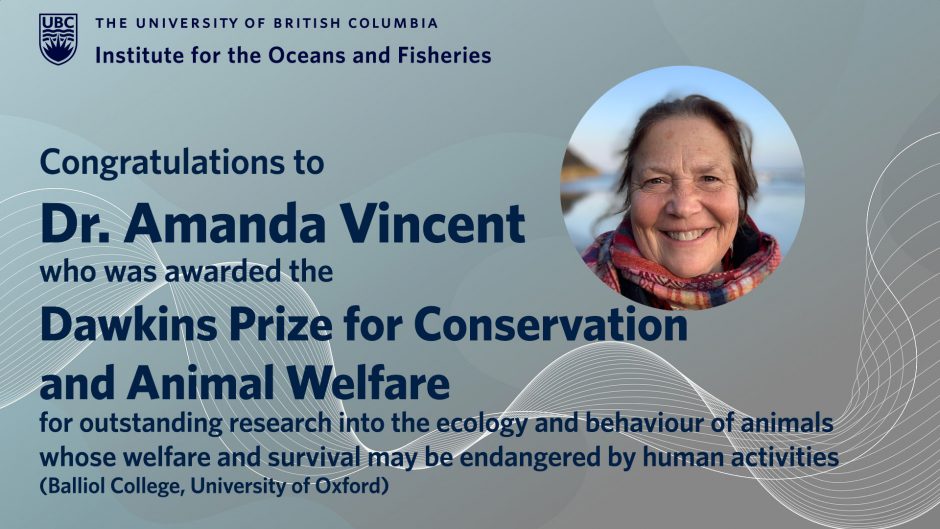 Dr. Amanda Vincent, a professor at the UBC Institute for the Oceans and Fisheries, has been named as the 5th recipient of the Dawkins Prize for Conservation and Animal Welfare, by Balliol College at the University of Oxford.
This Prize honours exceptional achievement in research focused on animals whose conservation and welfare are affected by human activity. It was endowed by Mr. John Dawkins, father of Professor Richard Dawkins FRS, (Oxford University’s Charles Simonyi Professor of the Public Understanding of Science) on behalf of the Dawkins family.
It was her love of the little, quirky, seahorse which drew Dr. Vincent in, and she has dedicated her career to ocean conservation. She was the first biologist to study seahorses underwater, to discover their species threatening, global trade, and it was her concern for these tiny fish which led her to mount a global conservation campaign to secure their future. In 1996, Dr. Vincent co-founded, with the Zoological Society of London, and still directs, Project Seahorse, an international team committed to conservation and sustainable use of the world’s coastal marine ecosystems. Now in its 27th year, Project Seahorse leads in marine conservation, making discoveries & collaborating globally to take effective action for seahorses and their seas.
Dr. Vincent has led on marine conservation initiatives all over the world, from community-based local projects to global policy ventures. Project Seahorse is notable for linking research and management in tight feedback, actively applying new knowledge promptly. Her team has catalysed creation of 35 new marine reserves, where no fishing is allowed, and promoted new fisheries and trade regulations. In 2002, she was instrumental in persuading the United Nations Convention on International Trade in Endangered Species (CITES) to embark on regulating exports in marine fishes, with milestone legislation to limit global seahorse exports to sustainable levels and legally sourcing. This work has led the way for the addition of other marine fishes to CITES, creating policies to control fish exports all over the world.
Dr. Vincent became a Fellow of the Royal Society of Canada in 2020, also becoming the first marine conservationist to win the world’s top award in animal conservation, the Indianapolis Prize, for her trailblazing work to protect seahorses and other marine life, in that year. In 2018 she won the Le Cren Award from the Fisheries Society of the British Isles (FSBI). She was named a Conservation Fellow by the Zoological Society of London in 2003, a Pew Fellow in 2000, and was named as a Fellow of the Royal Geographical Society in 1995. She is Chair of the IUCN SSC Marine Conservation Committee and Chair of the award-winning SSC Seahorse, Pipefish and Seadragon Specialist Group.
As part of winning this prize, Dr. Vincent will give a public lecture in Oxford, UK, at a date to be determined.
Tags: Amanda Vincent, awards, Project Seahorse, UK
Explorers among us
Congratulations to new members of the 2023 Explorers Club 50!
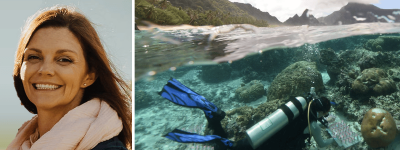
Each year, The Explorers Club 50 recognizes fifty extraordinary individuals changing the world. Naming these global exploration leaders to the EC50 shines a bright light on their extraordinary work, amplifies their voices, and redefines that field of exploration. This year, two UBC Institute for the Oceans and Fisheries community members were added to the 2023 listing.
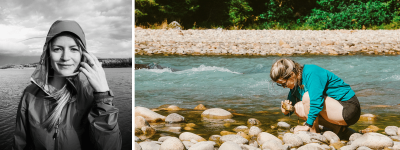
- Dr. Andrea Reid, Assistant Professor, Institute for the Oceans and Fisheries and Co-Director, Centre for Indigenous Fisheries
Indigenous fisheries scholar - Dr. Harmony Martell, postdoctoral fellow
Marine Scientist and Underwater Photographer
Congratulations!
Tags: Andrea Reid, awards, Centre for Indigenous Fisheries, faculty, Harmony Martell, IOF postdoctoral fellows
Dr. Rashid Sumaila named as 2022 AAAS Fellow
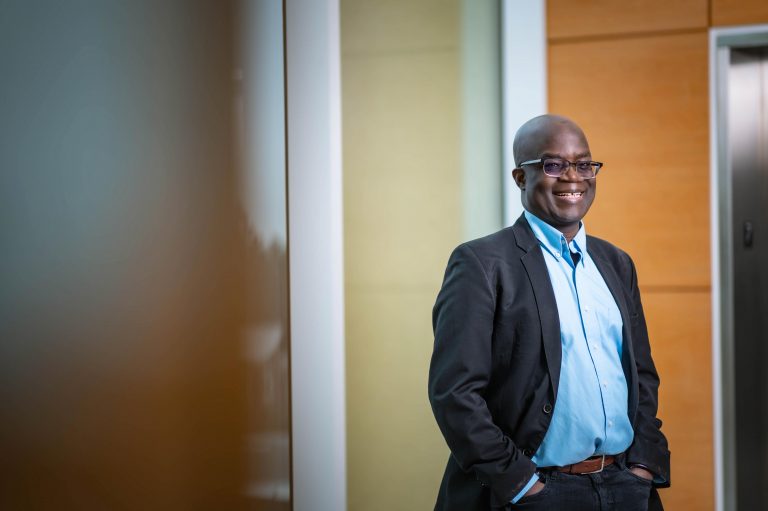 The American Association for the Advancement of Science (AAAS), the world’s largest general scientific society and publisher of the Science family of journals, has elected Dr. Rashid Sumaila to the newest class of AAAS Fellows, among the most distinct honours within the global scientific community.
Dr. Sumaila, University Killam Professor, Professor in the Institute for the Oceans and Fisheries and the School of Public Policy and Global Affairs, Canada Research Chair (CRC) in Interdisciplinary Ocean and Fisheries Economics (Tier 1) and Fellow of the Royal Society of Canada, is recognized by AAAS in the section of Atmospheric & Hydrospheric Sciences for ‘distinguished research into how economics, through integration with ecology and other disciplines, can be used to ensure that environmental resources are sustainably managed for the benefit of all generations.’
“This is an honour for me, and a recognition of the subfield of ‘deep’ interdisciplinary ocean and fisheries economics—a field that seeks to open up economics a little bit to make it more interdisciplinary, more diverse and more inclusive,” said Dr. Sumaila. “The ocean is present at the local, national and global scales, and to sustain it we need partnerships and the co-creation of ideas, insights from, and actions taken by governments and peoples from all over the world.”
“This is wonderful recognition, and so well deserved,” said Dr. Meigan Aronson, Dean, UBC Science. “Dr. Sumaila has emerged as leading global voice on fisheries bio-economics, and his research has focused attention on subsidies policy, illegal fishing and resource management at all levels of governments around the world.”
“AAAS is excited to announce the newest class of fellows from across the scientific enterprise in a tradition dating back nearly 150 years and to honor their broad range of achievements,” said Dr. Sudip Parikh, AAAS chief executive officer and executive publisher of the Science family of journals.
The 2022 class of AAAS Fellows includes 505 scientists, engineers, and innovators spanning 24 scientific disciplines who are being recognized for their scientifically and socially distinguished achievements. AAAS Fellows are a distinguished cadre of scientists, engineers, and innovators who have been recognized for their achievements across disciplines ranging from research, teaching, and technology, to administration in academia, industry, and government, to excellence in communicating and interpreting science to the public.
Tags: awards, Rashid Sumaila
‘This is a wake-up call for the world’: UBC researchers at the forefront of championing for change
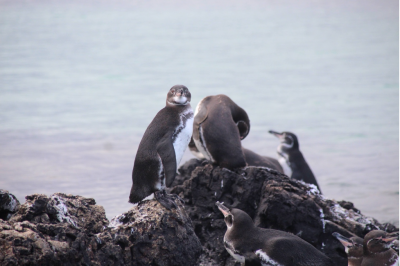
Galápagos Penguins on rocks ©Karly McMullen
One such species is the Galápagos penguin. Standing at 20 inches tall, the bird spends its days foraging for fish and small crustaceans. It’s a welcome sight for the 100, 000 tourists who frequent the islands every year, and it is a great example of the rich biodiversity that the islands have to offer.
It is also under severe threat from ocean pollution, climate change, and illegal, unregulated, and unreported (IUU) fishing pressures. Found in the penguins’ feathers are accumulations of mercury. Some of the birds even have scars from where fishing hooks caught them. UBC research associate, Dr. Juan José Alava, calls these penguins “a canary in a coal mine”- a warning sign of potentially devastating changes that may one day impact not only the Galápagos themselves, but the whole natural world.
A part of the IOF’s Ocean Pollution Research Unit, Alava, along with master’s student Karly McMullen, compiled the first critical review on the impact that the three agitators are having on the animals inhabiting the lands and waters of the Galápagos Islands.
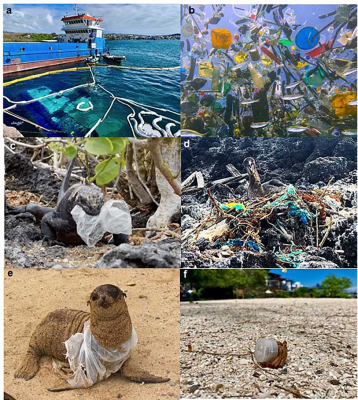
Examples of evident impacts of marine pollution in the Galápagos Islands and endemic species ©Dr. Juan José Alava
“We are raising a red flag because the islands are still pristine, and the islands’ species are resilient. I am not being dramatic by saying this is what is happening right now. This is a wake-up call for the world,” said Alava.
Alava called for enacting prevention measures to make sure it’s not too late to save the islands. And the Galápagos Islands are not the only ones under stress. Many other UNESCO sites are facing the same kinds of threats from anthropogenic impacts.
“I think we must think of these stressors holistically,” said McMullen. “We are living in a changing world and no one stressor should be overlooked. The Galápagos is especially close to my heart because it is home to such unique animals and diversity. It is truly a beautiful place to visit.”
A meeting place of three ocean currents, the islands contain species that co-existed and thrived for thousands of years before human contact. As a result of a rapidly globalizing world, these species are now being bombarded by threats from all directions.
Climate change has led to ocean warming events such as El Niño becoming more and more frequent. These events raise the temperature of sea waters and cause population decline of phytoplankton—a major issue for species that rely on these microorganisms for food. Combined with plastic pollution, which exposes the islands’ animal residents to the risk of either digesting or being trapped by the waste, the islands are under a lot of pressure.
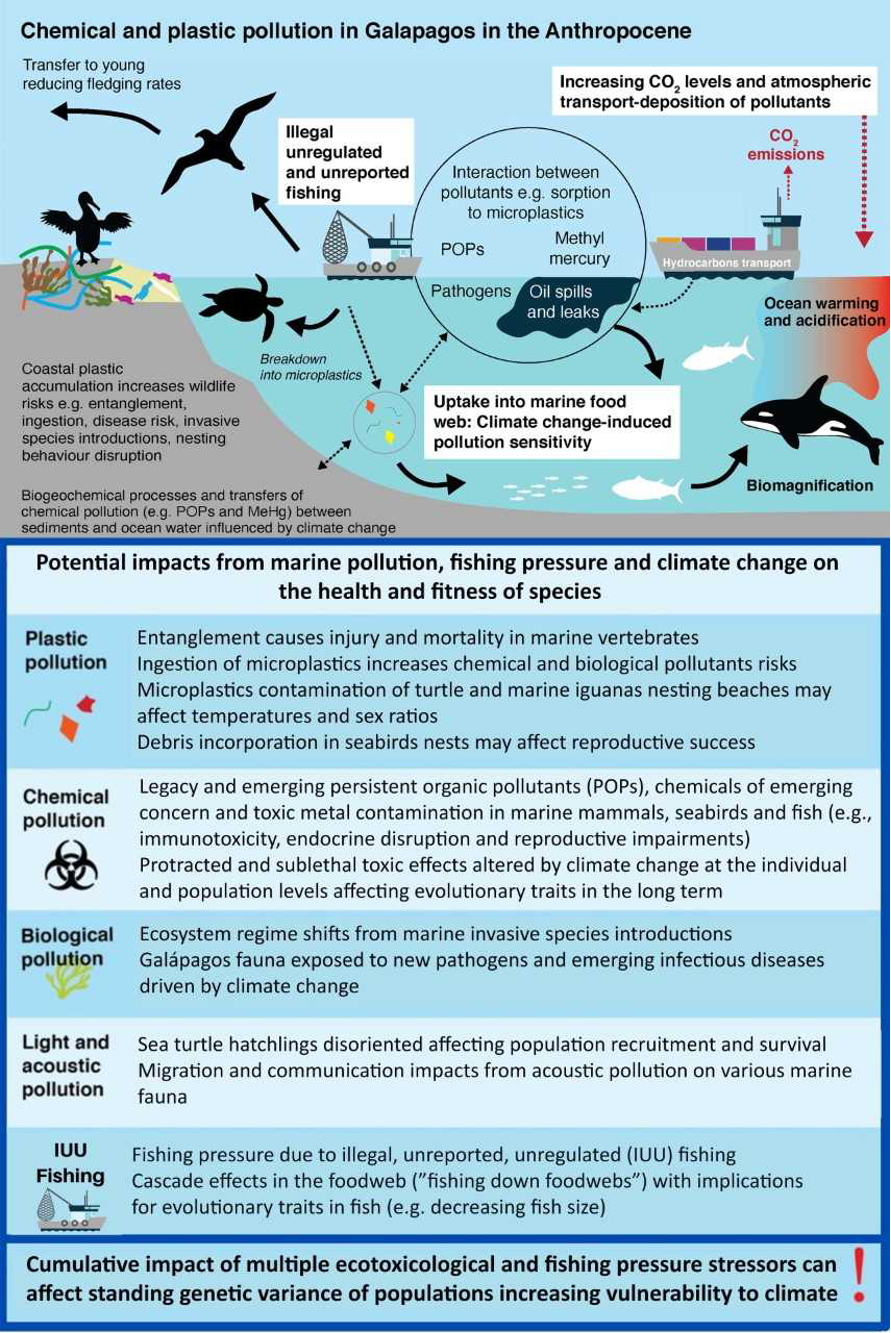
Chemical and plastic pollution in Galapagos in the Anthropocene ©Dr. Juan José Alava
“I met a man who had been counting the number of penguins for months to track their population numbers. I met students who consistently collect garbage on beaches in Santa Cruz,” said McMullen. “There were shop owners who put pylons around the sea lions in the small city to make sure tourists were not disturbing them. The people have so much knowledge and compassion for the animals they live with. It is critical not to overlook this.”
For Alava, hope came from seeing a local fisherwoman selling Galápagos groupers—an endemic species of fish—at a stall in the local fishing market. The grouper, only found on the islands, was once severely endangered due to overfishing. Seeing it sold once again in local markets is a sign of hope for the islands’ future.
“The Islands are where we can witness the original process that inspired Darwin’s Evolution of the Species,” says Alava. “It is one of the last frontiers, but it is not the only one. We need to take care of it before it is too late.”
Tags: biodiversity, climate change, conservation, Galápagos, IOF Research Associates, IOF students, Juan Jose Alava, OPRU, penguins, pollution, Research
Rashid Sumaila appointed as co-Editor in Chief of npj Ocean Sustainability journal
Dr. Rashid Sumaila was appointed co-Editor in Chief of the newly launched npj Ocean Sustainability journal, part of the Nature Group family, which is dedicated to research on the multiple dimensions of ocean sustainability.