Sustainable fisheries make good sense for jobs, nutrition, and climate change resilience
Financial aid to fisheries in developing countries has declined by 30 percent, finds a new study from UBC and Stockholm Resilience Centre researchers, published in Marine Policy. Projects focusing on climate issues in fisheries had a 77 percent decline over the five years studied.
 “Sustainable fisheries make good economic sense not only as a source of employment and regular catches, but also because of their nutritional value,” said co-author Colette Wabnitz, Research Associate at UBC’s Institute for the Oceans and Fisheries and the Nippon Foundation – UBC Nereus Program “Investments in small-scale, sustainable fisheries enhance climate change resilience and give vulnerable communities access to healthy food while preserving traditional diets.”
These sustainable food sources also limit the spread and prevalence of diet-related chronic diseases. Fisheries and aquaculture supply 17 percent of animal protein and provide livelihoods to 12 percent of the world’s population. Official Development Assistance (ODA), commonly known as aid, is financial assistance to the developing world. From 2010 to 2015, ODA levels increased by over 13% to USD $133 billion, with further increases in 2016 and 2017. Yet, funding to fisheries projects in Oceania dropped by almost half.
“Demonstrating tangible results in fisheries as a result of donor support is often more difficult in the oceans than it is on land,” said co-author Robert Blasiak, Postdoctoral Researcher at the Stockholm Resilience Centre, and a Nippon Foundation Nereus Program Fellow.
ODA funds are used to help people fish more sustainably, protect the environment, and create better jobs. These funds are used in fisheries for varied projects, including undertaking research, supporting policy, providing equipment, as well as training and capacity building. Practical research could for example focus on how to improve fishers’ access to less vulnerable stocks, and transfer fishing effort away from vulnerable ecosystems like coral reefs on to less threatened open ocean stocks, with strategically located fish aggregating devices (FADs).
“The types of projects are vast, they include testing water quality and measuring ocean acidification, improving marketplaces, training local staff, and providing solar-powered fridges to remote communities to reduce spoilage and losses,” said Wabnitz. “According to our research, fisheries ODA has also increasingly been channeled towards improving policy and management rather than fishery development.”
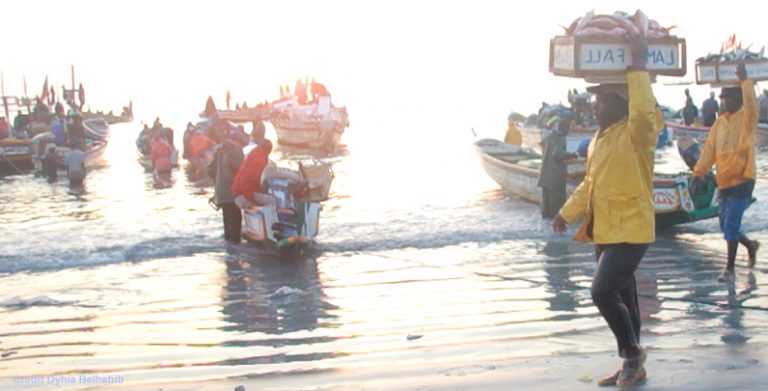 Small Island Developing States that rely heavily on fisheries for food security, livelihoods, customs, and culture, will be particularly impacted by this loss of funding aid. Coastal communities in low-income countries are especially reliant on the micronutrients provided by fish. Many of the Pacific small islands have minimal land area and cannot turn to agriculture for their nutritional requirements.
“Fish supplies 50 to 90 percent of the animal protein to community’s diets,” said Wabnitz. “But we are seeing an increase in export of fish from these countries and import of lower quality foods, such as canned meat, instant noodles, and cereal.”
Research can improve understanding of the future impacts of climate change on fish stocks and link results from modelling work with on-the-ground monitoring and assessment efforts to improve adaptation strategies.
“Tremendous advances in modeling have made it possible to identify countries that will be particularly vulnerable to climate change impacts. Science is enabling practical action to prioritize the most vulnerable areas, in line with stated international commitments,” said Blasiak. “Fisheries are at the nexus of health, nutrition, livelihoods, and economic security, if aid can help to get fisheries “right”, the positive impacts will extend into lots of areas.”
While recent activities appear to show promise in increasing funding allocations for oceans and fisheries, it is up to the international community to ensure that ODA allocations for fisheries under climate change are in line with international development goals and targets.
“Aligning fisheries aid with international development targets and goals” was published in Marine Policy.
About the Nippon Foundation-UBC Nereus Program
The Nereus Program, a collaboration between the Nippon Foundation and the Institute for the Oceans and Fisheries at the University of British Columbia, has engaged in innovative, interdisciplinary ocean research since its inception in 2011. The program is currently a global partnership of twenty leading marine science institutes with the aim of undertaking research that advances our comprehensive understandings of the global ocean systems across the natural and social sciences, from oceanography and marine ecology to fisheries economics and impacts on coastal communities. Visit nereusprogram.org for more information.
Tags: climate change, Colette Wabnitz, fisheries management, IOF Research Associates, Nereus Program, small-scale fisheries




 On January 25, 2018, IOF Director, Dr. Evgeny Pakhomov and IOF researcher Dr. Juan Jose Alava met with His Excellency Martin Vidal, Ambassador of Uruguay to Canada, Mr. Carlos Rodriguez (OAS Uruguay Mission), and Ms. Silvana Montes de Oca, Uruguyan Consul General from the Consulate in Toronto.