|
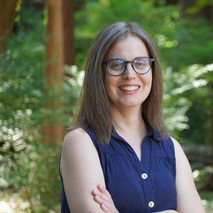
Professor
Institute for the Oceans and Fisheries
Institute for Resources, Environment and Sustainability
Department of Geography
Research Unit
Climate and Coastal Ecosystem Lab |
Contact Information
Email: simon.donner@ubc.ca
Office phone: 604-822-6959
Office location: Department of Geography, 1984 West Mall, Vancouver, British Columbia
Website: Simon Donner
Social Media
LinkedIn: @simondonner
Bluesky: @simondonner
Threads: @simondonner
YouTube: @simondonner1199
Twitter: @simondonner
Biography
I grew up in the diverse city of Toronto where even in the dead of winter, I was often packed in a baby carriage and left outside to sleep. Since then, I have been interested in the human, societal, and environmental impacts of climate and climate change. Today, I am an interdisciplinary climate scientist that teaches and conduct research at the intersection of climate science, marine science, and policy. I hold appointments in UBC’s Institute for Resources, Environment and Sustainability, Geography Department, and Institute for the Oceans and Fisheries. I also direct the university’s Climate Solutions Research Collective, which catalyses solutions-oriented climate research.
Being a scientist and a professor at a public institution, I am fortunate to have the opportunity to engage my curiosity about the world for a living. With that opportunity, comes responsibility. I regularly volunteer to translate climate change science for the public and policymakers via government hearings, community events, radio and television appearances, and sometimes, by filming videos about climate change while cycling to work.
Due to a lifelong love of watersports, my spouse says I’m like an aquatic plant – I need sun and water to thrive. After the start of the pandemic, we dipped into the cold ocean near our Vancouver home every day for over a year.
Research Interests
Climate Science, Marine Heat Waves, Coral Reefs, Sea-Level Rise, El Niño, Equatorial Pacific, Small Island Developing States, Climate Change Adaptation, Kelp Systems, Numerical Modelling
Degrees
PhD – Atmospheric and Oceanic Sciences – University of Wisconsin
MEM – Water and Air Resources – Duke University
Teaching
GEOG 312: Climate Change Science and Society
GEOG 314: Analysing Enivonrmental Problems
ENVR 440: Analytical Methods in Sustainability Science
Publications
Scott TJ, White R, Donner SD (2026). Summers over land and ocean are becoming longer, transitioning faster, and accumulating more heat. Environmental Research Letters, doi: 10.1088/1748-9326/ae5724
Spencer T, Magnan AK, Donner SD, Garschagen M, Ford J, Duvat VK, Wabnitz CC (2024). Habitability of low-lying socio-ecological systems under a changing climate. Climatic Change, 177(1)
Li, X, Donner SD (2023) Assessing future projections of warm-season marine heatwave characteristics with three CMIP6 models. Journal of Geophysical Research-Oceans, doi.org/10.1029/2022JC019253
Cornwall C, Comeau S, Donner SD et al. (2023) Coral adaptive capacity insufficient to halt global transition of coral reefs into net erosion under climate change. Global Change Biology, doi: 10.1111/gcb.16647
Virgen-Urcelay A, Donner SD (2023). Increase in the extent of mass coral bleaching over the past half-century, based on an updated global database. PLoS-One, 18(23), p.e0281719
González-Espinosa PC, Donner SD (2023) Cloudiness delays projected impact of climate change on coral reefs. PLoS Climate, 2(2), e0000090.
Summers S, Donner SD (2022). Investigating the ability of coral reefs to protect shorelines in the Republic of Kiribati. Coral Reefs, 41(2), 369-82
Findlater K, Webber S, Kandlikar M, Donner SD (2021) Climate services promise better decisions but mainly focus on better data, Nature Climate Change doi.org:10.1038/s41558-021-01125-3
Logan C, Dunne J, Ryan JS, Baskett ML, Donner SD (2021) Quantifying global potential for coral evolutionary response to climate change. Nature Climate Change, 11, 537–542
Donner SD, Carilli J (2019) Resilience of Central Pacific coral reefs subject to frequent heat stress and human disturbance. Scientific Reports, 9 (3484), DOI: 10.1038/s41598-019-40150-3
Donner SD (2017) Publicity or Perish: Finding the balance in science communication. Biogeochemistry, DOI 10.1007/s10533-017-0344-7
Donner SD, Kandlikar M, Webber S (2016) Measuring and tracking the flow of climate change adaptation aid to the developing world. Environmental Research Letters, 11 (5), 054006, DOI: 10.1088/1748-9326/11/5/054006
Donner SD (2015) The legacy of migration in response to climate stress: learning from the Gilbertese resettlement in the Solomon Islands. Natural Resources Forum, 39, 191-201, DOI: 10.1111/1477-8947.12082
Donner SD (2014) Finding your place on the Science-Advocacy continuum. Climatic Change, 124 (1-2), 1–8, DOI: 10.1007/s10584-014-1108-1
Related stories:
Dr. Simon Donner and Dr. Rashid Sumaila are involved with separate projects that received funding via SHHRC's Insight Grant Program/
It was found that when elevated water levels and the right wave direction line up, inundation risk jumps. This is particularly true during El Niño, when regional sea level sits higher.
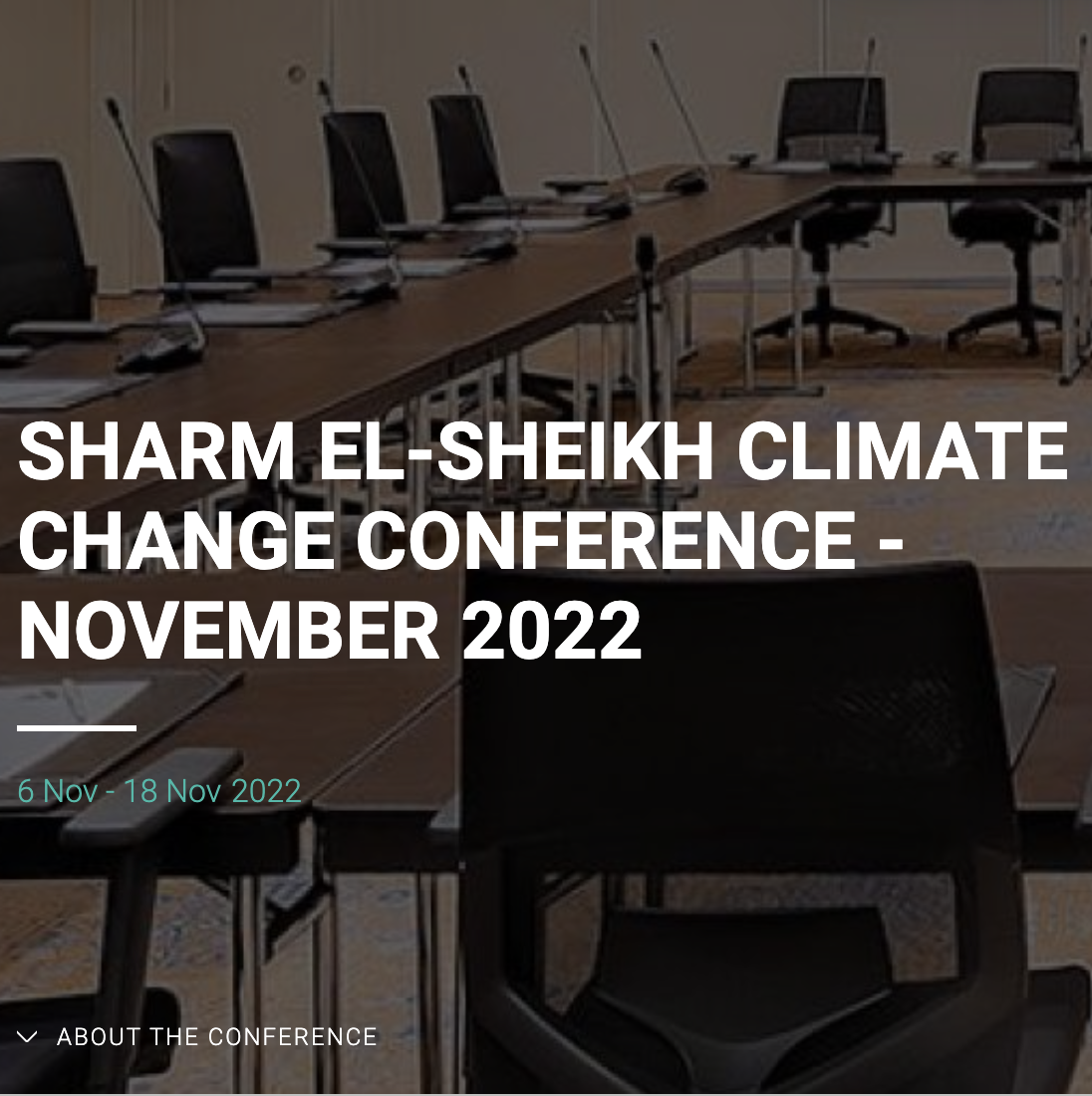
PhD candidate Veronica Relano and Dr. Simon Donner, professor in IOF, IRES and Geography, are among the 10 members of UBC’s delegation travelling to Egypt to attend the 27th United Nations Climate Change Conference of the Parties (COP27)
The Net-Zero Advisory Body is a group of independent experts from across Canada, established by the federal Minister of Environment and Climate Change, to give advice on how Canada can achieve its goal of net-zero greenhouse gas emissions by 2050.
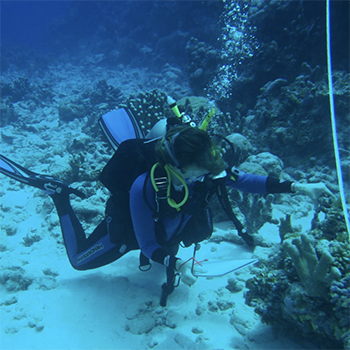
Study found coral in more polluted and high traffic water handled extreme heat events better than a more remote, untouched reef.
We brought together leading experts in climatology, oceanography, aquatic ecology, and fisheries to share their knowledge about heatwaves and their impacts on biodiversity and dependent human communities.
Ocean Leaders teaches students from across disciplines in the natural and social sciences how to communicate marine research to a broad audience
IOF-related experts recommend the one policy action they would use to address the climate crisis
A UBC-led research team has developed a new global coral bleaching database that could help scientists predict future bleaching events.