Second cohort of Africa-UBC Oceans and Fisheries Visiting Fellows selected
The Africa-UBC Oceans and Fisheries Visiting Fellows Program has announced its second cohort of laureates: Dr. Rael Adhiambo (Kenya) and Dr. Ahmad Muhammad Talba (Nigeria).
“These two researchers have developed fascinating projects, which address diverse challenges facing Africa’s oceans and fisheries,” said Dr. William Cheung, professor and director of UBC’s Institute for the Oceans and Fisheries (IOF), which administers the program. “We are looking forward to the novel and sustainable solutions and collaborative engagement that will result from the interactions between them and the UBC researchers they will be working with.”
This Program was created by the IOF’s Drs. Daniel Pauly and Rashid Sumaila, co-winners of the 2023 Tyler Prize for Environmental Achievement. The professors, both of African descent, wanted to offer an opportunity to talented early-career academics from sub-Saharan African universities and research institutes to participate in mutually beneficial research collaborations and build international networks.
Developed with the assistance of the University of Cape Coast, and is made possible, in part, due to funding from the Bloomberg Philanthropies Ocean Initiative and a number of individual donors, the program selects African academics and matches them with a UBC faculty member for a 12-month period. Eleven months are spent engaging virtually on the fellow’s proposed project, with a one-month visit to UBC’s Vancouver campus. The fellow’s airfare, accommodation and a per diem are provided, in addition to a sum for research expenses. The total value of each fellowship is $23,000 CAD.
The Laureates and their hosts
Dr. Rael Adhiambo (Kenya) and Dr. Leila Harris (UBC Institute for Resources, Environment & Sustainability)

Dr. Rael Adhiambo (Kenya)
Her fellowship project will explore the relationships between women’s knowledge, labour, participation, governance processes, and benefit-sharing within coastal climate resilience initiatives in Kenya. Mangrove restoration, ecosystem-based adaptation, community conservation programmes, and other climate resilience interventions rely on the participation of women, Dr. Adhiambo said. “While women play important roles in these initiatives, questions remain regarding how their knowledge and contributions influence decision-making processes, governance arrangements, and access to benefits. My study will examine policy and institutional frameworks, stakeholder relationships, project implementation processes, and community experiences to better understand how climate resilience initiatives are governed and how women navigate these spaces in pursuit of social, economic, environmental, and development goals.”

Dr. Leila Harris
“I have done some research in other contexts in Africa, and am very interested in the aims and research goals of Dr. Adhiambo’s project,” said Dr. Harris. “This work aligns closely with several of my previous projects, and ongoing interests, and I am aware of the criticality of fostering more resilient and just futures in the face of climate change and other stressors.” Dr. Harris is also excited about working closely with Dr. Adhiambo and other researchers from Kenya and the broader East Africa region.
Drs. Adhiambo and Harris have already spoken a few times to discuss and refine the project, and are planning for the UBC visit in April 2027.
Dr. Ahmad Muhammad Talba (Nigeria) and Dr. Chris Wood (UBC Zoology)

Dr. Ahmad Muhammad Talba
He has always been focused on aquatic animal health and medicine, and done substantive research on fish diseases, diagnostics, immunological responses, nutritional interventions and antimicrobial resistance in aquaculture pathogens. His project will investigate how climate change stressors affect African catfish (Clarias spp.) by examining the combined impacts of elevated temperature, episodic ammonia spikes, and intermittent hypoxia on metabolic physiology, immune function, and growth.
“Using controlled laboratory exposure experiments and targeted immuno physiological assays, I will measure metabolic rates, energy reserves, physiological responses and growth performance under stressor scenarios that reflect current and projected West African conditions,” said Dr. Talba. “I anticipate the findings will improve predictive understanding of climate-driven health risk in African catfish and generate evidence-based strategies for climate-resilient aquaculture in West Africa.”

Dr. Chris Wood
Dr. Wood strongly believes that science benefits from trans-national and cross-cultural fertilization. “I have worked extensively in Kenya, visited many other African countries, and have had Ph.D. students and postdoctoral fellows from Nigeria and Kenya in the past. I feel that I have benefitted greatly from these interactions, and that it is a two-way street. The IOF Visiting Fellows offers a great opportunity for this experience.”
Dr. Talba and Dr. Wood have discussed this project and are very much looking forward to meeting each other in person. Dr. Talba is hoping to be at UBC later in 2026, “though we will have to finalize the exact schedule once I have confirmed travel arrangements,” he said.
The Africa-UBC Oceans and Fisheries Visiting Fellows Program will be announcing the opening for applications for its third cohort of the program on July 15, 2026, and in addition to seeking new laureates, they are also looking to expand the number of UBC host researchers. Interested faculty members can access more information here under the UBC Host/Partners tab.
Tags: Africa, Africa-UBC Visiting Fellows Program, aquaculture, Bloomberg Philantrophies, climate change, Daniel Pauly, fish health, freshwater fish, Kenya, Nigeria, pathogens, Rashid Sumaila, University of Cape Coast, William Cheung, women in fishing
When knowledge systems meet on the ice and in models
Conservation decisions are often said to rely on the “best available information.” In practice, though, not all knowledge is used in the same way.

A ringed seal in the ocean. Credit: Marie Auger-Methe
Indigenous Knowledge can offer deep, place-based understanding of how animals use their environment, yet it is still rarely included directly in the same habitat models as satellite telemetry and other Western scientific data. A new study led by UBC’s Institute for the Oceans and Fisheries researcher Dr. Rowenna Gryba, along with co-authors from the North Slope Borough Department of Wildlife Management, UBC, and Iñupiat hunters and knowledge holders, shows that this can change. The team developed an analytical approach that brings Indigenous Knowledge and telemetry data together to better understand how ringed seals are using their habitat.

Ringed seal. © Rowenna Gryba
What makes this work especially novel is that Indigenous Knowledge was not treated as background context or added after the modelling was complete. Instead, it was built directly into the modelling process. The researchers worked in partnership with Iñupiat hunters in the waters near Utqiaġvik, Alaska to include Indigenous Knowledge in two ways: using prior knowledge to help guide the analysis, and through maps showing areas seals tend to use more often or avoid because of features like currents and land barriers. The study also emphasized that this process must be collaborative, with mapped interpretations reviewed by Iñupiat co-authors and knowledge holders to ensure the results reflected what had been shared.

Ringed seal. © Rowenna Gryba
That matters because missing information in scientific datasets does not necessarily mean that information is ecologically unimportant. In this case, the available current data for the nearshore waters around Utqiaġvik were limited, and the satellite tracking data could not clearly show how seals were using those areas.

Ringed seals on ice. © Rowenna Gryba
The study also showed that differences between Indigenous Knowledge and satellite data do not necessarily mean one is wrong. In this case, most seals were tagged after the ice had already started to break up, so the tracking data mostly reflected open-water conditions later in summer. Indigenous Knowledge, however, also captured how seals use habitat when ice is still present. That means an apparent mismatch may simply reflect that each knowledge source is capturing a different part of the year.

Ringed seal. © Rowenna Gryba
A Bayesian approach to include Indigenous Knowledge in habitat selection functions was led by UBC’s Institute for the Oceans and Fisheries researcher Rowenna Gryba, along with co-authors A.L. Von Duyke, H.P. Huntington, B. Adams, B. Frantz, J. Gatten, Q. Harcharek, R. Sarren, G.H.R. Henry, and M. Auger-Méthé.
Tags: Alaska, Arctic, Indigenous conservation, Indigenous fisheries, Indigenous Knowledge, Iñupiat, IOF alumni, IOF students, Marie Auger-Methe, ringed seals, seals, SERG, statistical ecology
UN releases Third World Ocean Assessment

Third World Ocean Assessment (United Nations)
The United Nations released its Third World Ocean Assessment today, and it documents the deepening crisis facing our ocean systems. Climate change, pollution, overfishing and biodiversity loss continue to plague our marine ecosystems, and though it has been five years since the release of the last Assessment not enough has occurred to mitigate the grave situation that face our ocean.
This document is a 1,600-page assessment, the result of more than five years of work by 550 experts from 86 countries, comprising the most comprehensive evaluation to date, providing Governments, institutions and the public with findings that demand urgent action, through stronger multilateral cooperation, greater ambition and decisions grounded in the best available science.
Scientists and researchers at UBC’s Institute for the Oceans and Fisheries (IOF) participated in the formation of this Assessment:
- Dr. Rashid Sumaila, University Killam Professor in the IOF as well as the School of Public Policy and Global Affairs was Coordinating Author of Section 5, Chapter 1A: Medium and Large-Scale Fishing, and part of the writing team on Section 5, Subsection 5a, Chapter 1, Subchapter 1f: Trade.
- Dr. Brian Hunt, Associate Professor, IOF, was part of the writing team for Section 4, Chapter 5, Subchapter 5n: Pelagic domain
- Dr. Ibrahim Issifu, Senior Researcher at IOF, was part of the writing team on Section 5, Subsection 5a, Chapter 1, Subchapter 1e: Seafood Processing, as well as Section 4, Chapter 6, Subchapter 6e: Pollution.
- Dr. Louise Teh, Senior Researcher, IOF, was part of the writing team on Section 5, Subsection 5a, Chapter 1, Subchapter 1e: Seafood Processing.
- Dr. Colette Wabnitz, Senior Researcher at IOF and at Stanford University, was part of the writing team on Section 5, Subsection 5a, Chapter 1, Subchapter 1e: Seafood Processing, as well as contributing to Section 5, Subsection 5b, Chapter 5: Equity, Justice and human rights in the ocean, along with Coordinating Author, Dr. Nathan Bennett, IOF Adjunct Faculty member.
Building a Regenerative Blue Economy
WORLD OCEAN DAY 2026

The World Economic Forum released its Regenerative Blue Economy: Pathways to Prosperity report today, June 8, 2026. The report focuses on the pressures that marine ecosystems continue to face due to the warming ocean, pollution, and overuse. This status quo undermines the well-being of global economies and the well-being of communities dependent on marine resources. It seeks to build a new reality; a Regenerative Blue Economy.
Dr. Rashid Sumaila, University Killam Professor in UBC’s Institute for the Oceans and Fisheries and the School of Public Policy and Global Affairs, was co-Chair of the Global Future Council for a Regenerative Blue Economy, with fellow co-Chair Helle Herk-Hansen, as well as a contributing author alongside an internationally diverse group of leading experts from the private and public sectors, civil society, and academia.
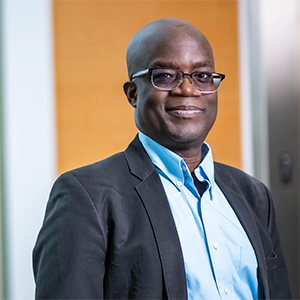
Dr. Rashid Sumaila
The report looked at four interdependent areas and indicated that their interactions could assist in delivering on the ambition of a regenerative rather than just a sustainable blue economy:
- Governance: Integrated ocean governance could help align policies across sectors, manage trade-offs, and address the combined impacts of different ocean use, leading to more coherent planning and better long-term outcomes;
- Finance: Redirecting finance through public investment and innovative commercial instruments would shift incentives away from extractive activities towards regenerative outcomes, while ensuring coastal and Indigenous communities have equitable access to capital;
- Human capacity: Strengthening human capacity could ensure that local actors have the skills and resources to design and deliver solutions, turning policy into effective action on the ground; and
- Technology and AI: Advances in technology and artificial intelligence can improve ocean monitoring, risk management and coordination, making it easier and more affordable to track progress and support better decisions.
Read the full report here.
Starfish Barometer 2026 warns that accelerating ocean change is outpacing global response
WORLD OCEAN DAY 2026
The Starfish Barometer 2026, an international scientific assessment of the relationship between the Ocean and Humanity, is published today in State of the Planet. Drawing on the latest peer-reviewed science and international assessments, the report highlights accelerating ocean change, rising societal and economic impacts, and a widening gap between human pressures and protection efforts. First launched at the third United Nations Ocean Conference in 2025, the 2026 edition has grown into a global, multidisciplinary scientific effort, bringing together 29 experts from 14 countries across oceanography, climate science, ecology, economics and social sciences.
 Its conclusion is clear: ocean degradation is continuing, with signs of acceleration across several major indicators, while political, financial and conservation responses remain too limited in scale and speed. Despite this, important governance milestones signal growing international action on ocean and biodiversity protection.
What’s new in 2026
While revisiting key issues identified in 2025, the 2026 edition highlights several major developments in the Ocean–Humanity relationship:
- Acceleration of ocean change is becoming increasingly observable in global datasets, particularly for sea-level rise and ocean warming;
- Societal impacts are becoming more visible, with rising economic losses, humanitarian risks and growing pressure on coastal economies;
- Major governance milestones have been achieved, including the entry into force of the High Seas Treaty (BBNJ) and the WTO agreement limiting harmful fisheries subsidies;
- A new concern is emerging: weakening ocean observing systems are threatening the world’s ability to monitor the state and evolution of the Ocean.

Dr. William Cheung
Photo: Claire Kiernan/UBC
As a country bordered by three oceans, Canada depends on healthy marine ecosystems for food security, coastal livelihoods, Indigenous cultures, biodiversity, and climate regulation. “For Canada, this reinforces the importance of reducing pressures at their source while advancing our commitment to protect 30% of marine and coastal areas by 2030 in partnership with Indigenous Peoples and coastal communities,” said Cheung.
The Starfish Barometer shows that human pressures on the ocean remain structurally high. These pressures interact with accelerating ocean warming, sea-level rise, biodiversity loss, and growing societal harms, underscoring the need for stronger ocean monitoring, science-based management, and coordinated action. “Human pressures on the ocean are not easing at the pace needed,” noted Cheung.
The Barometer also points to pathways for action. Strengthening ocean observing systems is essential so that Canada and the global community can track accelerating ocean change and respond before impacts become irreversible. Reducing pressures at their source, including emissions, pollution, unsustainable fishing, and poorly governed emerging activities, must go hand in hand with more effective protection, including marine protected areas that are not only designated but fully implemented, monitored, and enforced. Realizing these actions requires investment, governance, and policies that align ocean use with long-term ecosystem health and social equity.
An integrated view of the Ocean–Humanity relationship
 The Starfish Barometer is structured around five interconnected dimensions: Ocean state, human pressures, societal harms, protection efforts and opportunities for humanity. The Scientific Committee is chaired by Marina Lévy (CNRS) and co-chaired Karina von Schuckmann (Mercator Ocean International). Operational implementation is led by Mercator Ocean International.
“We often observe ocean signals separately – from warming to pollution and biodiversity loss – but rarely as a connected system. The Starfish Barometer brings these dimensions together, helping us understand not just what is happening, but how it all links together,” said Dr. Marina Lévy, Chair of the Scientific Committee.
“In a rapidly changing ocean, the imperative is to translate knowledge into action. The Starfish Barometer provides that bridge between science, policy and society,” added Karina von Schuckmann, Co-Chair of the Scientific Committee.
“The Starfish Barometer is designed as a decision-support tool. By connecting ocean observations, science and societal impacts, it helps identify blind spots, guide research and investment priorities, and support more coherent action at system level,” said Pierre Bahurel, Director General of Mercator Ocean International.
About the Starfish Barometer
The Starfish Barometer is an annual, science-based initiative providing an accessible synthesis of the relationship between the Ocean and Humanity. It is structured around five interconnected dimensions: Ocean state, human pressures, societal harms, protection efforts, and opportunities for humanity. It consolidates and translates authoritative scientific knowledge from peer-reviewed literature and major international assessments.
First launched at the United Nations Ocean Conference in 2025, the Starfish Barometer is published annually on World Ocean Day. Its findings are also included in the annual Copernicus Marine Service Ocean State Report, linking it to the broader international scientific community monitoring the Ocean.
Tags: anthropogenic pressure, biodiversity, climate change, coastal communities, coastal environment, CORU, fisheries, fisheries science, food security, food-climate-biodiversity, human pressures, Indigenous fisheries, marine ecosystems, ocean, Solving FCB, Starfish Barometer, sustainability, William Cheung
In Memoriam: Dr. Joshua Korman (1962 –2026)
The Institute for the Oceans and Fisheries is very sad to inform its community that Adjunct Professor Dr. Joshua Korman passed away on May 25, 2026.

Dr. Josh Korman
He will be sorely missed by all members of the IOF community.
All are welcome to leave remembrances for Dr. Joshua Korman
Vote for student photo in NSERC’s Science Exposed competition

Crab transformers
Photographer: Dezaiah Sheena, The University of British Columbia; Nicole Jung, The University of British Columbia; Heather Earle, Hakai Institute
VOTE HERE!
A photo by UBC Oceans student Nicole Jung and her team is a finalist in NSERC’s Science Exposed competition! Vote for the “Crab Transformers” photo for the People’s Choice Award.
Science Exposed is a contest devoted exclusively to images of scientific research, in all fields of study. Researchers create, capture and use images that are vital to scientific discussion, education, and knowledge dissemination – a powerful way of communicating and teaching.
This photo came about as part of a project undertaken as part of a project undertaken by PhD candidate Nicole Jung (UBC Centre for Indigenous Fisheries (CIF); Advisor: Dr. Andrea Reid), in partnership with SȾÁUTW̱ First Nation, to co-create ecologically- and culturally-grounded stewardship protocols for Dungeness crab (Á,ĆEX) within SȾÁUTW̱’s QEN,T Indigenous Protected and Conserved Area (IPCA). Other partner organizations include the Hakai institute, and the Shaw Centre for the Salish Sea.
The project brings together unique skillsets and experiences to thoughtfully reflect on how to work toward healthier communities and crabs through art, science, and marine stewardship policies. It includes developing protocols that range from interviews with SȾÁUTW̱ community members, to life stage-specific crab surveys, to initiating a youth internship program through the SȾÁUTW̱ Fisheries Department.

Nicole Jung (left), Dezaiah Sheena (right)
Tags: Centre for Indigenous Fisheries, CIF, competition, crab, Dungeness crab, Hakai Institute, honours, Indigenous fisheries, IOF students, NSERC, photograph, Science Exposed

Dr. Carl Walters wins UBC Emeritus Award
The UBC Emeritus College has named Dr. Carl Walters as a recipient of this year’s Award for Excellence in Innovative and Creative Endeavours.
 The Award for Excellence in Innovative and Creative Endeavours recognizes those who, since attaining emeritus status, have demonstrated outstanding achievement in research or artistic creation.
Dr. Walters, a Professor Emeritus of Fisheries, retired in 2013. However, his research career continues to flourish. He published over 115 journal articles and co-wrote an updated version of the Ecosystem Modelling with EwE textbook with colleague, Dr. Villy Christensen, that will be used in graduate level and UBC Extended Learning courses. He also continues to mentor graduate students and doctoral scholars at the Institute for the Oceans and Fisheries—still taking regular walking meetings with those who seek his guidance.
“Work has been my life for the last 60 years. It is also my pleasure,” Dr. Walters said. “It is an honour to be chosen for such an award. It means a lot to know there are people who care about me and my work.”
Congratulations, Carl!