Student Profile: Alex (Alejandro) Schmill
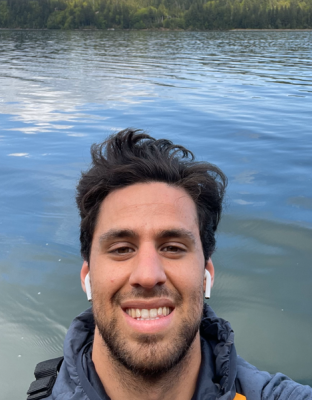 Alejandro (Alex) Schmill is a first-year MSc student, co-supervised by Dr. William Cheung and Dr. Margot Hessing-Lewis of the Hakai Institute. His research explores how environmental DNA (eDNA) can enhance our ability to map marine biodiversity across space and time. eDNA is an emerging tool that allows researchers to detect species by sequencing genetic material they leave behind in the environment — offering a powerful, non-invasive way to assess ecosystems. He has partnered with the Department of Fisheries, WWF Canada, CPAWS-Newfoundland, and the Miawpukek First Nation to conduct a year-long biodiversity survey of the waters off Newfoundland’s south coast. The goal is to inform a feasibility study for establishing a new National Marine Conservation Area (NMCA) in the region. By collecting eDNA samples from both shallow and deep waters across multiple seasons, he is not only identifying which species are present but also tracking when migratory species move in and out of the area. His work will help assess the accuracy of eDNA for detecting species in dynamic marine environments and contribute to refining its application for conservation planning.
How did you come to the IOF?
My background is in marine biology — I earned my BSc from the University of Victoria, where I got my start in research as a technician in the Fisheries Ecology Lab. After graduating, I trained as a scientific diver, which, in 2023, led me to the Hakai Institute. I spent summers underwater conducting surveys and the rest of the year behind a computer, analyzing data from a range of projects. My experience in both fieldwork and data analysis has given me a well-rounded approach to studying marine ecosystems, and I’m always looking for ways to bridge the gap between hands-on research and cutting-edge technological or statistical methods.
What has been your favourite project to work on?

Alex Schmill at work with the Hakai Institute
The second would have to be the ongoing work in collaboration with the Mamalilikulla First Nation to map the abundance and distribution of Red Tree Coral (Primnoa pacifica). I was fortunate enough to join a team of technicians and researchers in Knight Inlet, where we conducted dive surveys at shallow sites and deployed ROVs at deeper depths to map the extent of these unique coral species. Like my MSc project, this work is being used to support the establishment of an Indigenous Protected and Conserved Area (IPCA).
What other ways do you express your interest in marine and coastal ecosystems?
When I’m not hunched over my computer, with terrible posture, I enjoy getting outdoors and staying active. Ever since moving to Vancouver, my #1 love — surfing — has had to take a backseat to mountain biking and skiing. While I don’t tend to scuba dive recreationally anymore, I do save a special place in my heart for spearfishing off the coast of Vancouver Island during the summer months. To me, there’s nothing better than heading out on a beautiful day with a group of like-minded friends, catching your own food, and turning it into a variety of delicious West Coast-inspired dishes. An added bonus? You get to skip the often outrageous price of fresh local seafood at the grocery store.
Questions about whales, seals, sea lions, or other marine mammals? Dr. Andrew Trites is your ‘go-to’ guy.
 Congratulations to Dr. Andrew Trites, professor in the UBC Institute for the Oceans and Fisheries and Director of its Marine Mammal Research Unit, who has won UBC’s President’s Award for Public Education through Media.
Dr. Trites regularly communicates, in both official languages, with domestic and international media about his marine mammal research – be it whales, seals, or sea lions – through interviews, informed comments, op-eds, social media, and speaking events. Dr. Trites is the ‘go to’ guy, answering hundreds of media calls and enquiries each year. After all, he has been studying marine mammal for over 30 years, and even brought the “Big Blue” blue whale skeleton to UBC.
In recent years, there has been a large uptake in media coverage of issues related to killer whales, such as the UBC discovery of a possible new ocean population off the Pacific coast; the stranded calf that rescuers and researchers were trying to reunite with its pod, the declining Southern Resident killer whale population, food and energy intake for resident and transient orcas, or, their unprecedented ability to sink yachts near Gibraltar and in the Mediterranean Sea. Dr. Trites has been called upon to provide insights and explanations about all of these issues. He is also the person called upon to discuss sea lions’ and seals’ predator-prey activities, diving and foraging practices, whelping and pupping practices, possible cull arguments, and their propensity to hang out on beaches on Vancouver Island — even after they have been moved to other spots. And then there are the humpback whales that get tangled in fish farm nets, the new Guadalupe fur seal haul out, grey whale decline, and his recent work on South American manatees. Marine mammals around the world are keeping him very busy.
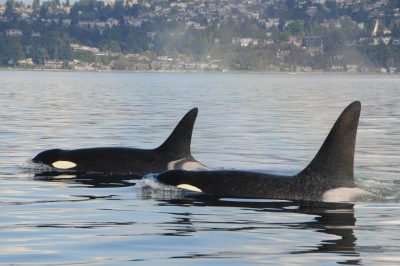
Southern Resident killer whales. Photo: Josh McInnes
Why did you want to be nominated for this award?
I have always believed that effective research must go beyond discovery — and that we must engage with the media to share our knowledge in ways that benefits society and furthers marine conservation. This award affirms my commitment and that of many others at UBC to connect the wider community with our research and knowledge — and brings greater attention to the value that UBC places on educating the public through media.

Steller sea lions. (©Andrew Trites)
How important do you think it is to educate the public about marine issues?
Educating the public about marine issues has never been more important than now, given the rapid pace of changes underway throughout all the world’s oceans. Unfortunately, most people struggle to connect with the ocean when its hidden world lies beyond their view. However, I have found that the widespread fascination that people have with marine mammals has been an effective means to bridge this gap — and spark curiosity, initiate public discourse and influence public policy.
Which marine mammal story do you feel was the most important?
Some of the most impactful stories have come from everyday people who, with their cell phones in hand, captured unexpected encounters with dolphins, humpback whales, grey whales, and killer whales — whether while walking the seawall, taking a ferry, sitting on the shore, or riding a hydrofoil. These moments have been entry points for me to hold broader conversations with radio, television, newspapers, and online media; going beyond the initial event to explore why these sightings occur and why protecting these marine species and their habitats is so important. They have all served as powerful openings for meaningful discussions that can influence public awareness and policy.
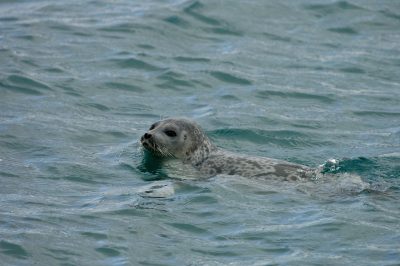
Canadian ringed seal (©Marie Auger-Méthé.)
How excited are you by this win?
I think this award underscores the importance of making UBC’s scientific knowledge accessible to the public — and the value of working with media to support conservation efforts and public education. I am incredibly honored and proud to be recognized by UBC for my expertise in marine mammal research, and for my dedication to science communication. I could not be happier.
I feel grateful to be part of a research community that values outreach and media engagement, and am particularly thankful for the continual support that I and others receive at UBC from our communications team at the IOF, the Faculty of Science and Media Relations. It is a team effort, and one that I am very proud to be part of.
Congratulations, Dr. Trites.
Tags: Andrew Trites, awards, blue whale, grey whales, Guadalupe fur seals, humpback whales, killer whales, manatees, marine mammals, MMRU, science communications, sea lions, seals, whales
Faculty members receive King Charles III Commemoration Medals

King Charles III Coronation Medal
Credit/Mention de source : MCpl/Le Cplc Matthieu Racette
Both faculty members were nominated by the Honorable Joyce Murray, MP for Vancouver Quadra.
 Dr. Rashid Sumaila, FRSC, is a Professor and Canada Research Chair (Tier 1) in Interdisciplinary Ocean and Fisheries Economics at the Institute for the Oceans and Fisheries, and the School of Public Policy and Global Affairs, University of British Columbia. He is Director of the Fisheries Economics Research Unit, and co-Director of the Solving Food-Climate-Biodiversity nexus. His research focuses on bioeconomics, marine ecosystem valuation and the analysis of global issues such as fisheries subsidies, marine protected areas, illegal fishing, climate change, marine plastic pollution, and oil spills. He has experience working in fisheries and natural resource projects in Norway, Canada and the North Atlantic region, Namibia and the Southern African region, Ghana and the West African region and Hong Kong and the South China Sea. Dr. Sumaila received his Ph.D. (Economics) from the University of Bergen and his B.Sc. (Quantity Surveying) from the Ahmadu Bello University.
 Dr. Andrew Trites is a Professor at the Institute for the Oceans and Fisheries, and Director of the Marine Mammal Research Unit; a research program that involves captive and field studies of seals, sea lions, whales and dolphins. Dr. Trites’ research is primarily focussed on pinnipeds (Steller sea lions, northern fur seals, and harbor seals) and involves captive studies, field studies and simulation models that range from single species to whole ecosystems. His research spans the fields of ecology, nutrition, physiology, and animal behaviour—and is designed to further the conservation of marine mammals. It is also designed to further the conservation and understanding of marine mammals, and resolve conflicts between people and marine mammals.
Congratulations to both faculty members.
Hindcasting the Salish Sea reveals long-term patterns of environmental change
Global climate change is altering ocean conditions, such as temperature, and driving fluctuations in marine environments across seasons to decades, which may impact ecosystem productivity and fisheries. These fluctuations have been reported in the Salish Sea, a biodiverse region that spans Canadian and American waters, supporting dozens of fisheries and vibrant coastal economies. However, gaps in historical measurements prevent researchers from having a clear picture of the seasonal and spatial aspects of these environmental changes.
Greig Oldford, PhD Candidate at the University of British Columbia’s Institute for the Oceans and Fisheries (IOF) and a scientist with Fisheries and Oceans Canada, recently co-developed The Hindcast of the Salish Sea (HOTSSea) to address these gaps in historical observations. Greig is part of the Global Ocean Modeling group at IOF and collaborated on HOTSSea with researchers from the UBC, Fisheries and Oceans Canada, and the University of East Anglia to understand how environmental conditions have changed in the Salish Sea.
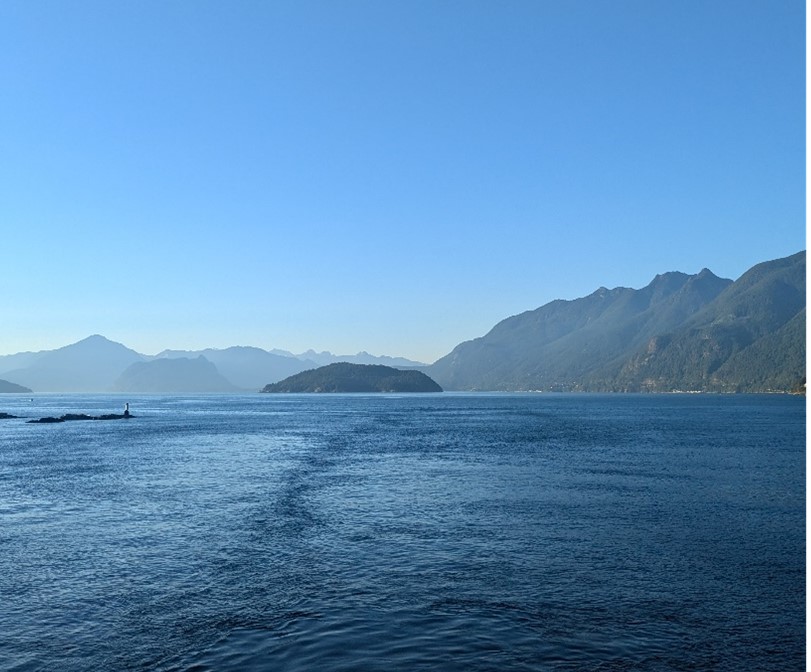
“The Strait of Georgia in the Salish Sea” Photo credit: Megan Duchesne
What is a hindcast?
GO: An ocean hindcast is a computer simulation that reconstructs past ocean conditions. Our HOTSSea model includes physical ocean properties (like tides, temperature, and salinity) in three dimensions. This hindcast extends back to 1980, updating the physical fields every few seconds or minutes – so it generated a lot of data! In addition to needing a lot of storage, ocean hindcasts like HOTSSea require a lot of computing power. So, we had to run it on a supercomputer. Like other hindcasts, HOTSSea was calibrated and evaluated using a large dataset of observations collected over decades by many research groups and institutions. Here, those institutions included UBC, Hakai Institute, the Pacific Salmon Foundation, and Fisheries and Oceans Canada.
How is hindcasting used to study the Salish Sea?
GO: Physical ocean properties from HOTSSea help directly answer questions like what has changed over time and how substantial the changes have been. The model results help direct our research efforts into how long-term environmental and ecological change impacts fisheries. HOTSSea works particularly well at recreating observed ocean temperature trends, including anomalies, in the Strait of Georgia. Its ability to detect environmental trends over weeks to decades and across tens of kilometres is especially valuable for ecological studies focused on Pacific salmon, herring, and plankton. So, the HOTSSea model outputs are especially helpful for researchers who need this information to investigate how changing ocean conditions might affect prey availability for migrating juvenile salmon or their vulnerability to disease and predation.

“Map of model domain showing geographic features, extents of the HOTSSea NEMO model domain (medium grey), and bathymetry.” Map credit: Greig Oldford et al.
What did the HOTSSea hindcast reveal?
GO: HOTSSea is the first 3D hindcast simulating conditions for the area on the scale of kilometres as far back as 1980 and it indicates that the water of the Salish Sea has been warming extremely quickly – much faster than the nearby open ocean. This is not just the surface water, but the entire water column up to 400 meters deep. This is consistent with previous studies which used relatively limited data from measurements. However, HOTSSea fills in the gaps and reveals that some areas, seasons, and depths within the Salish Sea may be warming faster than others. We did not previously realise the spatial and seasonal variability of the ocean temperature trends. For example, the surface waters of the northern Strait of Georgia seem to be experiencing particularly rapid warming in the autumn, when this region serves as a vital migration route for juvenile salmon.

“Coho Spawning on the Salmon River” by BLM Oregon & Washington is licensed under CC BY 2.0.
How can HOTSSea inform management in marine ecosystems?
GO: In many ways! For example, the HOTSSea outputs can be used in statistical models or ecosystem models to help evaluate whether trends in fish populations are primarily caused by environmental changes like increasing ocean temperature or other factors such as fishing, predation, pollution, disease, or habitat loss – or a combination of factors.
Where do we go from here?
GO: HOTSSea is part of a larger modelling effort underway at IOF in Prof. Villy Christensen’s Global Ocean Modeling research group, in collaboration with Fisheries and Oceans Canada and other partners. The aim is to tease apart the drivers of marine survival trends of juvenile salmon over a period of decades. I am hopeful that integrating physical oceanography and marine ecology using End-to-End (physics to fisheries) simulation models will shed light on how marine ecosystems function – and what we can expect in the future. This knowledge can help ensure we make wise resource management decisions, find win-win scenarios, and successfully mitigate impacts on our ocean ecosystems from climate change and other anthropogenic pressures.
Tags: British Columbia, climate change, ecosystems, Global Ocean Modelling, IOF students, ocean ecology, Salish Sea, Villy Christensen
Student Profile: Shabnam Shadloo
 Shabnam is a third-year PhD student at the Institute for the Oceans and Fisheries (IOF) under the supervision of Marie Auger-Méthé. Her research focuses on the movement ecology, behaviour, and disease dynamics of Larus glaucescens (glaucous-winged gulls) within coastal and urban environments. As generalist species, these gulls have adapted to diverse habitats, ranging from natural coastal areas to heavily urbanized landscapes. She is investigating the ecological and behavioural adaptations of these gulls and exploring how human-altered landscapes influence their spatial movements, foraging strategies, and exposure to pathogens.
How did you come to the IOF?
My academic journey initially focused on studying habitats such as deserts, environments defined by harsh conditions and limited water resources. While I appreciated the challenges of studying such environments, I was always curious about aquatic ecosystems. This curiosity led me to explore opportunities to study marine species and understand how human activity impacts them. The IOF stood out as the ideal place to continue my studies.
What has been your biggest learning experience since joining the IOF?
My biggest learning experience since joining IOF has been improving my communication skills. The lab I am currently a part of has provided a supportive and collaborative environment, allowing me to engage in discussions, practice active listening, and share ideas more effectively and confidently. While I’ve made significant progress, this environment continues to provide opportunities for me to grow further. Being at the IOF has shown me that communication is an ongoing skill that needs constant refinement, and I look forward to continuing to develop it throughout my PhD journey.
What has been the most exciting part of your journey at the IOF?
One of the most exciting parts of my time at the IOF so far has been the opportunity to develop my statistical skills. Beyond that, I’ve also had several opportunities to travel to beautiful areas to conduct field research. For instance, I spent the past few summers living on a remote island in the Southern Gulf Islands, where I conducted research in stunning coastal environments! All of these experiences have been incredibly rewarding.
What other ways do you express your interest in the environment?
Outside of my academic work, I find bird watching to be a wonderful way to connect with nature. I recently participated in the Christmas Bird Count at the George C. Reifel Migratory Bird Sanctuary, where I observed various bird species in their natural habitats and contributed to citizen science. I also really enjoy photographing wildlife. Living in Vancouver provides me with ample opportunities for both bird watching and photography, especially during walks by the ocean or around Stanley Park. Beyond outdoor activities, I’m an avid reader and particularly enjoy learning more about evolutionary biology.
Sumaila-Volvo Graduate Prize in Environmental Sustainability winners announced
Congratulations to Verena Rossa-Roccor (IRES) and Aleah Wong (IOF), winners of the 2025 Sumaila-Volvo Graduate Prize in Environmental Sustainability.
This prize is for a Master’s or Ph.D. student whose peer-reviewed publications to date are expected to have the most significant impact on the field of environmental sustainability. The endowment established by Dr. Rashid Sumaila upon being named the 2017 Volvo Environment Prize laureate.
 Verena Rossa-Roccor (PhD IRES) left her career as a physician because she became too frustrated with the limited impact she had on the systemic factors that made her patients sick. She then went on to complete a Master’s degree in public health at UBC. It was there that she became increasingly interested in the concept of knowledge mobilization, that is, how can research evidence more effectively shape policy decisions? She is now working with co-supervisors David Boyd (IRES) and Paul Kershaw (School of Population and Public Health) to explore ways in which academics conduct knowledge-to-action activities in the environmental policy realm. She was nominated for “Framing climate change as a human health issue: enough to tip the scale in climate policy?” published by Lancet Planetary Health in which she argue that in order to be more effective agents of change, academics have to bid farewell to the idea of evidence-based policy making and instead embrace the complexities and value-laden realities of politics. This means that they have to build capacity as knowledge mobilizers that include strategies such as inside lobbying or movement building.
 Aleah Wong (PhD, IOF) received an interdisciplinary B.A. in Biology and Environmental Studies from Macalester College in Saint Paul, Minnesota. This liberal arts experience initially sparked her interest in social-ecological systems, solutions-focused research and cross-disciplinary collaboration. Aleah uses a trait-based approach, stakeholder surveys and interviews to study aquaculture at the nexus of food, climate and biodiversity. Broadly, she is exploring the potential of aquatic species to contribute to food, climate and biodiversity goals and examining their social-ecological synergies and trade-offs to help inform sustainable and equitable pathways for aquaculture. She was nominated for “A traits-based approach to assess aquaculture’s contributions to food, climate change, and biodiversity goals” published in Nature.
Tags: awards, biodiversity, food security, honours, IOF students, public health, Publications, Rashid Sumaila
Student Profile: Anna-Luna Rossi
 Anna is a second-year MSc student at the Institute for the Oceans and Fisheries under the supervision of Daniel Pauly. Her research focuses on understanding the fisheries and their impact on the marine ecosystem in the archipelago of Saint Pierre and Miquelon to infer relevant fishery regulations. To do so, she is studying the local marine biodiversity, reconstructing the catches of these islands from 1950 to today, and building dynamic ecosystem models for the area using Ecopath with Ecosim.
How did you come to the IOF?
For a little context, my dad travelled the world when he was my age and told me stories about British Columbia, which he fell in love with; growing up, my dream was always to study at UBC. Growing up between the Mediterranean Sea and the East Coast of Canada, most of my childhood was made of tidal pooling, whale watching, snorkelling after school and boat lessons. I was always drawn to the sea I first used to fear and then developed a deep fascination for. I was drawn to the IOF because of how many great scientists make up the academic heart of the institute, whose names I had heard before in this field. I had been following Daniel’s research for a while and admired his career and life work.
What has been your biggest learning experience since joining the IOF?
I considered myself a detail-oriented person before I met Daniel Pauly: he cares a lot about little details that would easily escape your attention, and it teaches you to be rigorous in how you present your science and research results. It’s also a great lesson about diving deeper into smaller details that could lead to very interesting conclusions. Another lesson would be that complicated issues do not require complicated solutions: problem-solving, in the context of fisheries, for example, relies a lot on tackling one major issue at a time if we want to come to conclusive and durable solutions.
What has been the most exciting part of your journey at the IOF?
I would say getting the chance to connect with other researchers and learn about their research. There are so many talented people working on truly fascinating subjects, and it’s amazing to get the chance to chat with them or listen to what they have to share. Also, getting the opportunity to present my work at conferences and/or congresses feels very rewarding.
What other ways do you express your interest in marine and coastal ecosystems?
I love travelling and am an avid and passionate photographer: whenever I get the chance, I’m outside taking pictures of nature, whether on land or at sea. Travelling abroad to several islands around the world gave me a chance to broaden my understanding of people’s connection to the ocean and capture the beauty of the coastal world through my camera lens.