Aerial drones offer new perspective on resident killer whale behaviour
Scientists at the University of British Columbia are getting a rare glimpse into the underwater behaviour of northern and southern resident killer whales off the B.C. coast, with the help of aerial drones.
The unique footage, filmed in collaboration with the Hakai Institute, will help researchers determine if endangered southern residents are getting enough of their preferred prey, Chinook salmon, to meet their nutritional needs. The insights will inform conservation and recovery efforts for the population that has dwindled to under 75 individuals.
“In order to help these whales, we need to know more about them – how they hunt, how they forage and where their food is,” said Andrew Trites, project lead and director of the Marine Mammal Research Unit (MMRU) at UBC’s Institute for the Oceans and Fisheries. “This is the first time drones have been used to study killer whale behaviour and their prey. It’s allowing us to be a fly on the wall and observe these animals undisturbed in their natural settings.”
Over the course of three weeks in August and September, the team monitored pods of southern and northern resident killer whales in the Salish Sea and off the central coast of B.C.
“We were very lucky with conditions the whole trip and came back with ten hours of footage,” said Keith Holmes, drone pilot for the Hakai Institute. “Normally, we were flying between 100 and 200 ft. above the whales, often higher. They didn’t seem to notice the drone at all.”

Southern Resident Killer Whale J31 and her 3 month old calf J56 near the Fraser River, British Columbia, in August 2019. The calf was observed over two days carrying a fish in her mouth – although calves only drink milk during their first year of life.
Photo credit: Andrew Trites/University of British Columbia.
“We observed a northern resident mother with her new calf,” said Trites. “From the boat, we could tell they were swimming near each other. But it was only from the drone that we could see how much they were constantly touching and socializing with each other.”
In the absence of robust historical data on feeding behaviour and prey abundance of southern residents, the northern residents are an important point of comparison. Like southern residents, they feed primarily on Chinook and Chum salmon and face many similar threats from water and noise pollution, increased shipping traffic and reduced abundance of food.
But unlike their southern counterparts, the northern population has increased significantly – albeit slowly – since the 1970s, and is now estimated at over 300 individuals.
“It was amazing to see the southern residents zig-zagging along the surface as they chased and caught Chinook salmon,” said Sarah Fortune, a postdoctoral fellow at MMRU. “Observing both populations of killer whales means we’ll be able to compare the foraging conditions and hunting behaviours of the two groups and see whether it is more difficult for southern residents to capture prey.”
The team also collected environmental data like water temperature and salinity, and used hydrophones and traditional tagging methods to gather data on individual whales.
“A key part of this puzzle is figuring out where their prey is,” said Mei Sato, a research associate at MMRU. “We used hydro-acoustics to eavesdrop on the fish and gather information about the number and depth of Chinook salmon available to killer whales in the area.”
Over the coming months, the team will analyze their data and try to build a comprehensive picture of resident killer whale feeding behaviour.
“I keep thinking back to the beauty of the mother and calf interacting with each other,” said Trites. “It really drives home what’s at stake for these whales if we don’t figure out what’s going on.”
The project is part of the federally-funded Whale Science for Tomorrow initiative, with additional funding and support from the Province of British Columbia, the Pacific Salmon Foundation, the Hakai Institute and Vancouver Whale Watch.
The research was conducted under DFO and UBC animal care permits (XMMS 6 2019 and A19-0053).
FCRR – The catch and trade of seahorses in the Philippines post-CITES
Abstract
The Convention on International Trade in Endangered Species of Wild Fauna and Flora (CITES) decided to implement export controls for all seahorses in 2002 to ensure international trade is sustainable, legal and monitored. The Philippines, however, has not implemented the listing because their domestic Fisheries Code banned the extraction of any CITES listed marine species, including seahorses, since 1998. Exploitation continued nonetheless – field visits and surveys among importers in other countries revealed that fisheries and trade for seahorses continued illegally without monitoring or regulation. The revision of the Fisheries Code four years ago has provided renewed opportunity, however, to manage seahorse fisheries and trade for sustainability. Filipino Authorities are now in need of information that would allow them to develop a seahorse management plan, re-open legal fisheries and trades in a precautionary manner, and subsequently monitor and manage them in support of sustainable populations. In order to generate vital knowledge in support of this plan, we gathered information on the biology, fisheries, and trade of seahorses in the Philippines by conducting 268 interviews with fishers and traders across seventeen coastal provinces from May to July 2019.
Fishers reported catching seahorses from ten different types of fishing gear, some of which targeted seahorses (spear/skin divers, compressor divers, micro-trawls, push nets, and gleaners) and others which captured them incidentally in pursuit of other targets (gill nets (bottom), gill nets (floating), otter trawls, fish traps, and seines). The most commonly reported gear type was spear/skin diving. Mean catch per unit effort varied among gear types from fewer than one seahorse per day per gill net (bottom and floating), otter trawl and fish trap, to between one and ten seahorses per day for gleaners, spear/skin divers, compressor divers and fish nets, to as high as 100 seahorses per day per micro-trawler.
Scaling up catch rates (CPUE) to annual catch estimated a total national catch of ~1.7 million individual seahorses per year across the gear type/province combinations for which we had sufficient data. Compressor fishers were estimated to catch more than all other gear types combined, landing approximately 913,000 seahorses per year (54% of the total estimated catch), more than micro-trawls (~260,000 individuals), push nets (217,000 individuals) and spear/skin divers (~214,000 individuals) combined. The provinces of Iloilo, Masbate, Sulu, Bohol and Palawan together accounted for over 80% of our total national catch estimate, each landing between ~222,000 and ~359,000 individuals per year.
Our interviews with 31 buyers across ten provinces produced only limited quantitative information on purchase and sale volumes of seahorses in trade, but can infer that the majority of seahorse catches were dried and destined for export – we found very little evidence of live trade or domestic use. Buyers in the northern province of Pangasinan reported purchasing the largest number of seahorses per year. Seven different seahorse species were identified in trade (Hippocampus barbouri, H. comes, H. histrix, H. kelloggi, H. kuda, H. spinosissimus and H. trimaculatus), with H. comes and H. kuda comprising nearly two-thirds of specimens we surveyed. Buyers reported selling seahorses for between three and five times the price they paid fishers to acquire them; the median buying price per seahorses was USD 0.58, and the median selling price was USD 460 per kilogram or USD 2.30 per individual.
Ninety-eight percent of fishers reported a decline in seahorse catch over time, and spear/skin divers in Bohol and Surigao del Norte reported a decline in seahorse CPUE of 86% over a twenty-year period and 98% over a thirty-year period, respectively. Other indicators of conservation concern included highly skewed sex ratios across all species (more females than males); the proportion of males observed to be pregnant (about half of H. barbouri and more than half H. kuda males); and, for H. kuda, the mean size of sampled individuals was smaller than the species size at maturity.
Our surveys indicate that the Philippines is not fully implementing CITES regulations: none of the seahorse catch was being monitored or regulated to any extent to assess sustainability, and exports of dried seahorses were occurring illegally without CITES permits. For the Philippines to make progress in conserving seahorses it needs to pay attention to their fisheries, trade and conservation. The results of this study can be used to set the initial terms for sustainable exploitation under the revised Fisheries Code, terms which can be revised as more is learned in an adaptive management framework. The road map is there, the tools are in place, and the protocols are available to make considerable progress.
Full report
Tags: Amanda Vincent, faculty, FCRR, IOF Research Associates, Philippines, Project Seahorse, Publications, Research, Sarah Foster, seahorses
Ph.D. student Patrick Pata wins at PICES
Congratulations to Ph.D. student, Patrick Pata, who won best poster in the Monitor category at the PICES (North Pacific Marine Science Organization) 2019 Science Conference, in the scientific sessions and workshops sponsored by the Technical Committee on Monitoring.
His poster was entitled: “Sensitivity analysis on zooplankton bioregionalization of British Columbia.”

IUCN SSC Seahorse, Pipefish and Seadragon Specialist Group wins award
Congratulations to the IUCN Species Survival Commission (SSC) Seahorse, Pipefish and Seadragon Specialist Group, chaired by Dr. Amanda Vincent.
This expert group of 27 people from 15 countries around the world was awarded a Citation of Excellence at the recent IUCN SSC Leaders’ meeting for “their outstanding contribution in delivering the Species Strategic Plan.”

Achieving a safe and just future for the ocean economy
The economic potential of the oceans is expected to double from US$1.5 trillion in 2010 to US$3 trillion by 2030. Yet managing this growth should be undertaken in a safe and just manner caution a team of international researchers.
In a climate of environmental change and financial uncertainty, much attention has been given to the growth of the “Blue Economy” – a term which refers to the sustainable use of ocean and marine resources for economic growth, jobs, and improved livelihoods. Ocean resources are viewed as lucrative areas for increased investment, including in fisheries, aquaculture, bio-prospecting, renewable energy, oil and gas, and other businesses. Ensuring that socially equitable and sustainable development occurs should be the mandate of governments and industry, maintain an international group of researchers, led by UBC’s Nathan Bennett and Rashid Sumaila.
“Coastal countries and small island developing states have the most at stake when it comes to increased economic activities in local waters,” said Nathan Bennett, research faculty member in UBC’s Institute for the Oceans and Fisheries and lead author on the paper. “It is important that this not be like a Gold Rush scenario, where unbridled ocean development produces substantial harms for both the marine environment and the wellbeing of the populations who dependent on it. In this paper, we provide solutions to proactively address the potential harms produced by ocean development.”
The five recommendations in the paper focus on managing for sustainability, benefit sharing, and creating inclusive decision-making processes at local, national and international levels:
- Establish a global coordinating body and develop international guidelines;
- Ensure national policies and institutions safeguard sustainability;
- Promote equitable sharing of benefits and minimization of harms;
- Employ inclusive governance and decision-making processes; and
- Engage with insights from interdisciplinary ocean science.
“There are currently no set of guidelines, or even an obvious international coordinating body, which focuses on the Blue Economy,” said Dr. Rashid Sumaila, senior author, professor at UBC’s Institute for the Oceans, and Director of the OceanCanada Partnership. “Nothing exists in many nations either. This lack of coordination can lead to situations like we are already seeing in the global fishing industry, where harmful subsidies are leading to overfishing, human rights abuses are occurring, and local access to fish stocks and food security are being undermined.”
“The blue economy is already growing. But, we have an opportunity and responsibility to shape future growth so that it is sustainable and equitable,” said Bennett. “Including civil society, such as small-scale fishers, women and Indigenous people, in the decision-making and management processes will help to ensure that benefits are shared.
This paper was released ahead of the Our Oceans international conference, taking place in Oslo Norway on October 23-24, 2019, where one of the focal themes is “sustainable blue economy”. Partnerships and commitments will be made at this conference to catalyze sustainable and inclusive blue growth. These topics will also be discussed at the World Ocean Council’s Sustainable Ocean Summit being held in Paris, France on November 20-22, 2019.
“Towards a sustainable and equitable blue economy” was published in Nature Sustainability today.
Studying the Spring salmon to help protect BC ecosystems

The Carte Blanche, commercial salmon troller and temporary salmon research vessel. Photo: Mei Sato
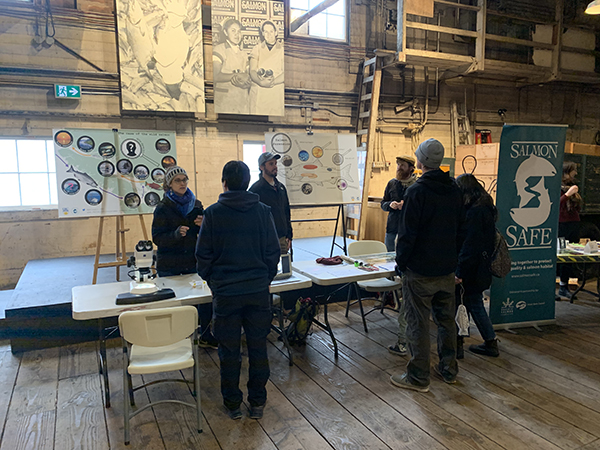
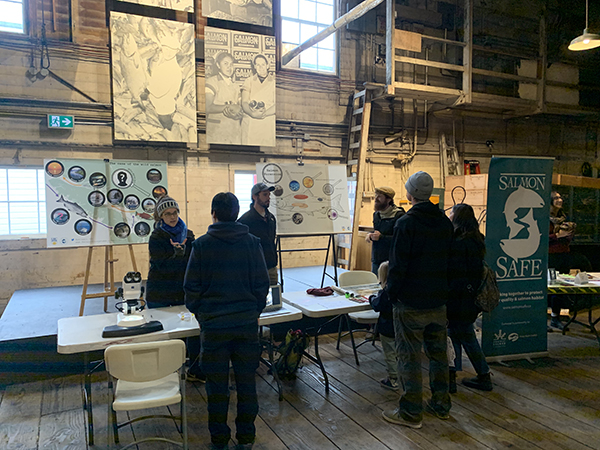
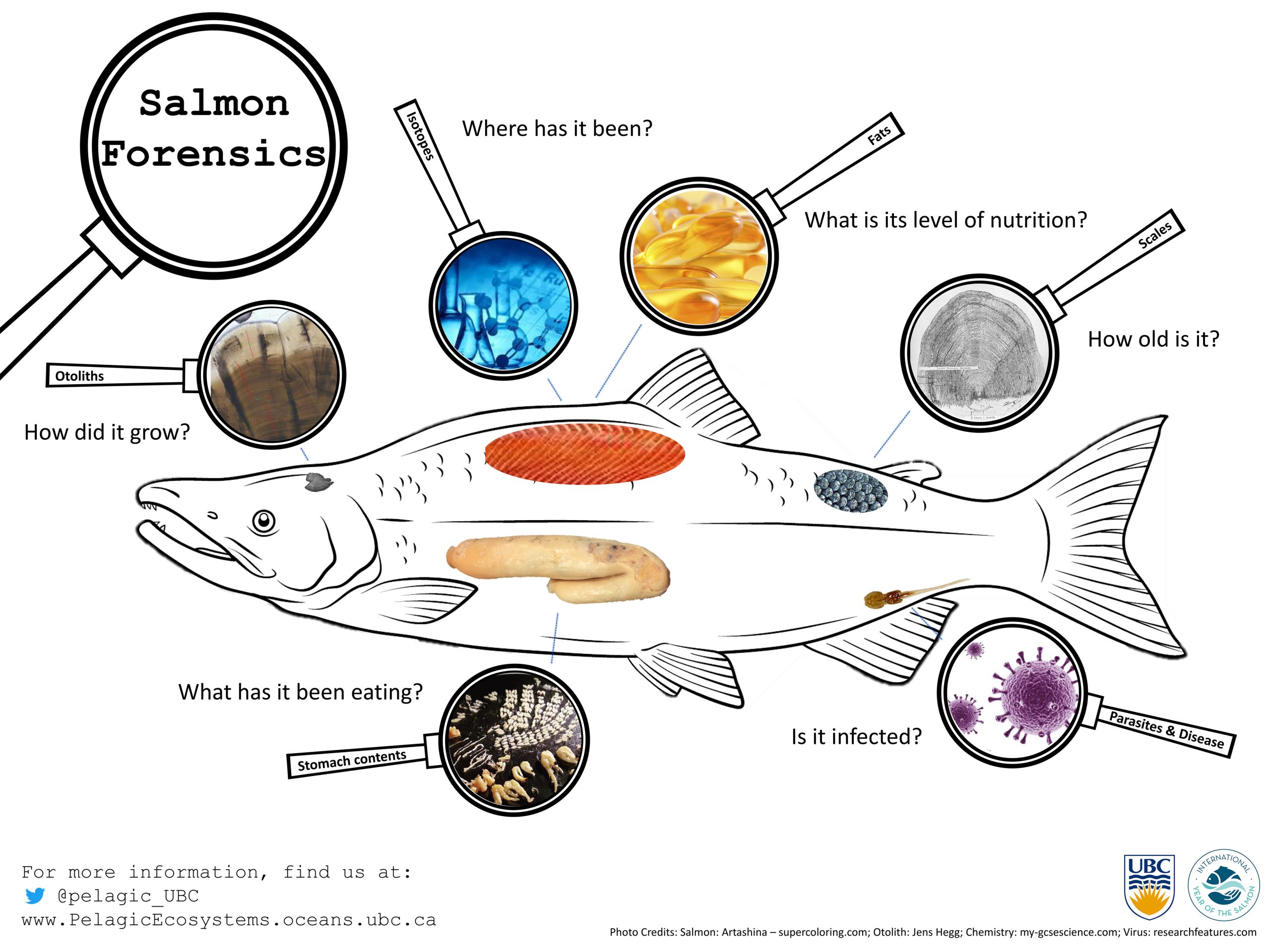
The hydraulics whirled, the fishing line tightened, and out of the water splashed a wild salmon, nearly a meter long. Once the fish was brought aboard the commercial salmon troller Carte Blanche, it was quickly identified as a Chinook salmon. However, this fish wasn’t processed for sale, but instead the salmon was measured for size, fat content, and a scale was taken for stock identification.
This was part of work studying Chinook salmon undertaken by a team of researchers from UBC along the BC coastline earlier this summer.
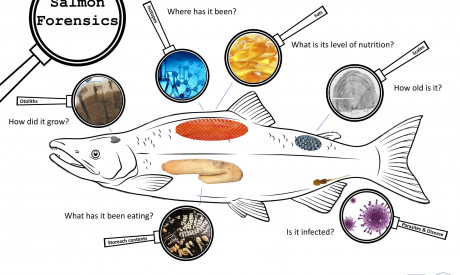
Aboard the Carte Blanche was Jacob Lerner, a UBC PhD student and part of the Pelagic Ecosystems Lab, whose research focuses on the relationship between the salmon and the marine ecosystem. He is investigating how fat content changes between stocks of Chinook and across regions of the coast. For three weeks, he measured the fat content of Chinook caught in Juan de Fuca and Johnstone Strait, two regions frequented by both Northern and Southern resident killer whales, laying the groundwork for research into Chinook salmon trophic ecology and their value as prey.

Jacob Lerner handles a large Chinook salmon, that will be released after measurements are taken. Photo: Mei Sato
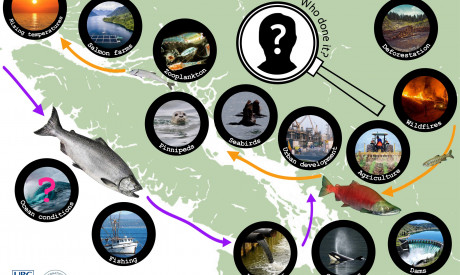
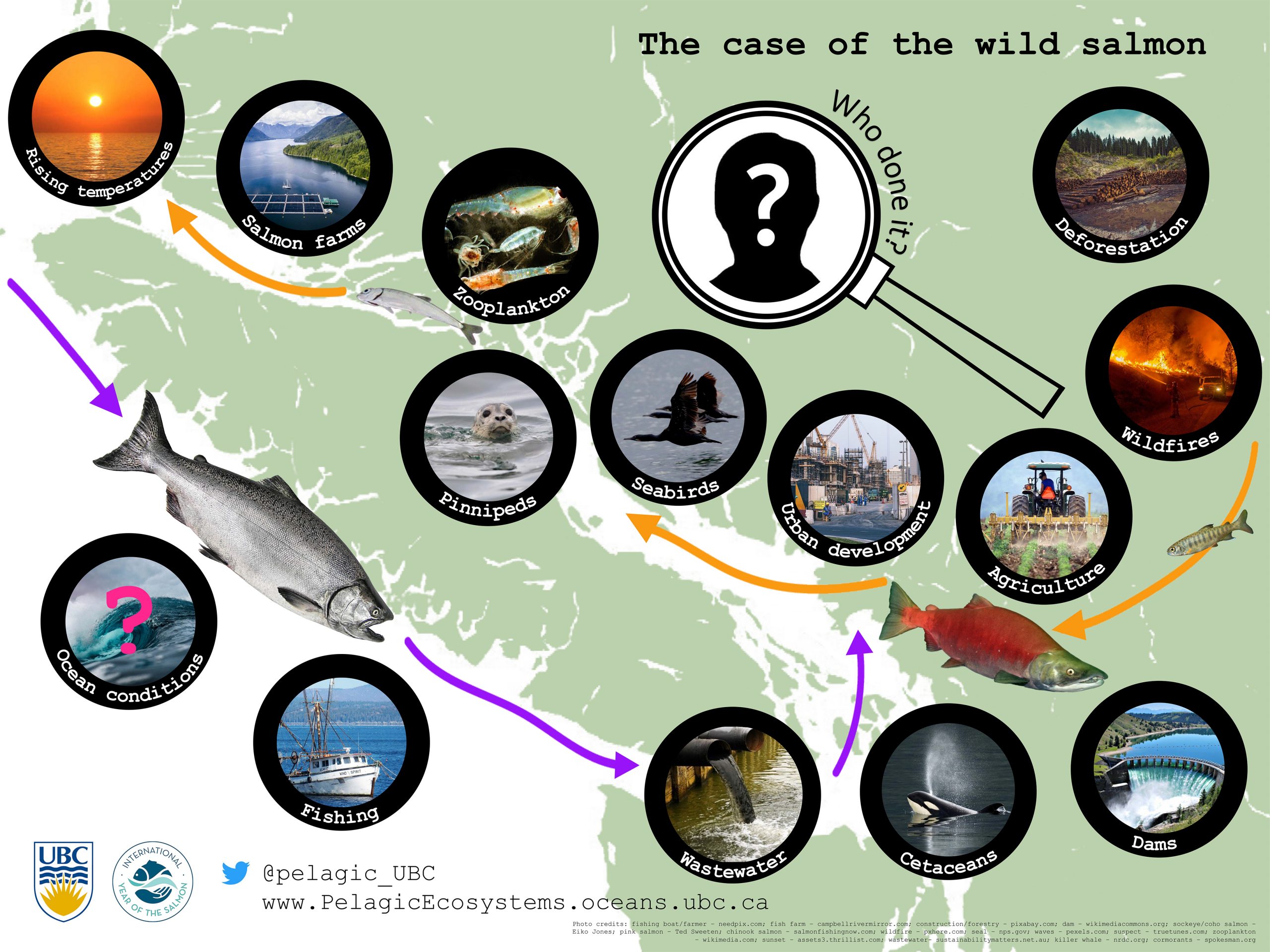
Despite their importance, many Chinook stocks in BC have been in decline. Both Northern and Southern resident orcas feed on Chinook, yet Northern populations have been growing while Southern populations have been stagnating. In light of the decline of Southern residents, questions about Chinook prey availability and the nutritional value of the accessible Chinook have been raised alongside previous concerns about contaminants and boat traffic.
Working with the federal department Fisheries, Oceans and the Canadian Coast Guard, along with sports fishing lodges and research labs throughout BC, the Pelagic Ecosystems Lab team is in the process of reconstructing the life history of individual Chinook stocks. Their research investigates how distribution, regional food-webs, and trophic ecology can impact the quality of the Chinook as prey and the condition of at-risk populations. The implications of this work are far reaching; ranging from the health of resident orca populations to the sustainability of the BC sports and commercial fishing communities.

Taking scales from a small Chinook for genetic stock identification. Photo: Mei Sato
After disembarking the Carte Blanche, Lerner hopped aboard the SeaCrest, a commercial trawler, for a research trip looking at the coastal food-webs around Vancouver Island. Once he returns to UBC, he will be joined by other researchers as they continue to study regional food-webs in their entirety. In this way, scientists can position Chinook in their ecosystems and begin to assess the impacts these systems may have on Chinook trophic ecology and quality as prey.
Tags: British Columbia, fieldwork, food webs, IOF students, killer whales, Pelagic Ecosystems Lab, Research, salmon, whales