
‘Disease detectives’ discover cause of sea star wasting disease that wiped out billions of sea stars
UBC researchers have identified the bacterial culprit behind sea star wasting disease, solving a decade-long mystery and opening the door to recovery efforts for devastated marine ecosystems.
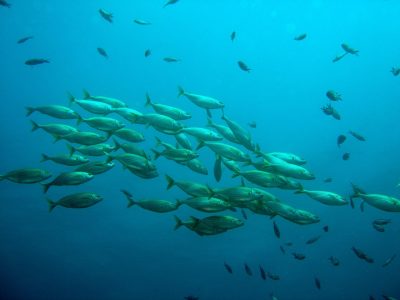
Nations will see half of their straddling stocks moving towards the high seas by 2050
UBC finds that 37% of straddling stocks are projected to have significant shifts between Exclusive Economic Zones (EEZs) and the high seas by 2030, while more than 50% could do so by 2050.
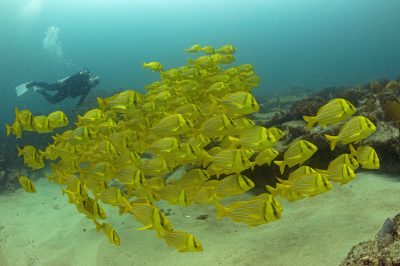
Scuba diving generates $20 billion annually
Substantial revenue from diving, which depends on healthy ocean ecosystems, offers a new argument for marine conservation

10 Years of IOF
The Institute for the Oceans and Fisheries (IOF) was officially established on July 1, 2015, however, our roots at UBC stretch back more than 70 years.

Addressing gendered impacts of climate change and IUU in small-scale fisheries
Researchers investigated the gendered impacts of climate change and IUU fishing and offered community-driven approaches to foster resilience, equity, and sustainability in SSFs across climate-sensitive regions.

Wildfires could be harming our oceans and disrupting their carbon storage
Wildfires pollute waterways and could affect their ability to sequester carbon, recent University of British Columbia research shows.
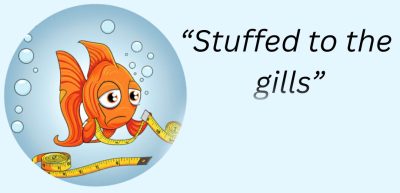
“Ocean Idioms” to teach you about our oceans
In honour of World Ocean Day, we present OCEAN IDIOMS!
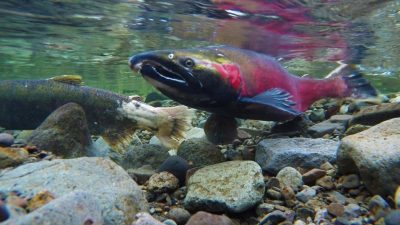
The future of Pacific salmon: Community dialogues underscore the urgent need for collaborative restoration
Thirteen public meetings to gather knowledge from local and Indigenous communities in support of salmon rebuilding and recovery in the Pacific Northwest.

New study exposes the tip of the illegal seahorse trade
Millions of seahorses are illegally trafficked across over 60 countries despite strict global trade regulations, a Project Seahorse and OceansAsia study finds
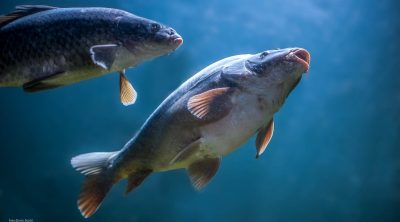
New study reinforces link between gill size and oxygen uptake in fish
Data from 33 fish species further supports the argument that small differences between fish’s oxygen consumption increase and gill surface area growth do not invalidate the principles of the Gill Oxygen Limitation Theory (GOLT).