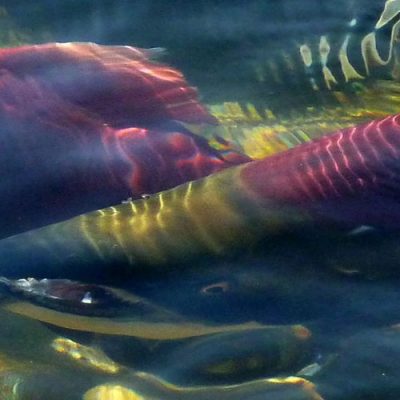
Food quality might be key for juvenile sockeye salmon growth and survival
The quality of food sockeye salmon eat along their migration routes is more important to their growth and condition than quantity, a new study has found, highlighting concerns about the effects of climate change on ocean conditions and salmon.
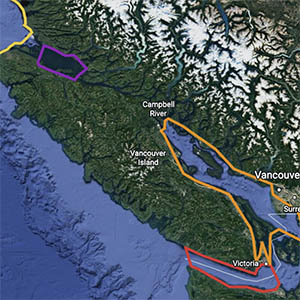
Expect shorter food chains in more productive coastal ecosystems
“We provided evidence for bottom-up omnivory in nutrient-rich temperate pelagic ecosystems, where food chain length is determined by the level of diatom production,” said Jacob Lerner. “This is very different from the global model for pelagic ecosystems.”
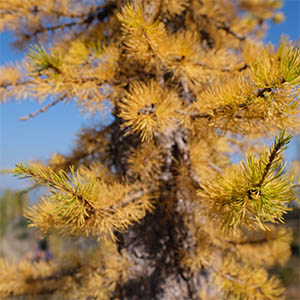
IOF finds fun fighting fire and fatigue in footslog up (and down) Frosty Mountain
“I’d walk through a burning building if there was a golden larch on the other side,” Adam Hicks remarked
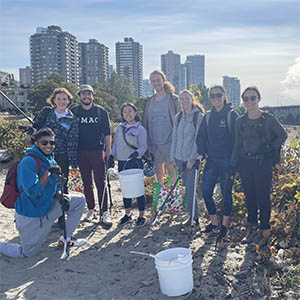
IOF Student Society does Shoreline Clean Up
A group of IOF and zoology students joined shoreline clean up event to celebrate International Coastal Cleanup Day
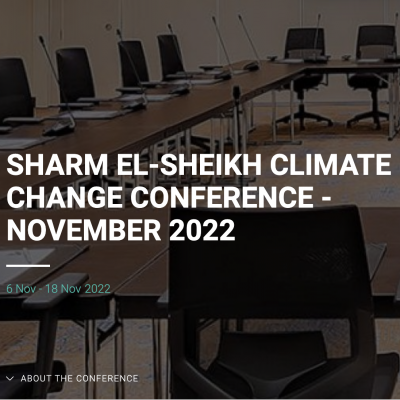
IOF delegation going to COP27
PhD candidate Veronica Relano and Dr. Simon Donner, professor in IOF, IRES and Geography, are among the 10 members of UBC’s delegation travelling to Egypt to attend the 27th United Nations Climate Change Conference of the Parties (COP27)
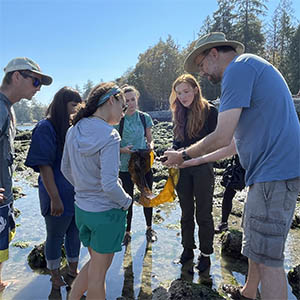
2022 Intertidal tour with Dr. Chris Harley
On Saturday, September 10th, IOF community members met coastal ecology expert, Dr. Christopher Harley, to take advantage of the receding waters and tour one of the intertidal zones at Stanley Park.
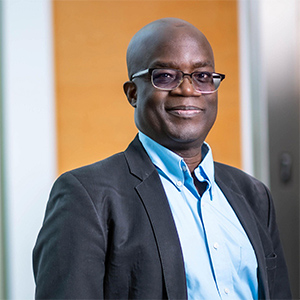
Rashid Sumaila wins RSC’s Miroslaw Romanowski Medal for scientific work relating to environmental problems
Prof. Sumaila is a UBC University Killam Professor, Canada Research Chair (Tier I) in Interdisciplinary Ocean and Fisheries Economics, and one of the world’s most innovative researchers on the future of the oceans.
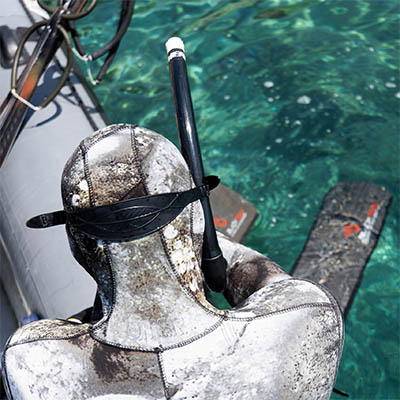
How do marine mammals make decisions about diving?
PhD candidate Rhea Storlund decided to take an unconventional approach to understand how marine mammals dive by asking human breath-hold divers about the decisions they make.
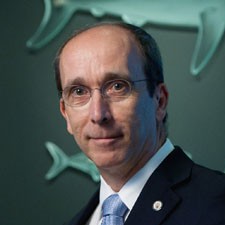
Villy Christensen named Fellow of the Royal Society of Canada
Dr. Christensen, a professor at the UBC Institute for the Oceans and Fisheries, is the principal architect behind the Ecopath with Ecosim (EwE) modelling approach and software.
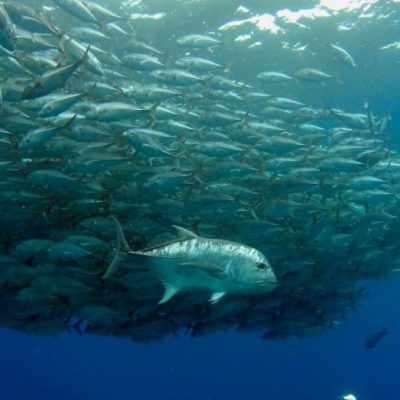
Global fish stocks can’t rebuild if nothing done to halt climate change and overfishing, new study suggests
“We are at a turning point. What we need is a coordinated global effort to develop practical and equitable marine conservation measures to support effective biomass rebuilding under climate change,” said Dr. William Cheung