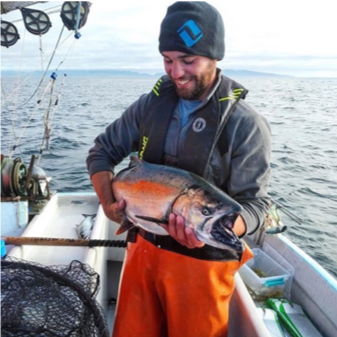
Getting a step closer to understanding how Chinook salmon live
Stable isotope analysis can peel back the curtain to give scientists a view of where fish spend their time, what they’ve been eating, and how they are interacting with other species.
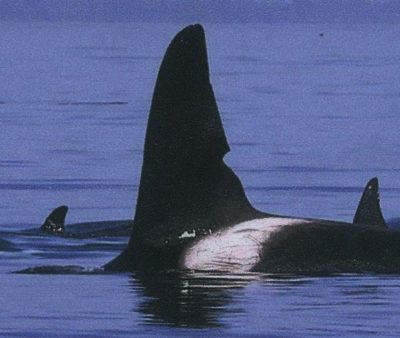
The Killers of California and Oregon
Thirteen years of photo-identification data of killer whales observed in California and Oregon provide new insights into the distribution and population structure of mammal-eating killer whales in the eastern North Pacific Ocean.
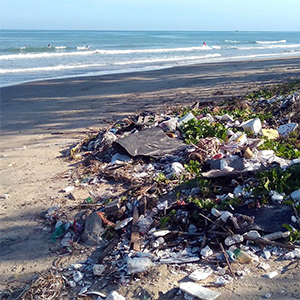
PROFILE: Investigating ocean pollution to “provide solutions, not just answers to questions”
“Anthropogenic stressors are reshaping our ocean – it’s not the same ocean we had 30 or 40 years ago. As academics we need to provide solutions, not just answers to questions.”
St. Lawrence fishery study tests the benefits of collaboration between scientists, government, management and industry members
Researchers had the opportunity to test the usefulness of a fashionable fisheries management tool called management strategy evaluation (MSE).
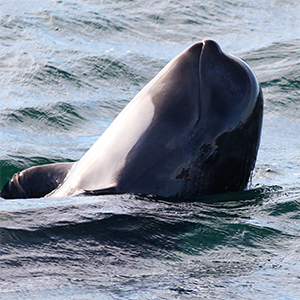
Partnership between researchers and whale-watch operators makes for big whale behaviour insights
Based on their findings, the researchers recommended that whale-watchers keep some distance from foraging areas to avoid disturbing the whales while they eat.
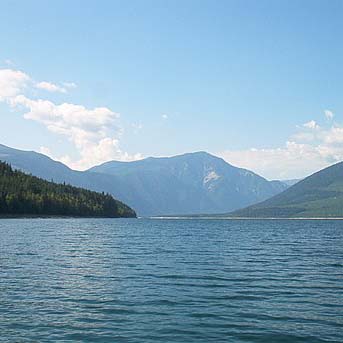
Ecosystem modelling indicates that adding fertilizer to water reservoirs pays off
In the simulated Arrow Lakes Reservoir, fish fared better when nutrients were added to the water, regardless of whether the water flow was high or low.
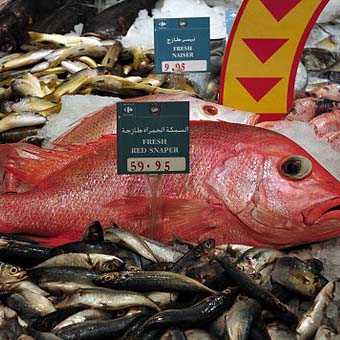
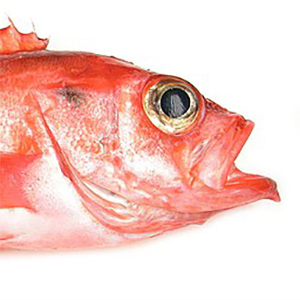
IOF researchers find simple solution to Kuwait’s blood snapper woes
The change could help repopulate Malabar blood snapper, whose numbers dropped by 95% between 1995 and 2009
Podcasts from FISH 500 class 2020/21
Listen to podcasts prepared by students in the FISH 500 class for academic year 2020/21
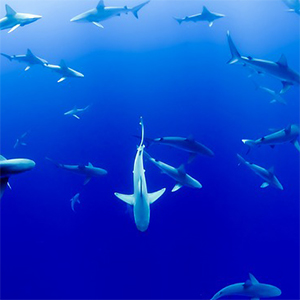
Ecosystem modelling paints a devastating picture for top marine predators by 2099
Without effective carbon mitigation the ocean would lose 18% of animal biomass by 2099 relative to the present day.
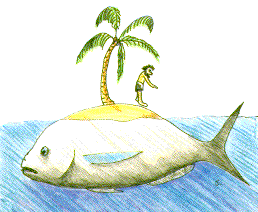
PROFILE: Finding novel ways to use modelling to solve oceans, fisheries and social problems
GOM took advantage of the COVID-19 pandemic, moving online, and connecting with researchers from 29 countries.