
A Call for Cooperation in the Southwest Atlantic Ocean
The Southwest Atlantic Ocean is one of the most productive marine regions on the planet. Yet despite its immense importance, the region remains one of the few large ocean areas without a coordinated system for managing its shared marine resources.

Thousands of jellyfish clones are multiplying in B.C. lakes
If you spot a jellyfish in British Columbia, chances are you are not looking at an ocean drifter, but a lake-borne invasive species.
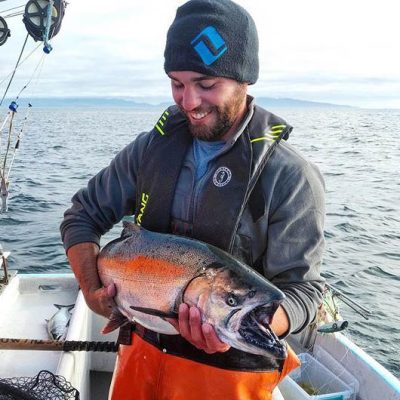
When the ocean changes the rules for Wild Salmon
One of the threats salmon face has a deceptively gentle name: thiamine deficiency complex.

International Women in STEM Day at IOF: Science that Protects Oceans, Communities, and Futures
IOF is highlighting a few of the women across the Institute whose work shows what science looks like when it is built for impact.

Opportunities exist for Canada’s mariculture industry despite climate change, UBC study says
In 2022, the industry contributed around $1.2 billion to the Canadian economy and employed 3,900 full-time individuals, many in remote coastal regions.
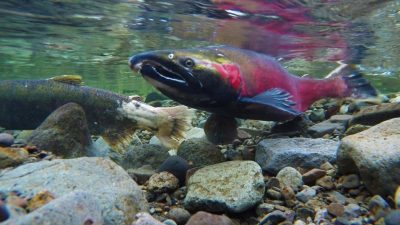
Bridging the gaps to save British Columbia’s salmon
Indigenous stewardship needs to be recognized and supported, giving First Nations and local communities clear decision making authority.

From single use to reuse in beverage packaging
Reusable cups and bottles can cut carbon, waste, and costs if return and washing systems are in place.
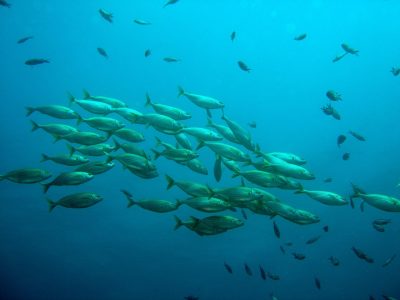
Nations will see half of their straddling stocks moving towards the high seas by 2050
UBC finds that 37% of straddling stocks are projected to have significant shifts between Exclusive Economic Zones (EEZs) and the high seas by 2030, while more than 50% could do so by 2050.
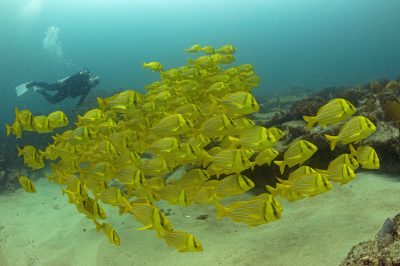
Scuba diving generates $20 billion annually
Substantial revenue from diving, which depends on healthy ocean ecosystems, offers a new argument for marine conservation

Addressing gendered impacts of climate change and IUU in small-scale fisheries
Researchers investigated the gendered impacts of climate change and IUU fishing and offered community-driven approaches to foster resilience, equity, and sustainability in SSFs across climate-sensitive regions.