The University of British Columbia
UBC - A Place of Mind
The University of British Columbia Vancouver campus
Institute for the Oceans and Fisheries
  • Home Page
  • About
  • Our Values
  • People
    • Pets
    • Alumni
  • Research
  • Graduate Program
  • Courses
    • Non-Credit Courses
  • News & Events
    • News
    • Media Coverage
    • IOF Seminars
    • 10 Year Anniversary
    • Ocean Idioms
    • Events
  • IOF Intranet 🔒
  • SUPPORT IOF
/ Home / killer whales

killer whales

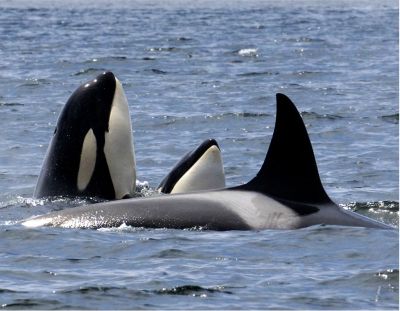
Toxic chemicals found in oil spills and wildfire smoke detected in killer whales

Toxic chemicals found in oil spills and wildfire smoke detected in killer whales

Toxic chemicals produced from oil emissions and wildfire smoke have been found in muscle and liver samples from Southern Resident killer whales and Bigg’s killer whales.
Posted in 2023, IOFNews, News Release | Tagged with biology, British Columbia, contaminants, faculty, IOF Research Associates, Juan Jose Alava, killer whales, OPRU, orca, Pacific Ocean, pollution, Research, whales

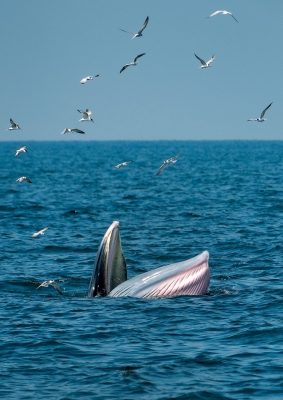
The cryptic lives of marine mammals: a century of marine mammal metabolisms

The cryptic lives of marine mammals: a century of marine mammal metabolisms

The metabolic rates of marine mammals who live their entire lives at sea or remain submerged for long periods of time are almost impossible to measure, creating large gaps in the data that scientists hope to fill with future technological innovations.
Posted in 2023, IOFNews, News Release | Tagged with cetaceans, David Rosen, dolphins, energetics, faculty, killer whales, marine mammals, metabolic rates, MMean Lab, MMRU, sea lions, sea otters, tuna, walrus, whales

Teenage orcas could be roughhousing with boats off the coast of Spain

Teenage orcas could be roughhousing with boats off the coast of Spain

Killer whales are in the news for sinking boats off the coast of Spain.

Posted in 2023, IOFNews, News Release | Tagged with Andrew Trites, Europe, faculty, IOF students, killer whales, Marine Mammal Research Unit, orca, whales

Food quality matters for southern resident killer whales, UBC study states

Food quality matters for southern resident killer whales, UBC study states

If southern resident killer whales ate just low-lipid salmon, they would have to eat around 80,000 more Chinook salmon every year than if they just ate high-lipid salmon.
Posted in 2023, IOFNews, News Release | Tagged with biology, Brian Hunt, British Columbia, faculty, fish, fish stocks, food webs, IOF students, killer whales, Pacific, Research, salmon, whales

Toxic toilet paper and long-lasting chemicals found in endangered killer whales

Toxic toilet paper and long-lasting chemicals found in endangered killer whales

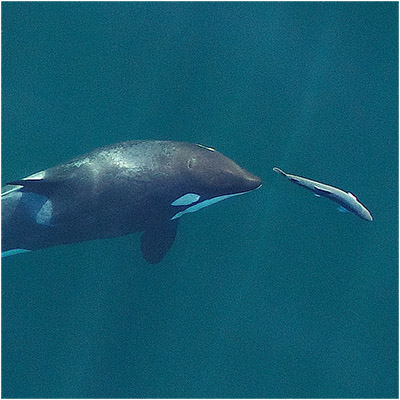
A chemical used in the production of toilet paper and ‘forever chemicals’ have been found in the bodies of orcas in B.C. , including the endangered southern resident killer whales.
Posted in 2023, IOFNews, News Release | Tagged with British Columbia, chemicals, IOF Research Associates, Juan Jose Alava, killer whales, marine mammals, OPRU, pollution, Research, whales

Southern resident killer whales not getting enough to eat since 2018

Southern resident killer whales not getting enough to eat since 2018

The animals have been in an energy deficit, averaged across spring, summer and fall, for six of the last 40 years.

Posted in 2022, IOFNews, News Release | Tagged with British Columbia, Carl Walters, climate change, faculty, food security, IOF students, killer whales, Pacific, salmon, sea lions, Villy Christensen, whales

Enhanced statistical models will aid conservation of killer whales and other species

Enhanced statistical models will aid conservation of killer whales and other species

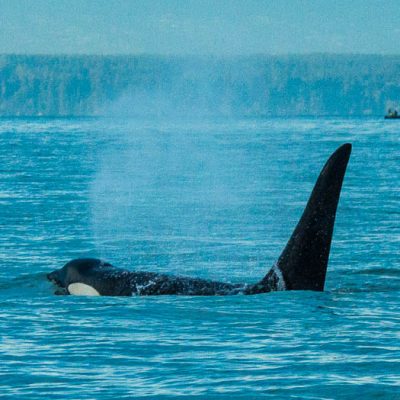
The whale used to develop the model preferred to save energy by gliding through the water when making deep dives, and when it was closer to the surface, it moved more actively, accelerating faster and ‘fluking’ its tail more often.
Posted in 2022, IOFNews, News Release | Tagged with animal movement, killer whales, Marie Auger-Methe, statistical ecology, whales

No apparent shortage of prey for southern resident killer whales in Canadian waters during summer

No apparent shortage of prey for southern resident killer whales in Canadian waters during summer

Researchers reported that Chinook salmon in the Salish Sea in summertime are four to six times more abundant for southern resident killer whales than northern resident killer whales.
Posted in 2021, IOFNews, News Release | Tagged with Andrew Trites, British Columbia, faculty, IOF Research Associates, killer whales, Marine Mammal Research Unit, Mei Sato, Pacific, Research, salmon, whales

PROFILE: Finding novel ways to use modelling to solve oceans, fisheries and social problems

PROFILE: Finding novel ways to use modelling to solve oceans, fisheries and social problems

GOM took advantage of the COVID-19 pandemic, moving online, and connecting with researchers from 29 countries.

Posted in 2021, IOFNews, News Release | Tagged with British Columbia, Ecopath, Ecopath with Ecosim (EWE), faculty, Global Ocean Modelling, IOF students, killer whales, Modelling, Peru, Research, Tsleil-Waututh Nation, Villy Christensen, whales

What’s Killing Killer Whales?

What’s Killing Killer Whales?

Despite there being no singular common cause of death, the study found a common theme: Human-caused deaths occurred in every age class — from juveniles to subadults and adults.

Posted in 2020, IOFNews, News Release | Tagged with British Columbia, Canada, cetaceans, conservation, faculty, killer whales, Marine Mammal Research Unit, Research, Stephen Raverty, whales, zoology

  • Previous
  • 1
  • 2
  • 3
  • Next
Institute for the Oceans and Fisheries
Faculty of Science
Vancouver Campus
The University of British Columbia
AERL, 2202 Main Mall
Vancouver, BC Canada V6T 1Z4
Tel 604 822 2731
Website oceans.ubc.ca
Email info@oceans.ubc.ca
Find us on
     
Back to top
The University of British Columbia
  • Emergency Procedures |
  • Terms of Use |
  • Copyright |
  • Accessibility